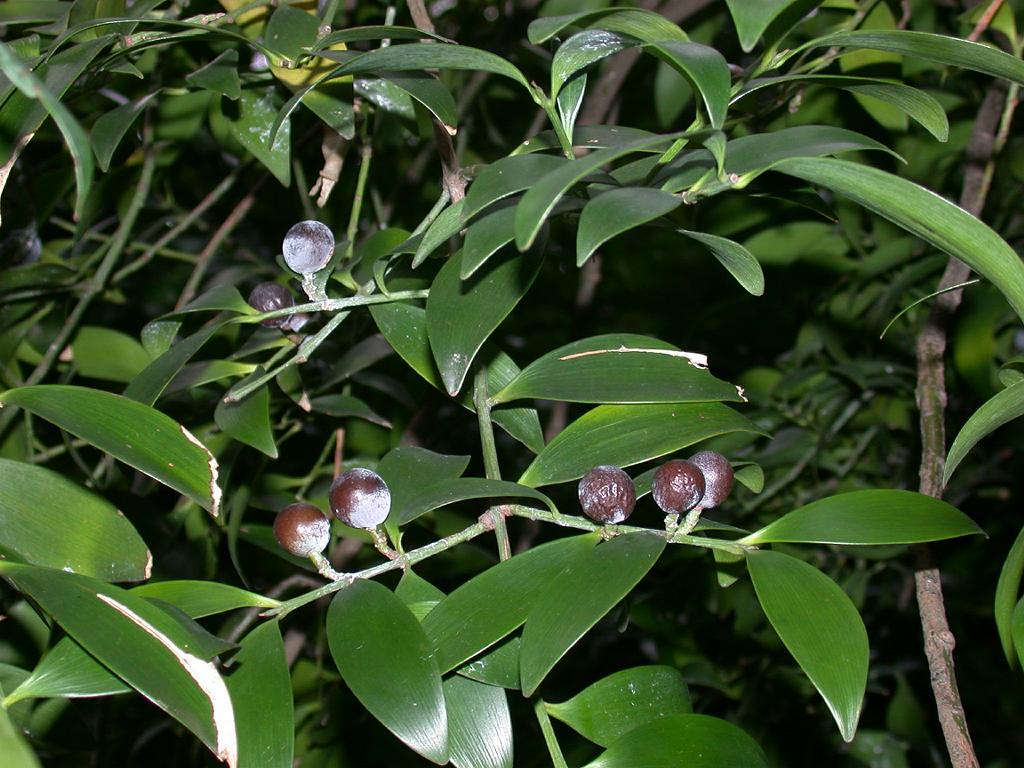
학명 : Nageia nagi (Thunberg) Kuntze
분류 : 나한송과(Podocarpaceae)
학명 이명 : Podocarpus nagi (Thunb.) Zoll
중국어명 : 竹柏
일어명 : ナギ (梛)
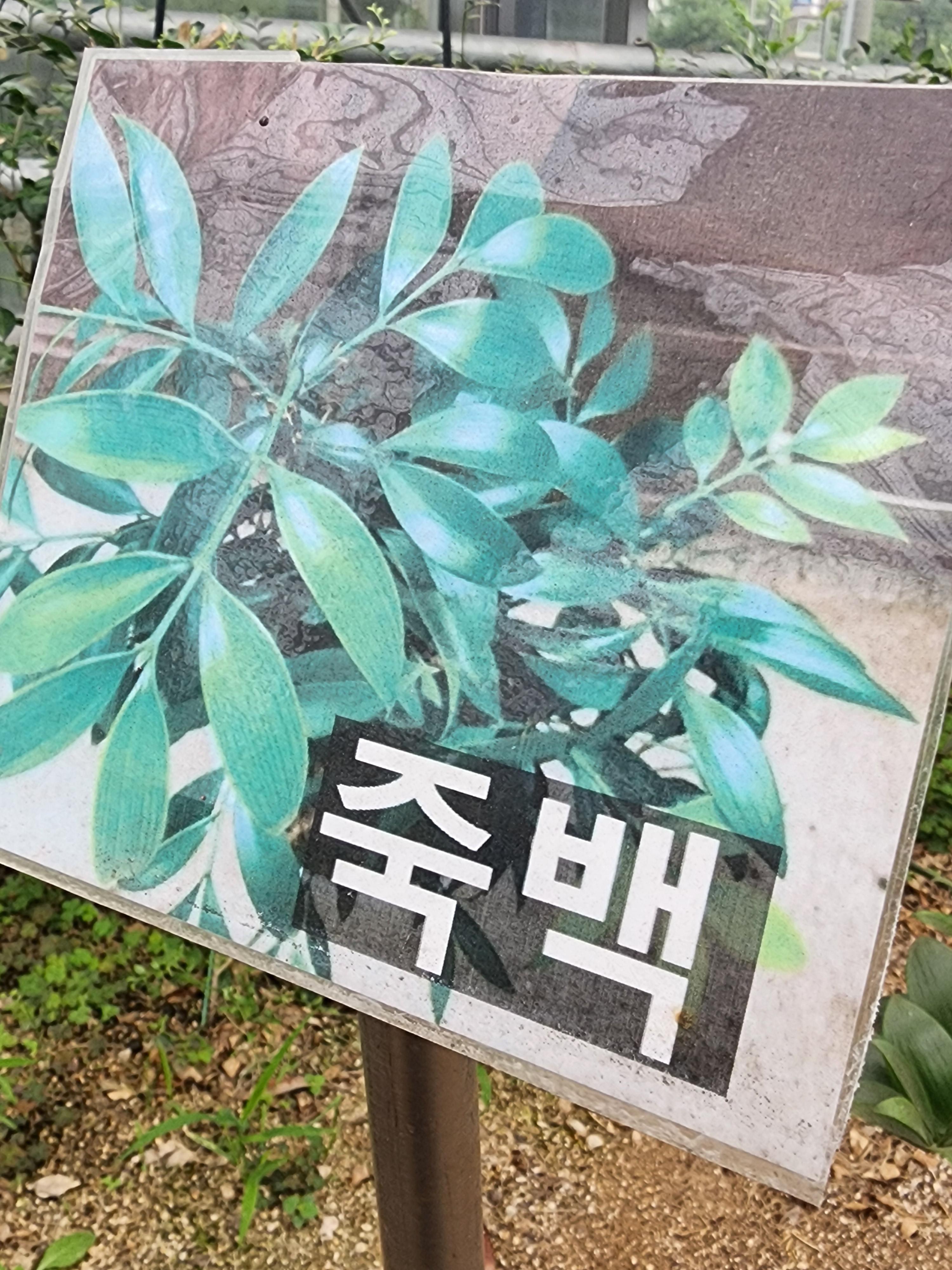
국내 유통명 : 죽백(나무)
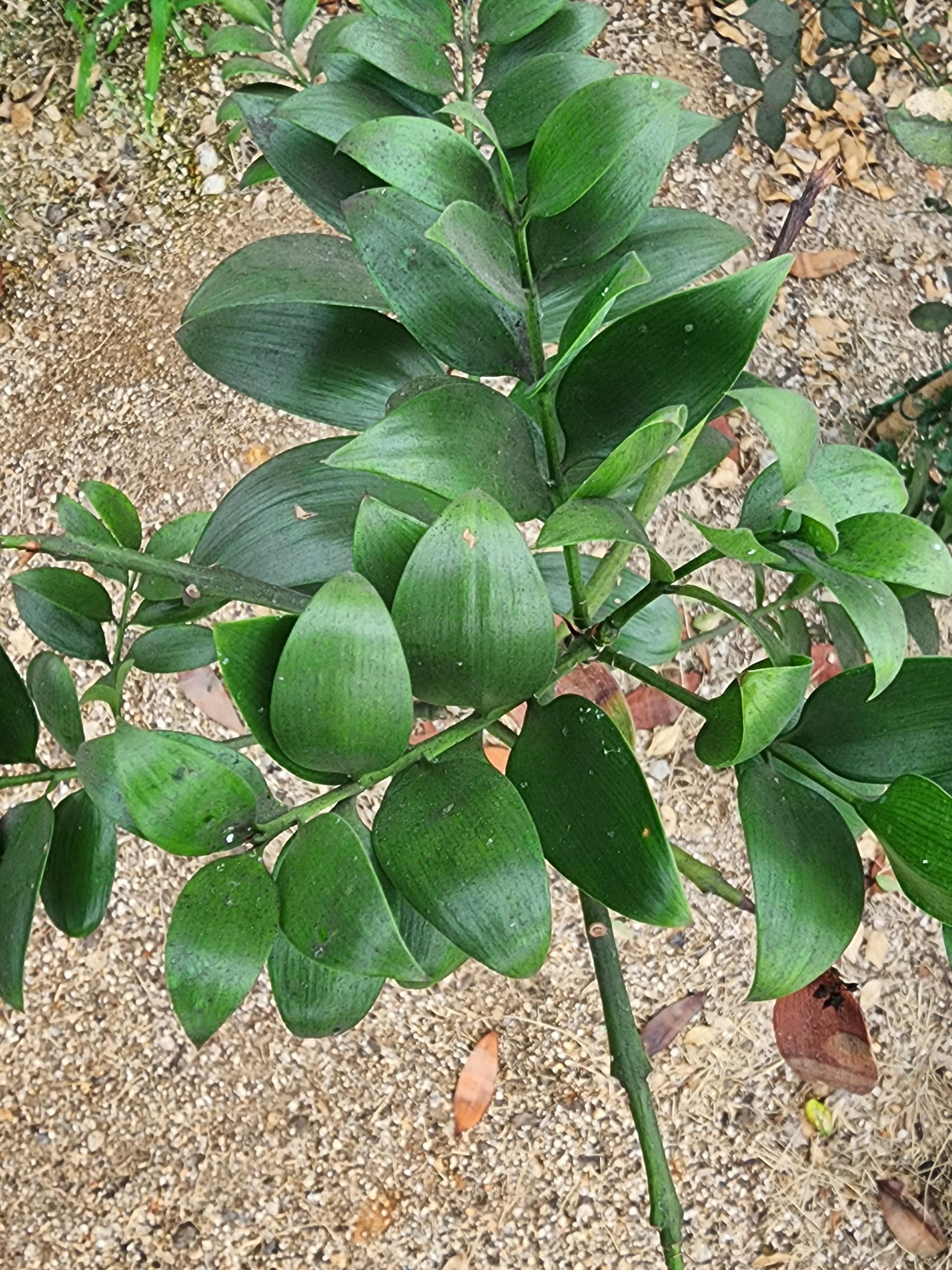
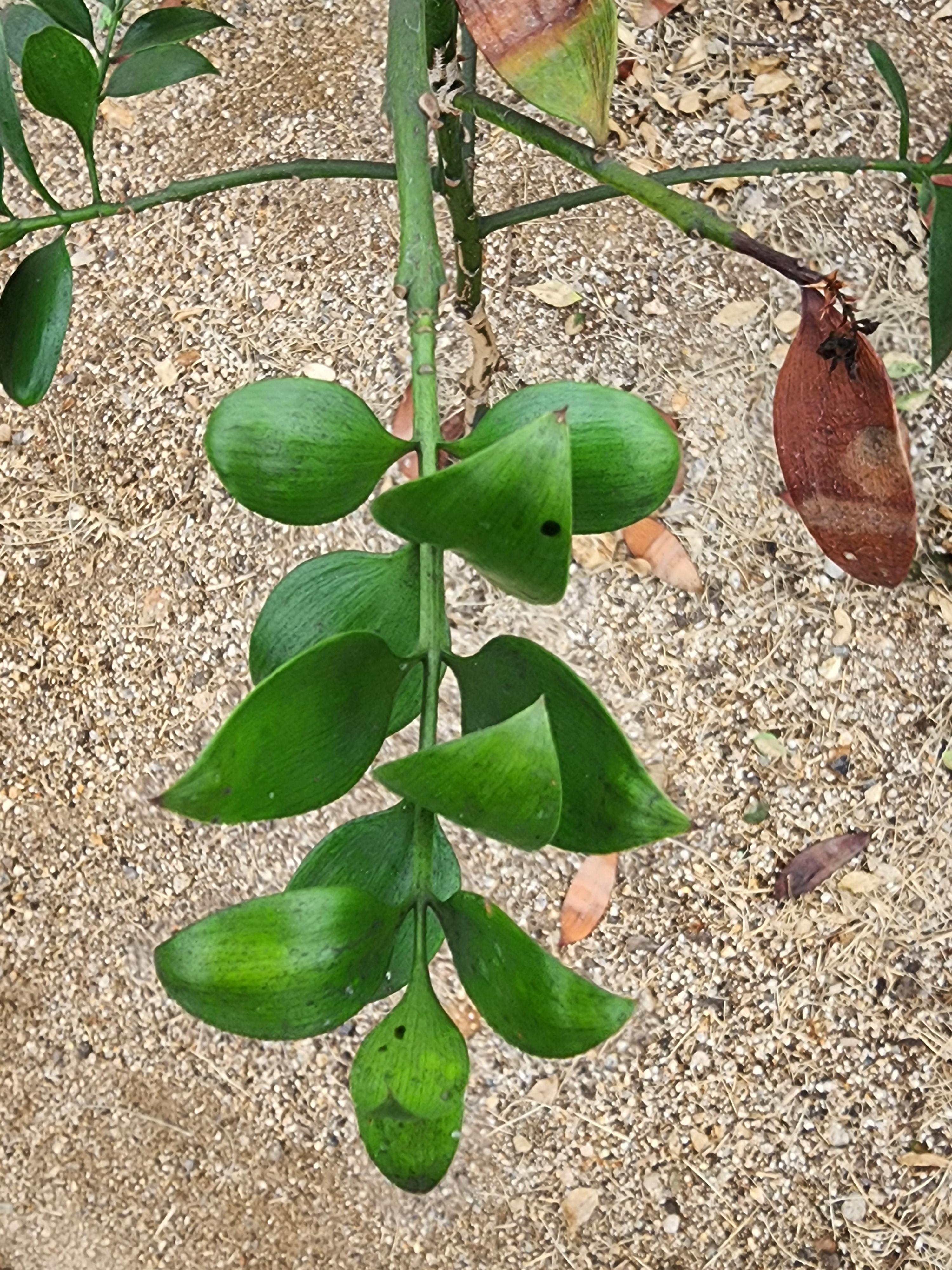
사진 : 2025.09.19 안산식물원



FOC
Nageia nagi (Thunberg) Kuntze, Revis. Gen. Pl. 2: 798. 1891
竹柏 zhu bai
Myrica nagi Thunberg in Murray, Syst. Veg., ed. 14, 884. 1784; Decussocarpus nagi (Thunberg) de Laubenfels; D. nagi var. formosensis (Dummer) Silba; Nageia formosensis (Dummer) C. N. Page; N. nagi var. formosensis (Dummer) Silba; N. nankoensis (Hayata) R. R. Mill; Podocarpus formosensis Dummer; P. japonicus J. Nelson (1866), not Siebold ex Endlicher (1847); P. koshunensis (Kanehira) Kanehira; P. nageia R. Brown ex Endlicher; P. nagi (Thunberg) Pilger; P. nagi var. koshunensis Kanehira; P. nankoensis Hayata.
Trees or shrubs to 20 m tall; trunk to 50 cm d.b.h.; bark reddish brown, dark purplish red, or light or dark gray, peeling in small, thin flakes; branches and branchlets erect, ascending, spreading, or ± pendulous, grayish to dark brown, slender, semiterete, stout; branchlets opposite, rarely alternate, compressed-tetragonal, rigid, glabrous, densely leafy. Leaves opposite, decussate; petiole strongly twisted at base, rotation continuing along whole length of internode; blade dark green and glossy adaxially, pale green abaxially, ovate-lanceolate, lanceolate, elliptic-lanceolate, or narrowly elliptic, 2-9 × 0.7-3 cm, leathery, parallel veins indistinct, stomatal lines present on abaxial surface only, sometimes scarcely visible, base cuneate or cuneate-attenuate into widened, flattened petiole, apex truncate, broadly obtuse, acute, or acuminate, sometimes blackened. Pollen cones axillary, solitary or in clusters of up to 10, pedunculate or sessile, cylindric, ovoid-cylindric, or subglobose, 0.5-2.5 cm; peduncle (when present) short, thick, with a few basal bracts. Seed-bearing structures axillary, solitary rarely paired; peduncle stout, or slightly thickened only distally, 4.5-13 mm, with several deciduous bracts leaving scars. Receptacle obsolete, consisting of few bracts. Epimatium green with white bloom when young, dark purple with sparser white bloom when ripe. Seed globose to pyriform, 1-1.5 cm in diam., with dense punctiform depressions, base pointed, apex rounded. Pollination Mar-May, seed maturity Aug-Nov. 2n = 26*, 29*.
Evergreen broad-leaved and Quercus forests, forests on dry mountainsides, thickets, along streams; 200-1200(-1600) m. Fujian, Guangdong, Guangxi, Hainan, Hunan, Jiangxi, Sichuan, Taiwan, Zhejiang; also cultivated as an ornamental [Japan (including Ryukyu Islands)]
A broad concept of Nageia nagi is adopted here. However, R. R. Mill indicates that the plants occurring in Taiwan should be treated as two separate species: those from S Taiwan (Hengchun Peninsula area) as N. formosensis, and those from N Taiwan (Nanko, Tanshui) as N. nankoensis. The taxonomy of this group of taxa is still not fully understood; field observations and cultivation experiments would be desirable.
The wood is used for constructing houses and bridges, making furniture, utensils, and handicraft articles. The seeds yield an edible oil which is also used in industry.
Wikipedia 설명
Nageia nagi, or the Asian bayberry, is a plant species in the family Podocarpaceae named by Carl Peter Thunberg. Nageia nagi is native to China, Japan, and Taiwan.[2] It was formerly called Podocarpus nagi.
Description
Nageia nagi pollen cones
Nageia nagi seed cones
Nageia nagi is a hardy tree species that can withstand a range of weather conditions, but it prefers moist sites that are well drained and with full sunlight to light shade. Being from the family Podocarpaceae, it is a dioecious tree, that is, the male and female parts of the trees are on separate plants.[2] The pollen cones are catkins and the female cones, which mature in one year, are reduced fleshy bracts that contain a single inverted ovule. It requires wind for pollination; it cannot self-pollinate.[3]
The trees range from fifteen to twenty meters in height and are relatively slow growing.[4] The leaves are lanceolate in shape, and are arranged sub opposite on the branches. Leaves range from two to eight inches long and 0.75 to 2.5 inches wide and lack a mid-vein. The new leaves are a light green and as they age they become dark green and glossy. The branches also start out as green but as they age they become reddish brown and peel in small layers.[2]
Nageia nagi can be propagated by cuttings or by seed. It is best to plant the seed in a warm greenhouse and sandy soil. For their permanent position, they should be planted in late spring or early summer after the last frost.[5]
The species is threatened by habitat loss.
Uses
Houses, bridges, utensils, handiwork and furniture are constructed from the wood. The seeds yield an oil that is edible and valued in industry.[6] Young leaves are sometimes cooked and eaten.[5] Its bark exhibits strong antibacterial effect.[7] Stems are used in floral arrangements that last in water for up to a year.[8]
아래는 위키페디아에서 퍼온 세밀화와 사진