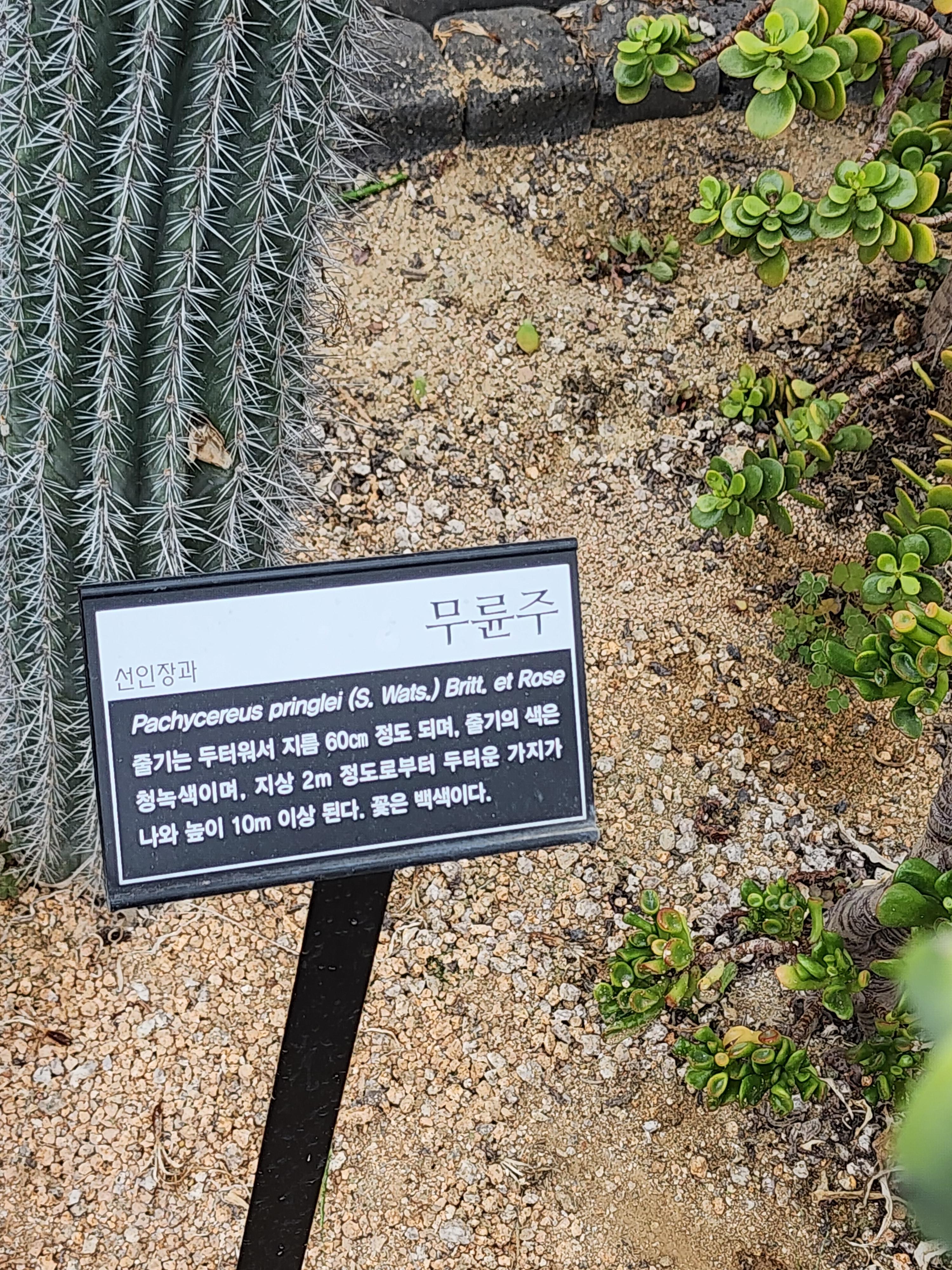
학명 : Pachycereus pringlei (S.Watson) Britton & Rose
분류 : 선인장과(Cactaceae)
국표식 등재 국명 : 무륜주선인장
일어 한자 : 武倫柱
중국어명 : 武伦柱
영명 : Mexican giant cardon, elephant cactus
사진 : 2025.09.19 안산식물원



Wikipedia 설명
Pachycereus pringlei (also known as Mexican giant cardon or elephant cactus) is a species of large cactus native to northwestern Mexico, in the states of Baja California, Baja California Sur, and Sonora. It is commonly known as cardón, a name derived from the Spanish word cardo, meaning "thistle"; additionally, it is often referred to as sabueso (or "bloodhound"), which is possibly an early Spanish interpretation of the native Seri term for the plant, xaasj.[3]
Large stands of this cactus still exist, but many have been destroyed as land has been cleared for cultivation in Sonora.
Climate change will likely affect the future distribution of numerous plant species, including Pachycereus pringlei, which can be attributed to alterations in precipitation and temperature.[4]
The cactus fruits were always an important food for the Seri people, in Sonora; the dried cactus columns themselves could be used for construction purposes, as well as for firewood.[5]
A symbiotic relationship with bacterial and fungal colonies, on its roots, allows P. pringlei to grow on bare rock, even where no soil is available at all; the cactus has the distinction of being lithophytic as needed. The root's bacterial colonies can fix nitrogen from the air and break down the rock to expose hidden sources of nutrients. The cactus even evolved to maintain this symbiotic bacteria within its seeds, serving to benefit by taking it on as part of its very physical biology.[6][7][8]
Morphology
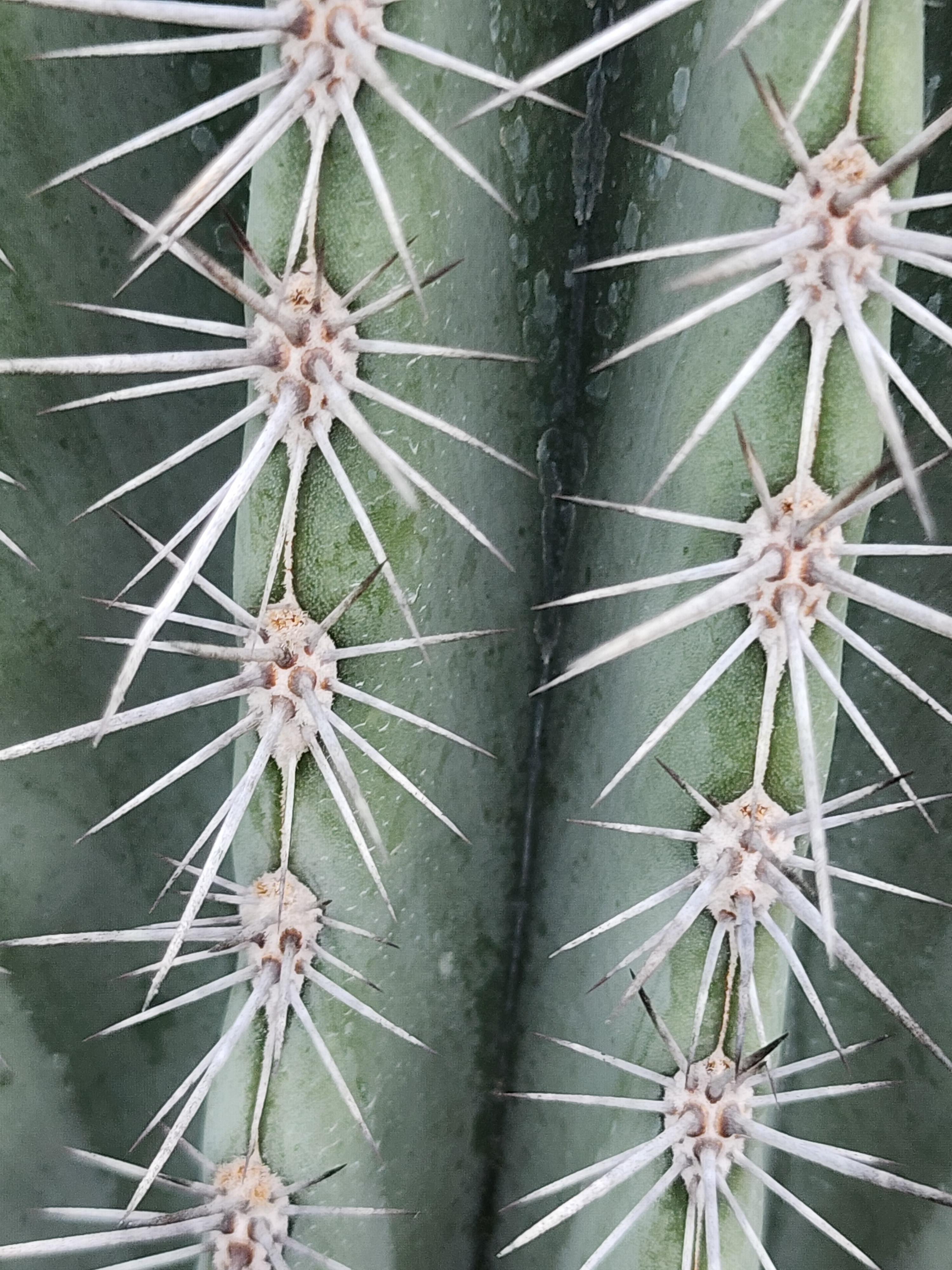
A cardon specimen is the tallest[1] living cactus in the world, with a maximum recorded height of 19.2 m (63 ft 0 in),[9][10] with a stout trunk up to 1 m (3 ft 3 in) in diameter bearing several erect branches. In overall appearance, it resembles the related saguaro (Carnegiea gigantea), but differs in being more heavily branched and having branching nearer the base of the stem, fewer ribs on the stems, blossoms located lower along the stem, differences in areoles and spination, and spinier fruit.
Its flowers are white, large, nocturnal, and appear along the ribs as opposed to only apices of the stems.
Lifespan and growth
An average mature cardon may reach a height of 10 metres (30 ft), but individuals as tall as 18 metres (60 ft) are known.[11] It is a slow-growing plant[12] with a lifespan measured in hundreds of years. One way scientists have aged these cacti has been to use radiocarbon dating to test the spines closest to the ground.[13] Growth can be significantly enhanced in its initial stages by inoculation with plant growth-promoting bacteria such as Azospirillum species.[14][15][16] Most adult cardon have several side branches that may be as massive as the trunk. The resulting tree may attain a weight of 25 tons.[17]
........................................ 하략 ............................................
'선인장과 다육식물' 카테고리의 다른 글
| 귀면각(鬼面角) (0) | 2025.12.08 |
|---|---|
| 빅토리아용설란(세설) (0) | 2025.12.08 |
| Agave(용설란속) sp. (0) | 2025.12.08 |
| 추수감사절선인장(게발선인장) (0) | 2024.03.20 |
| Monstera adansonii (0) | 2024.01.12 |