학명 : Salvia sclarea L.
분류 : 꿀풀과(Lamiaceae)
영명 : Clary Sage; Clary
국표식 추천 국명 : 클라리세이지
원산지 : 지중해지역
사진 : 2025.09.30 강동구 일자산 허브천문공원


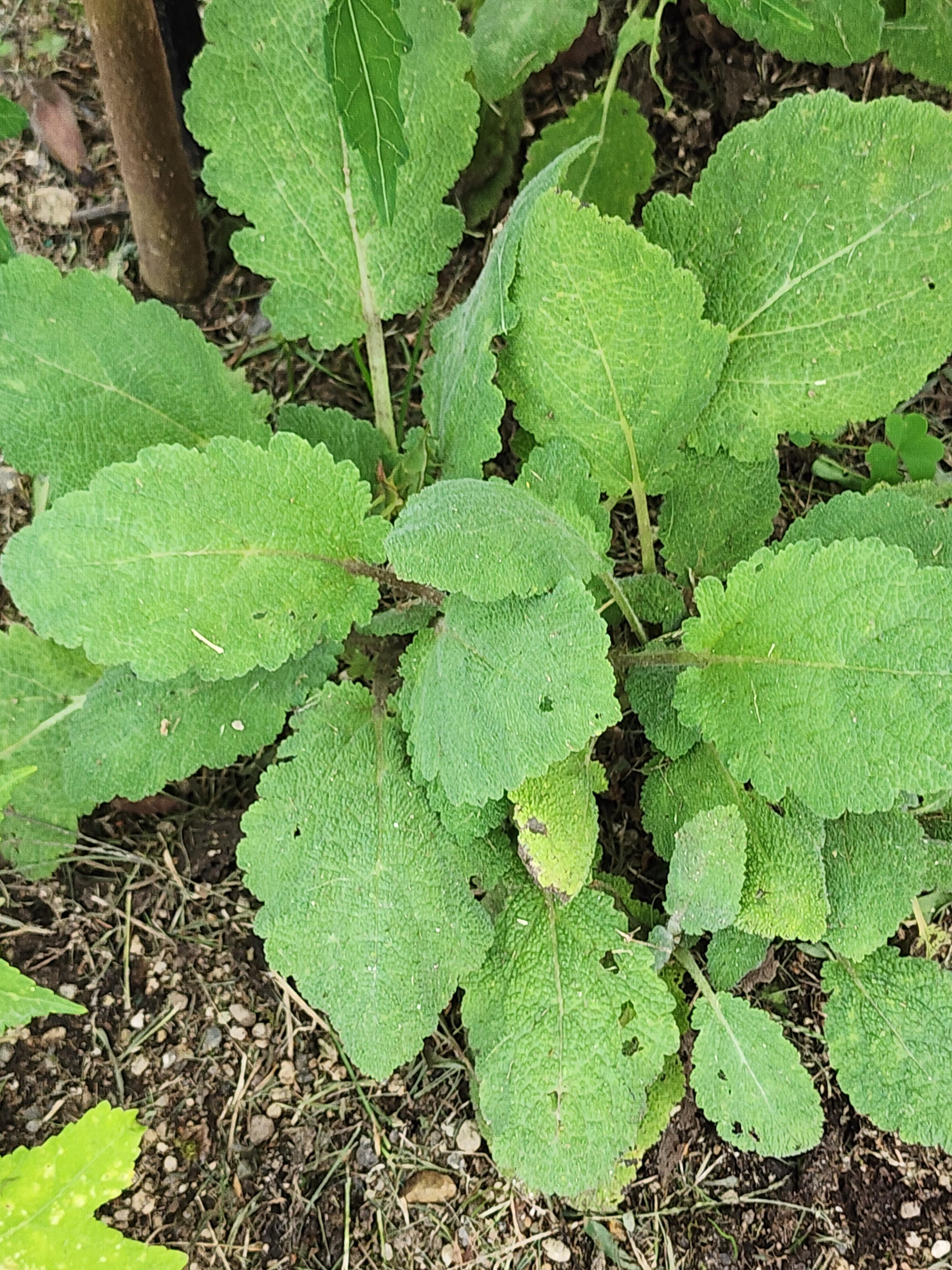
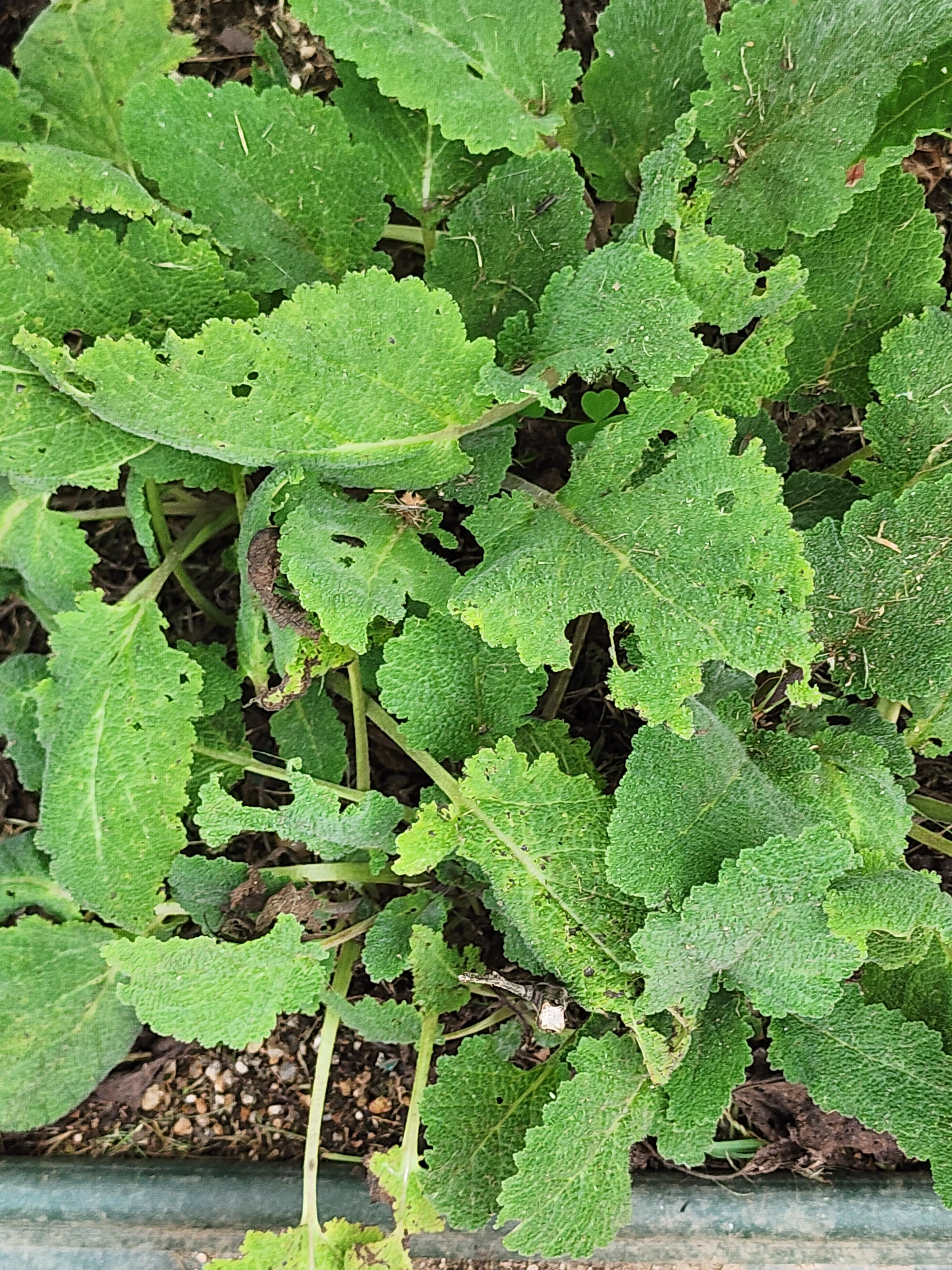
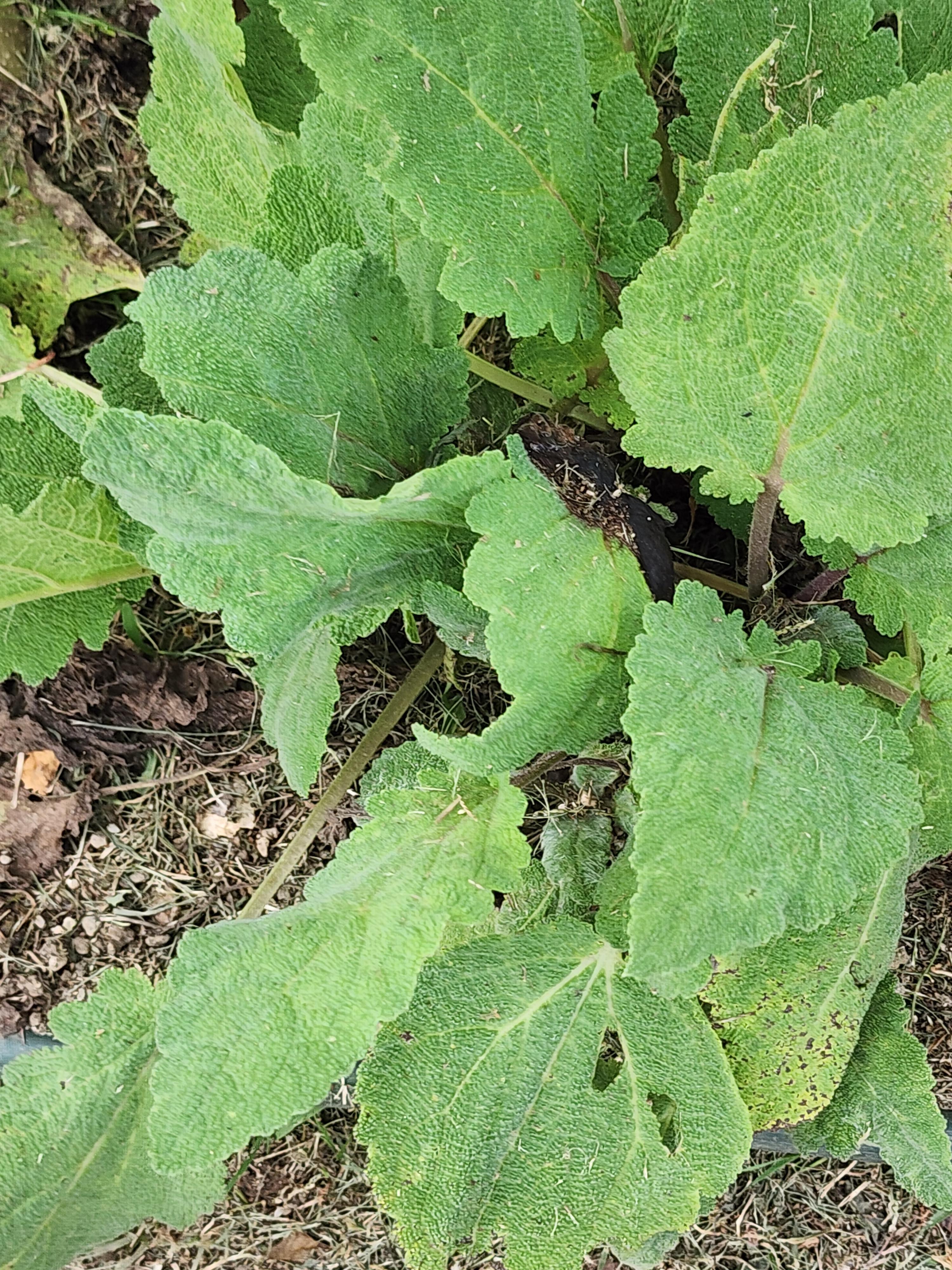
The upper leaf surface is rugose, and covered with glandular hairs.

꽃은 층을 이루어 윤생한다

화관은 양순형으로 상순은 하순에 대하여 직각으로 벌어진다 .
상순의 색깔이 더 짙어 담자색이고 하순은 백색에 가깝다.
포는 넓은 난형이다

식물 전체(잎, 줄기. 포, 꽃받침, 화관)에 털(선모외 강모)이 밀생
설명 1
Wikipedia
Salvia sclarea, the clary or clary sage (clary deriving from Middle English clarie, from Anglo-Norman sclaree, from Late or Medieval Latin sclarēia meaning clear), is a biennial (short-lived) herbaceous perennial in the genus Salvia.[2] It is native to the northern Mediterranean Basin and to some areas in north Africa and Central Asia.[citation needed] The plant has long been cultivated as an herb and is currently grown for its essential oil.[3]
Description
Salvia sclarea reaches 3 to 4 ft (0.91 to 1.22 m) in height, with thick, square stems covered in hairs. The leaves are approximately 1 ft (0.30 m) long at the base, and 0.5 ft (0.15 m) long higher up on the plant. The upper leaf surface is rugose, and covered with glandular hairs. The flowers are in verticils(윤생), with between two and six flowers in each verticil, and are held in large colorful bracts that range in color from pale mauve(담자색) to lilac or white-to-pink with a pink mark on the edge. The lilac or pale-blue corolla is approximately 1 in (2.5 cm), with the lips held wide open.[3] The cultivar S. sclarea 'Turkestanica' bears pink stems, petiolate leaves, and white, pink-flecked blossoms on spikes that grow up to 30 inches (76 cm) tall.[4]
History
The plant’s medicinal uses are described as far back as the 4th century BCE, in the writings of Theophrastus, as well as in the 1st century CE writings of Dioscorides and Pliny the Elder).[5]
Clary seeds have a mucilaginous (점질) coat, which is why some centuries-old herbal guides recommend placing a seed into the eye of someone with a foreign object in it so that it could adhere to the object and make it easy to remove. This practice is noted by Nicholas Culpeper in his Complete Herbal (1653), who referred to the plant as "clear-eye".[6]
It has also long been used as an additive to wine and beer. In 16th-century Germany elderflower-infused clary was added to Rhine wines to make a more potent beverage known as Muscatel.[7]
Uses
Cultivated field in northeastern North Carolina
The distilled essential oil of Salvia sclarea is used widely in perfumes and as a muscatel-like flavoring for vermouths, wines, and liqueurs.[3] It is also used in aromatherapy.[8]
In the United States, this oil is mostly produced on a large scale in and around Bertie County in northeastern North Carolina.[9]
https://en.wikipedia.org/wiki/Salvia_sclarea
설명 2
Plant description
Clary sage is an upright biennial (2-year life cycle) or short-lived perennial (2+ year life cycle) herb that grows up to 6 feet tall. The entire plant is hairy and has a strong odor, which may be familiar due to its popular essential oil. Clary sage reproduces by seed.
Leaves are large, wrinkled, and have a toothed margin. The leaves are opposite (they grow directly across from each other on the stem). The stems are erect, square, and branch at the ends.
Tall showy flower spikes form on towards the top of the branch. Up close, flowers appear to have many parts. Flower petals fused to form two ‘lips’, upper lip is purple and lower lip is whitish, though colors may vary. A large showy bract (modified leaf) sits beneath each flower cluster, bract colors can range from white to pink to purple.
Seeds come in oval shaped nutlets that each hold one seed.
Clary sage is native to the Mediterranean region. It is well-adapted to dry, upland slopes. It can also spread into wet meadows and streambanks. It is most often found in pastures, rangeland, roadsides, and disturbed areas.
'원예.재배식물 > ㅇ-ㅎ' 카테고리의 다른 글
| 황금세덤 (0) | 2026.02.27 |
|---|---|
| 오데코롱민트 (2) (0) | 2025.12.24 |
| 파인애플세이지 (1) | 2025.12.22 |
| 초콜릿민트(초코민트) (0) | 2025.12.22 |
| 흑토란(Colocasia 'Black Opal') (0) | 2025.12.16 |