박쥐란(2)
https://daehyo49.tistory.com/7817353
박쥐란(1)
https://daehyo49.tistory.com/7809071
학명: Platycerium ssp.
분류: 고란초과(Polypodiaceae)
학명 풀이:
그리스어 platys ‘broad’; keras ‘horn’ →사슴뿔같이 보이는 잎을 가리킴
영명: staghorn / elkhorn
원산지: South America, Africa, Southeast Asia, Australia and New Guinea
소속 종수: 18종(Wikipedia)
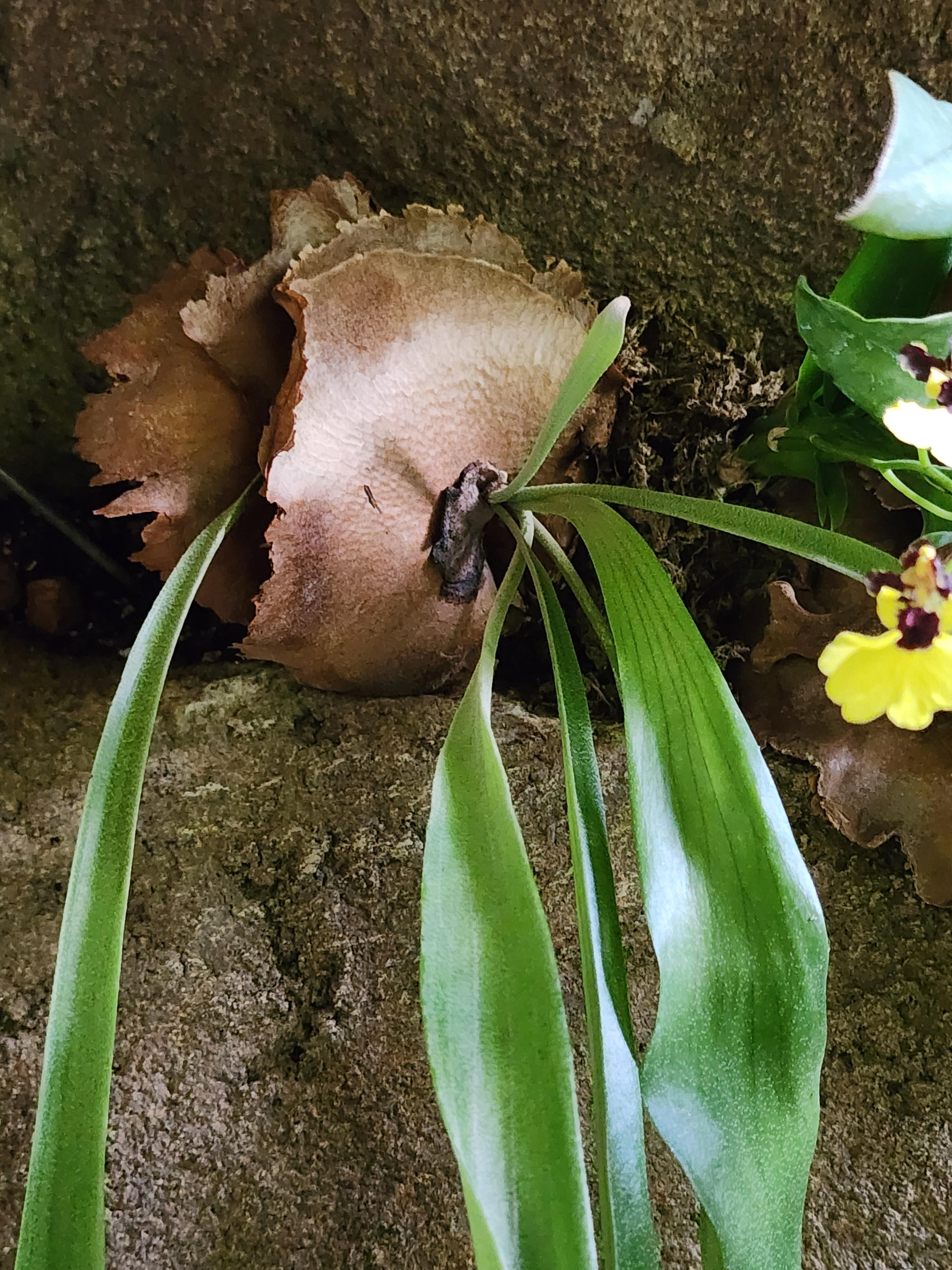
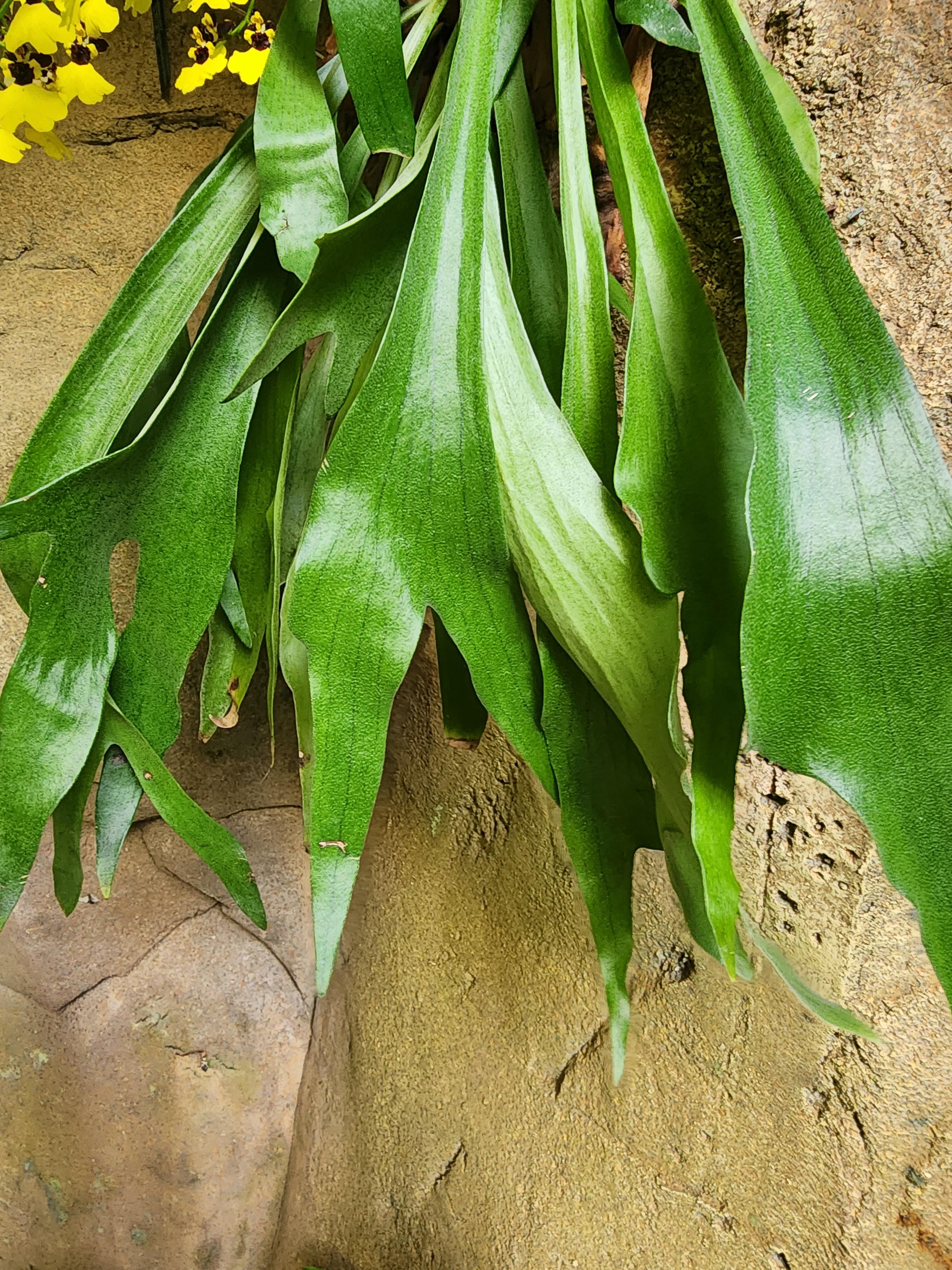
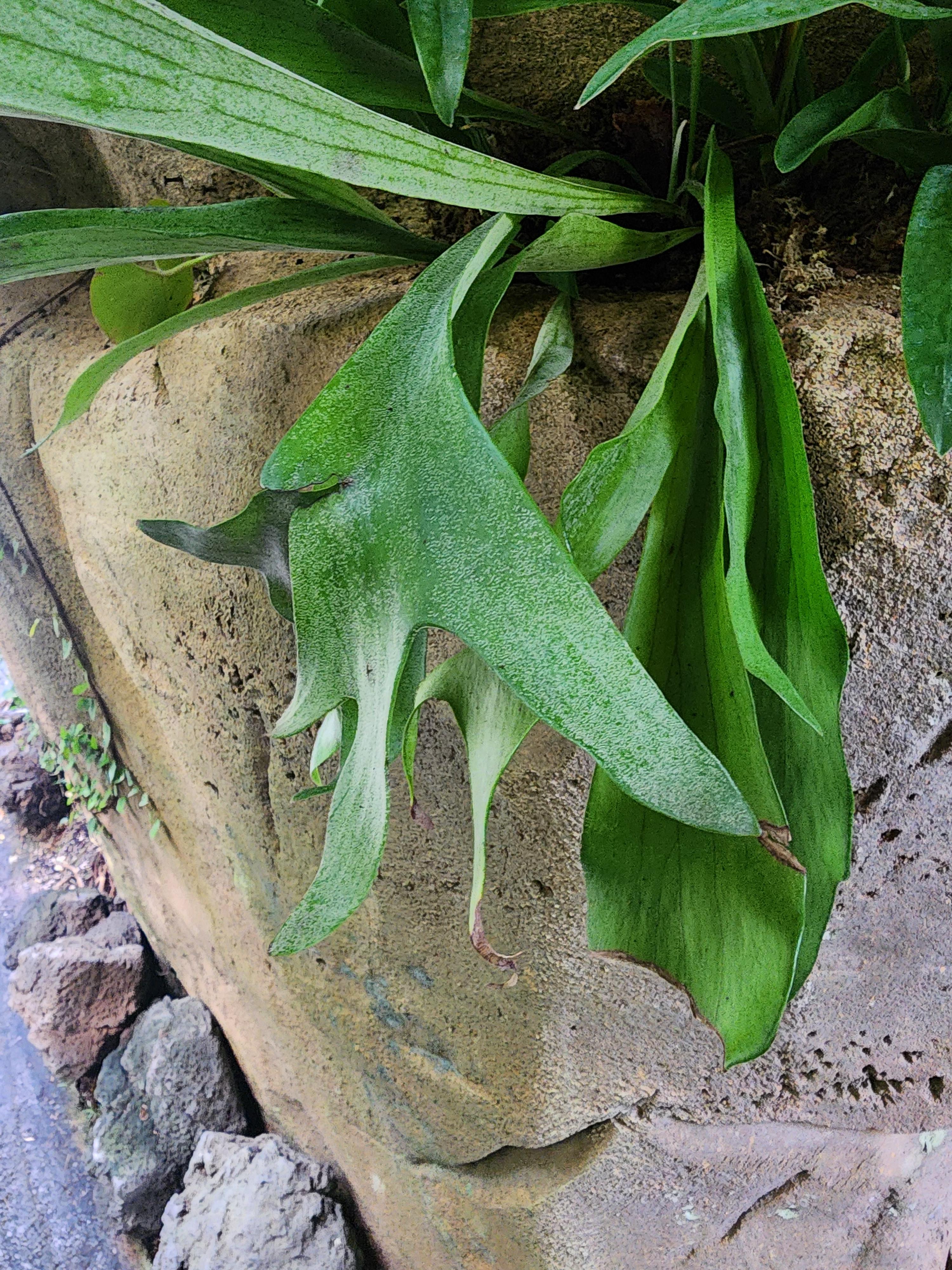
사진 : 2025.12.02 서울식물원

국표식 등재종
재배식물 정명 Platycerium grande (A.Cunn.) J.Sm. 대왕박쥐란 2011/12/08
재배식물 정명 Platycerium alcicorne Desv. 마다가스카르박쥐란 2011/12/08
재배식물 정명 Platycerium bifurcatum (Cav.) C.Chr. 박쥐란 2011/12/08
재배식물 정명 Platycerium coronarium (J.König) Desv. 왕관박쥐란 2011/12/08
재배식물 정명 Platycerium willinckii T.Moore 자바박쥐란
From Wikipedia, the free encyclopedia
Platycerium
Platycerium is a genus of about 18 fern species in the polypod family, Polypodiaceae. Ferns in this genus are widely known as staghorn or elkhorn ferns due to their uniquely shaped fronds. This genus is epiphytic and is native to tropical and temperate areas of South America, Africa, Southeast Asia, Australia, and New Guinea.[1]
Description
Platycerium sporophytes (adult plants) have tufted roots, growing from a short rhizome, and bear two types of fronds - basal and fertile fronds. Basal fronds are sterile, shield- or kidney-shaped, and laminate against the tree, to protect the fern's roots from damage and desiccation. In some Platycerium species, the top margin of these fronds will grow into an open crown of lobes; catching rainwater, falling forest litter, bird/animal droppings, and even an occasional fallen deceased animal, these plants build up their own "compost" system of nutrition over many years.[citation needed]
Fertile fronds bear spores on their undersurface, are dichotomous or antler-shaped, and jut out or hang from the rhizome. The spores are borne in sporangia, clustered in large sori that are usually positioned on the tips of the lobes, on a specialized stalked lobe (as in P. ridleyi and P. coronarium), or at the sinus between frond lobes. [2]
Some species of Platycerium are solitary, having only one rhizome. Other species form colonies when their rhizomes branch, or when new rhizomes are formed from root tips. If the conditions are right, the spores will germinate naturally, on surrounding trees. A Platycerium gametophyte is a small, heart-shaped thallus.[citation needed]
Platycerium have diverged into four natural groups. Several Platycerium are strongly adapted to xeric conditions, with a naturally drought-tolerant metabolism method having been reported for P. veitchii.[3]
설명:
나무 위에 붙어서 자란다. 덩어리 같은 뿌리줄기에서 2가지 잎이 모여 나온다. 하나는 영양엽(營養葉)으로 콩팥 모양이고 밑에서 뿌리줄기를 둘러싸며 흙을 감싸고 수분을 유지한다. 또한 그물맥이 있고 연한 녹색이며 어릴 때는 잔털이 있다.
위로 자라는 잎은 생식잎이고 거꾸로 선 바소 모양이며 2∼3개로 갈라지고 뒷면에 포자낭군이 달린다. 길이 20∼40cm로 잎자루가 없고 흰빛이 도는 짙은 녹색이며 질이 두껍다. 잎맥은 그물같이 결합되고 뒷면에 돌출한다. 뒷면은 빛깔이 연하고 솜 같은 털이 있다. 포자낭군은 윗부분에 달리고 전체에 밀포한다. 여름에는 반 그늘에 두고 겨울에는 직사광선을 쬔다. 박쥐란은 낮은 온도에 강해서, 0℃ 이하로 내려 가지 않으면 월동한다.
'양치식물' 카테고리의 다른 글
| Pteris wallichiana(왈리키아나봉의꼬리)(4) (0) | 2026.03.28 |
|---|---|
| Nephrolepis sp. 'Sabai Nang' (0) | 2026.02.27 |
| 은청개고사리 (0) | 2026.02.01 |
| Adiantum raddianum (3) (1) | 2026.01.26 |
| Adiantum raddianum (2) (0) | 2026.01.25 |