학명 : Ochna kirkii Oliv.
분류 : Ochnaceae
학명 풀이
Ochna : From the Greek name Ochne ‘Wild Pear’(잎 모양이 배나무 비슷)
kirkii : Sir John Kirk (1832-1922), a British doctor, naturalist and diplomat who accompanied Dr David Livingstone on his second botanical expedition to Central Africa in 1858
Common names: Mickey Mouse plant, bird's eye bush (Brickell and Zuk 1997).
사진: 2021.04.07 서울식물원
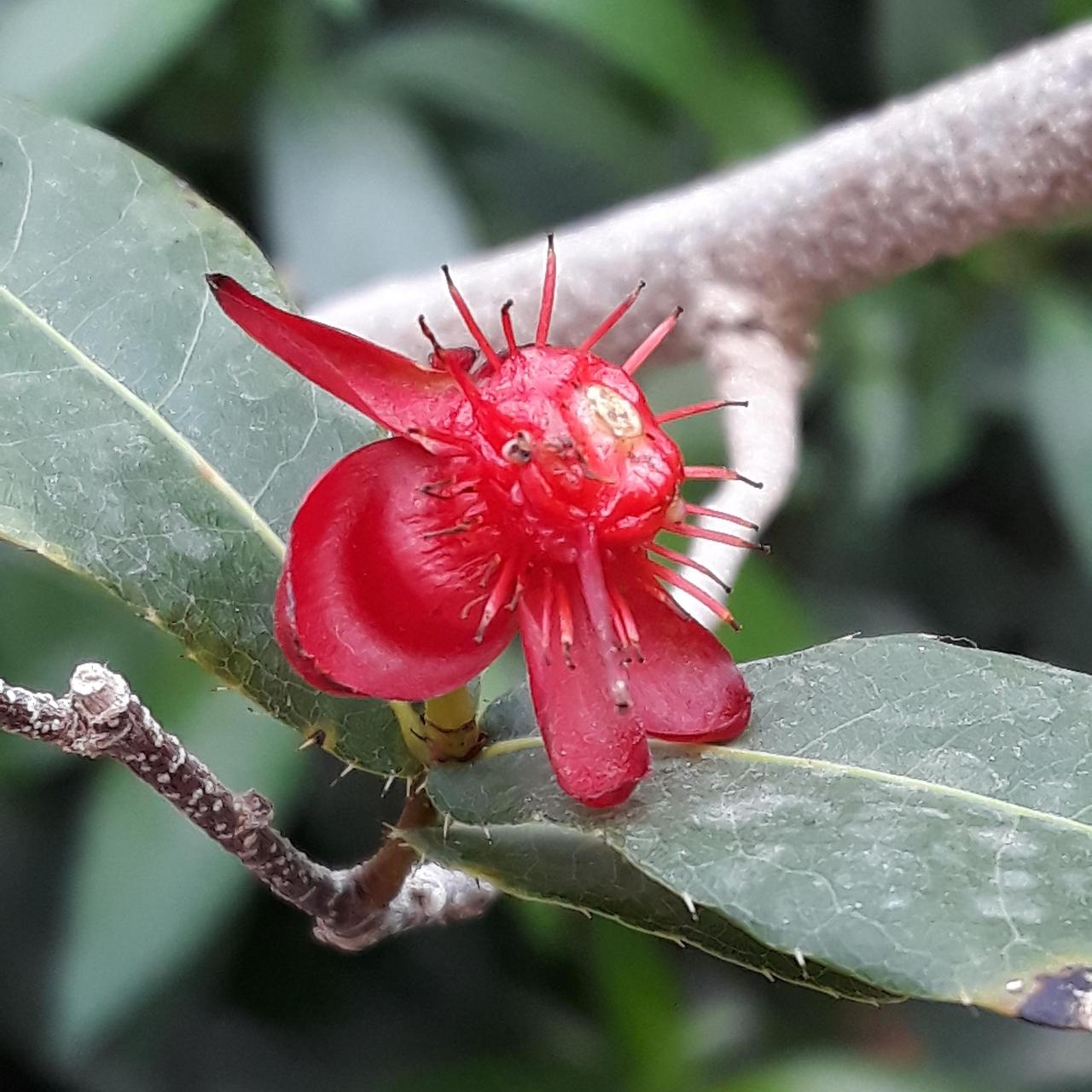
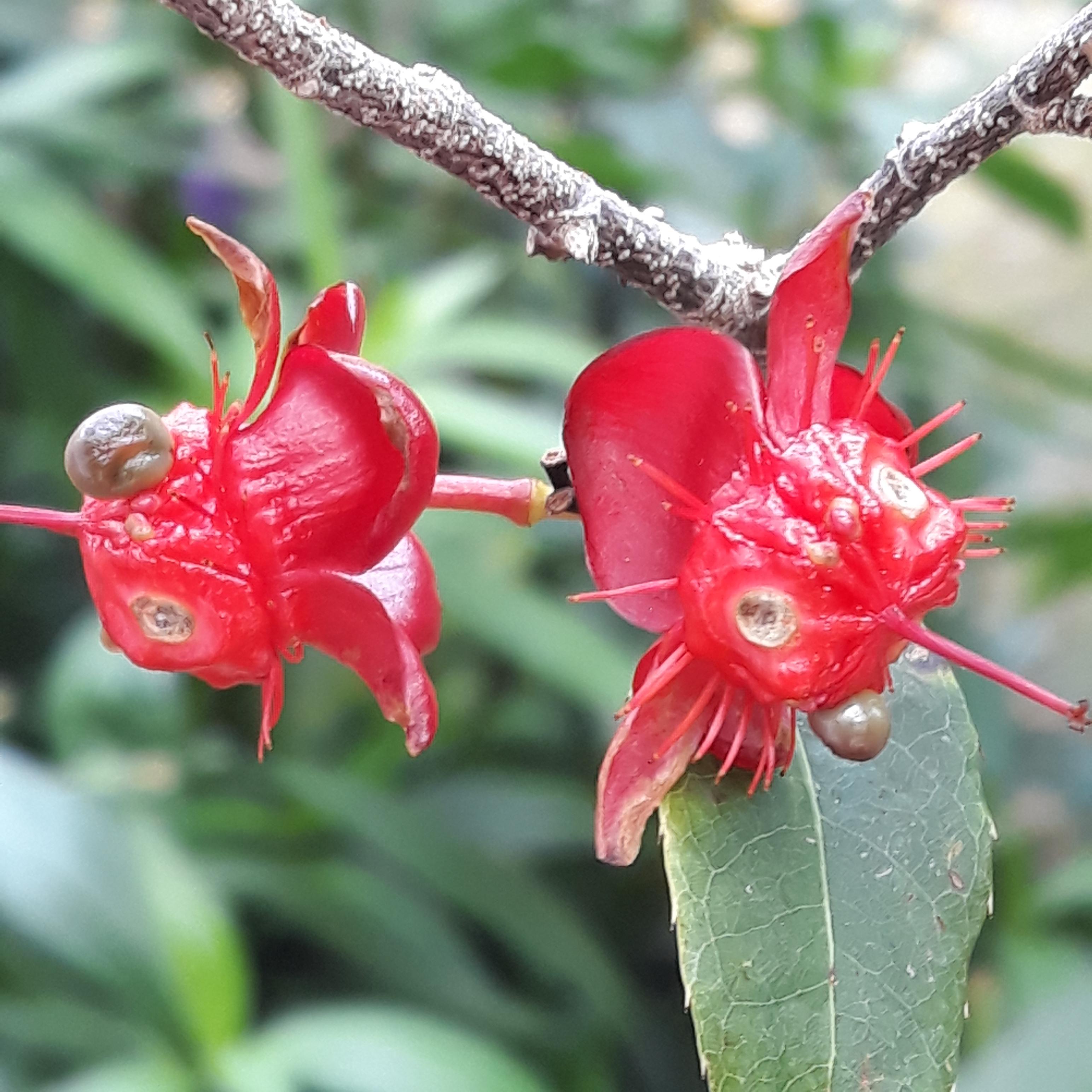
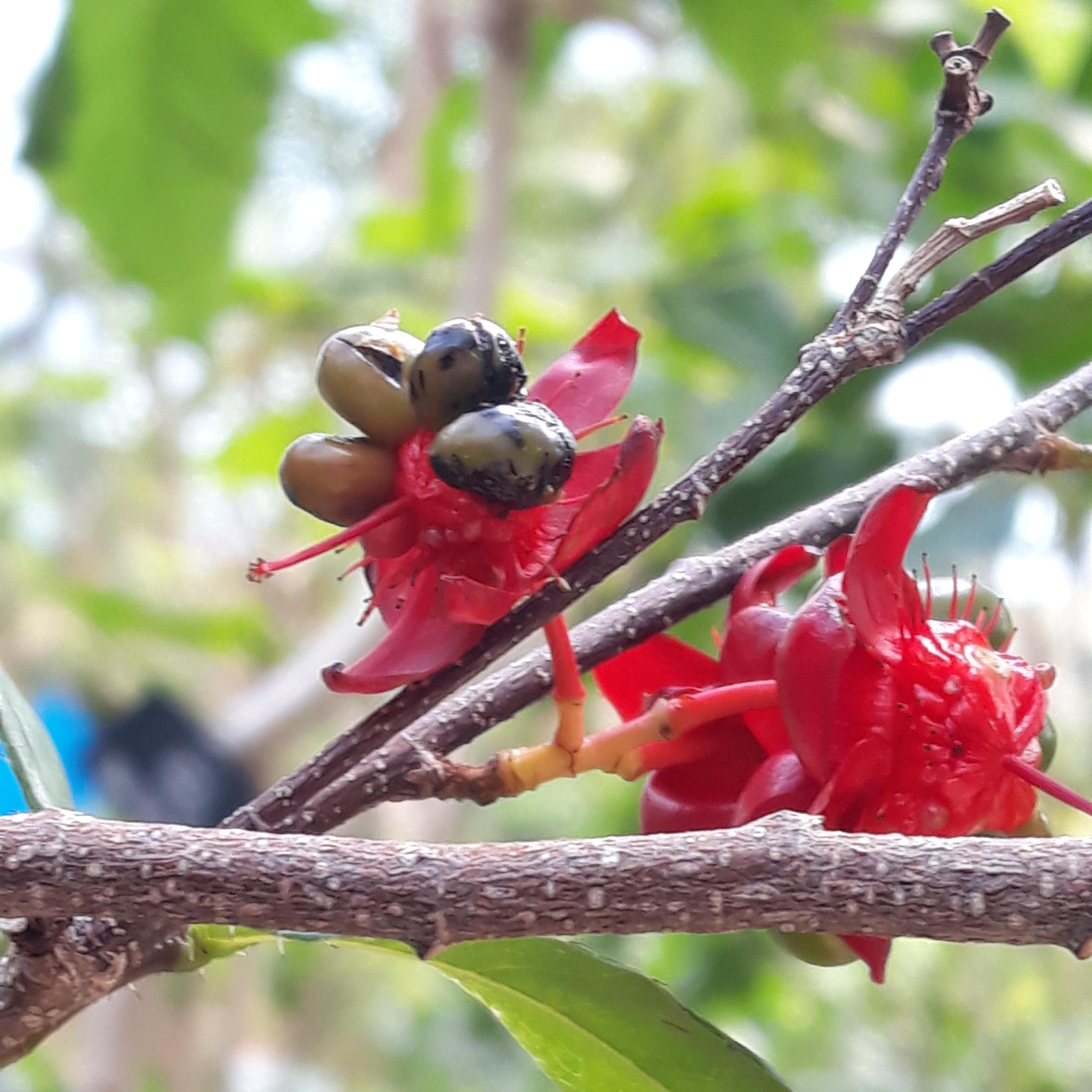
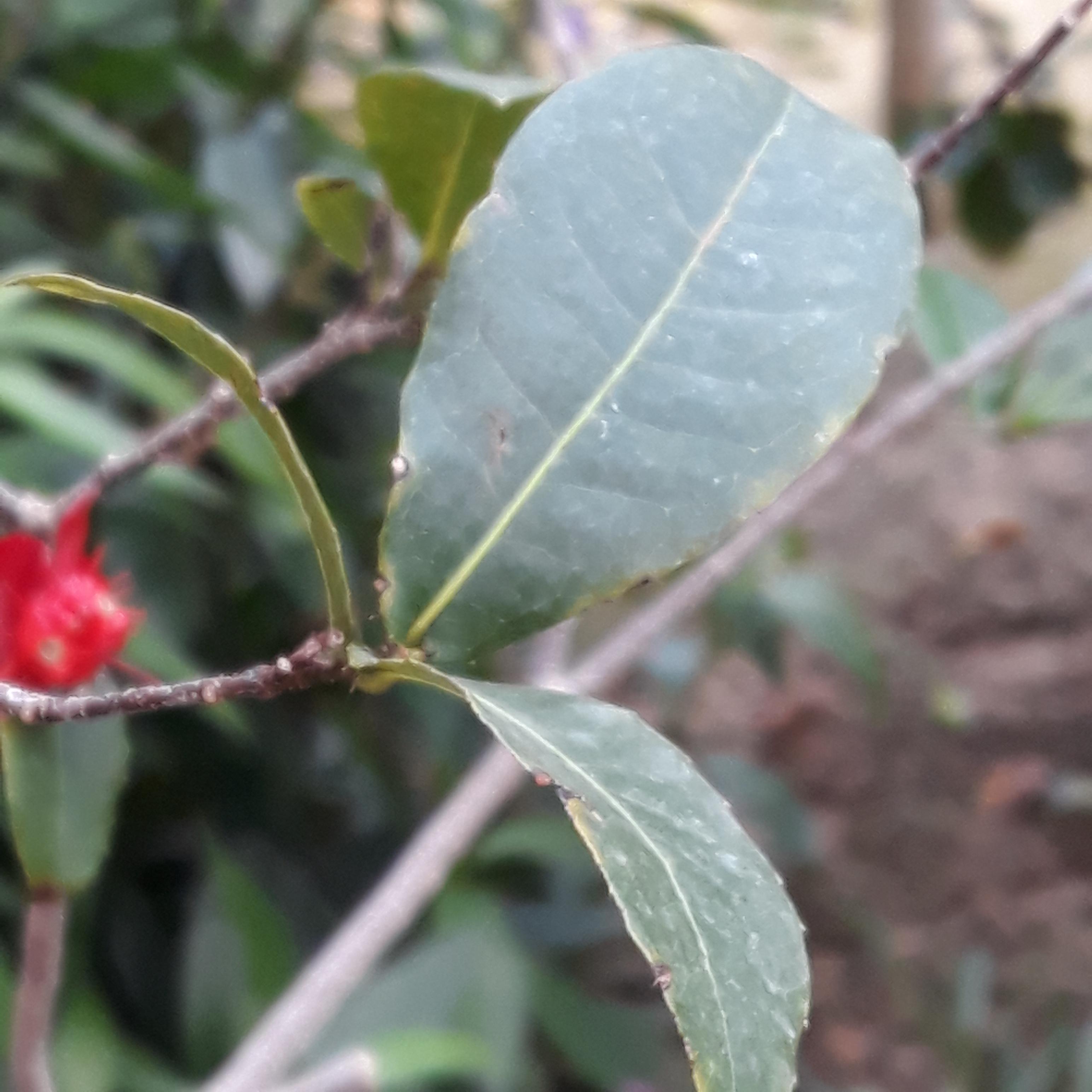

Ochna thomasiana와 Ochna kirkii의 차이 설명
Ochna thomasiana
Description: "Shrub to 15 feet tall; twigs reddish brown with whitish warts (lenticels). Leaves sessile; blades ± broadly elliptic, 1.25-2 inches x 0.1-1 inch, base cordate and clasping stem (auriculate), ciliate, margins undulate, apex tapering and mucronate. Inflorescence a cluster of lowers, terminal on short lateral branches. Flower sepals green; petals obovate, less than 1 inch long, yellow; carpels to 12. Fruit flattened and ± cylindrical, black, erect on crimson to red receptacle with boat-shaped, reflexed red sepals" (Staples & Herbst, 2005; p. 437).
Compared to Ochna thomasiana, Ochna kirkii "has larger leaves (2-3.25 inches long, 0.75-1.25 inches wide) that are broadly oblong, oblanceolate, or obovate, provided with many cilia around the margin on mature leaves; and smaller fruiting sepals (0.4-0.5 inch long, 0.15-0.25 inch wide). Young leaves of O. thomasiana are ciliate around the entire margin, but at maturity only 5-8 cilia persist near the blade base" (Staples & Herbst, 2005; p. 437).
http://www.hear.org/pier/species/ochna_thomasiana.htm
설명
Plant type: An ornamental perennial shrub or small tree.
Features: Ochna kirkii is an attractive species among 86 species of evergreen trees and shrubs in the genus Ochna. It’s a slow-growing perennial and evergreen woody shrub that’s somewhat large or small tree that ranges between 1.5-4.5 m in height, with spreading and woody branches covered with lenticels.
Its dense foliage is leathery, glossy and dark green, with young leaves emerging light green or have a coppery tinge. The leaves are alternate, oblong-elliptic to narrowly obovate in shape, usually between 5-12 cm long and lined with numerous cilia along the margin.
In optimum growing conditions, it can be a year-round flowering and fruiting shrub, It produces bright yellow 5-petaled single flowers in axillary and terminal clusters. Each flower is 3.8-5.1 cm in diameter, cupped by pale-green or lemon-coloured sepals (calyx) and has a cluster of yellow stamens with orange anthers in the center.
However, more spectacular is the colourful flowering and fruiting sequence of the shrub. As the flower petals wither or are shed, the calyx closes up like a flower bud once again and gradually changes in colour to peach and deepen to tea rose. Within it, the fruit that comprised of 1-6 green berry-like drupelets develop on a swollen receptacle.
As the berries get bigger, the calyx turns blood red and reopens to expose the immature green drupelets, sitting erect around the long and red style, on the waxy and fleshy red disk and surrounded by the persistent stamens and petal-like sepals.
Some of the unripe ovoid drupelets (1.2 cm long) may fall prematurely while others may continue to ripen to become fleshy and glossy black berries, resembling Mickey Mouse face (especially its pair of black ears), hence the plant’s common name, Mickey Mouse Plant. Some species of birds find the ripe fruit palatable. Each ripe drupelet contains a single seed and can be used for propagation.
The bright red sepals that are often mistaken as the plant’s flower petals are Flower-like red calyxes of Ochna kirkii long-lasting and remain long after the berries are gone.
Thus, the Mickey Mouse Plant commands attention! You get to see yellow and ‘red’ flowers, colourful buds, as well as green and black berries, all at the same time adorning its shrub! Fascinating, right?
Unfortunately, the ripe black berries are highly attractive to birds too and thus seeds are easily dispersed and naturalized. This plant is now declared as an invasive horticultural plant in Hawaii and probably a noxious weed in other regions of the world.
There’s a similar species, Ochna serrulata (Mickey Mouse Bush, Small-leaved Plane), a plant that is declared an environmental weed in Queensland and New South Wales, Australia. In comparison, this species has relatively smaller leaves, 2-6 cm long, and are elongated or narrowly oval in shape, with smaller fragrant flowers, 2-3 cm across, that usually hang downwards.
Yet another similar species is Ochna integerrima (Vietnamese Mickey Mouse Plant) that flowers prolifically during ‘Tet‘, the traditional Vietnamese New Year, especially in winter. A deciduous tree that is known to be relatively cold hardy to light freeze with leaves that are wider than the narrow leaves of O. serrulata.
•Culture (Care): Ochna kirkii is relatively easy to grow and requires minimum maintenance.
Light: Partial to full sun.
Moisture: Medium water requirements. Best to water regularly for optimum growth.
Soil: Prefers well drained and fertile soils.
Others: The shrub can be trained to grow into a small tree or pruned to form a hedge. Regular pruning helps to maintain bushiness and encourage flowering. Feed once fortnightly with a balanced fertilizer. Watch out for common pests that include scales, mealybugs and thrips.
For subtropical and temperate regions: Hardiness: USDA Zone 9b-11. Winter hardy to 25°F (-3.8°C). Flowers from late spring or early summer. In colder regions, best to plant it in container as patio plant that can be easily overwintered indoors. To propagate, sow seed indoors before last frost.
•Propagation: By seeds that germinate easily.
•Usage: Potted Ochna kirkii (Mickey Mouse Plant, Bird's Eye Bush) in the neighbourhood.Adorned with colourful flowers and unusual fruits, Ochna kirkii or Mickey Mouse Plant will definitely make great specimen plants for gardens, landscapes and parks. An ideal plant as flowering hedges in home gardens, residential and urban areas too. Besides, it is suitable for container gardening, housed in large pots to decorate porches, decks and patios. Grow it if you’re a nature lover to attract birds, butterflies and bees to your garden.
Ochna kirkii 사진과 설명 참조 사이트
https://www.jaycjayc.com/ochna-kirkii-mickey-mouse-plant/#.YHJqAEl7nmQ
Ochna kirkii 퍼온 사진

Ochna kirkii는 잎의 침상거치가 잎 거의 전체에 걸쳐 있다.
Ochna thomasiana는 대체로 침상거치가 드물고 대부분 엽신 기부에 있다
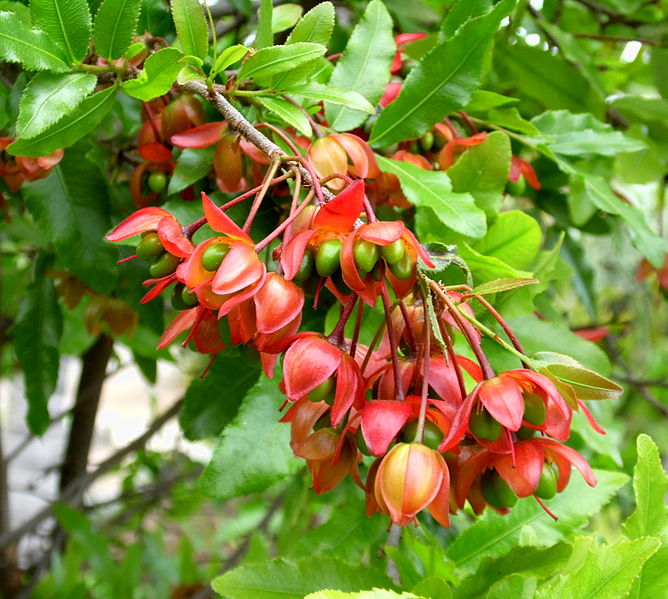
출처 commons.wikimedia.org/wiki/File:Ochna_kirkii_kz4.JPG

'원예.재배식물 > O-Z' 카테고리의 다른 글
| Seashore Mangosteen (0) | 2026.05.10 |
|---|---|
| Snowberry (0) | 2026.05.08 |
| Sanchezia speciosa(금엽목) (3) (0) | 2026.02.26 |
| Streptocarpus saxorum (4) (0) | 2026.02.25 |
| Sphaeropteris cooperi(나무고사리 종류) (0) | 2026.02.13 |