모나르다 (3)(M. fistulosa와 M. didyma 구별)
https://daehyo49.tistory.com/7817040
모나르다(2)
https://daehyo49.tistory.com/7815470
모나르다(1)
https://daehyo49.tistory.com/7808013
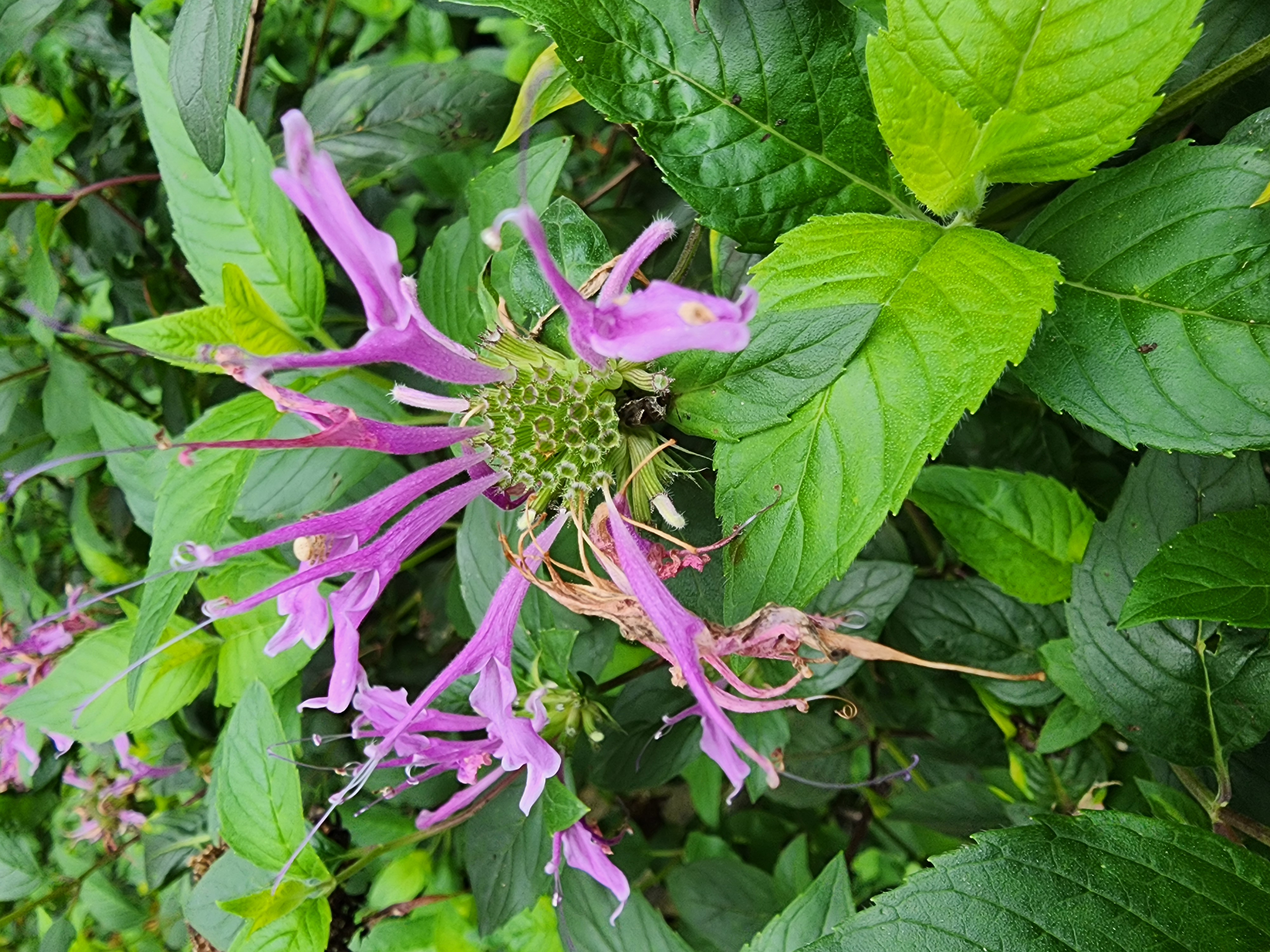
A. Monarda fistulosa
학명 : Monarda fistulosa L.
분류 : 꿀풀과(Lamiaceae)
Common Name :Wild Bergamot ; Bee balm
사진 : 2025.08.29 한택식물원
국내에선 Monarda속은 보통 종을 구분하지 않고 있지만 구분하자면 아래 것들은 모두 M. fistulosa로 보인다
FOC 검색표에선 화관도 동정 포인트인데 사진으로는 잘 볼 수 없기에 꽃색과 꽃받침 털로 구분하는 것이 제일 무난할 것이다

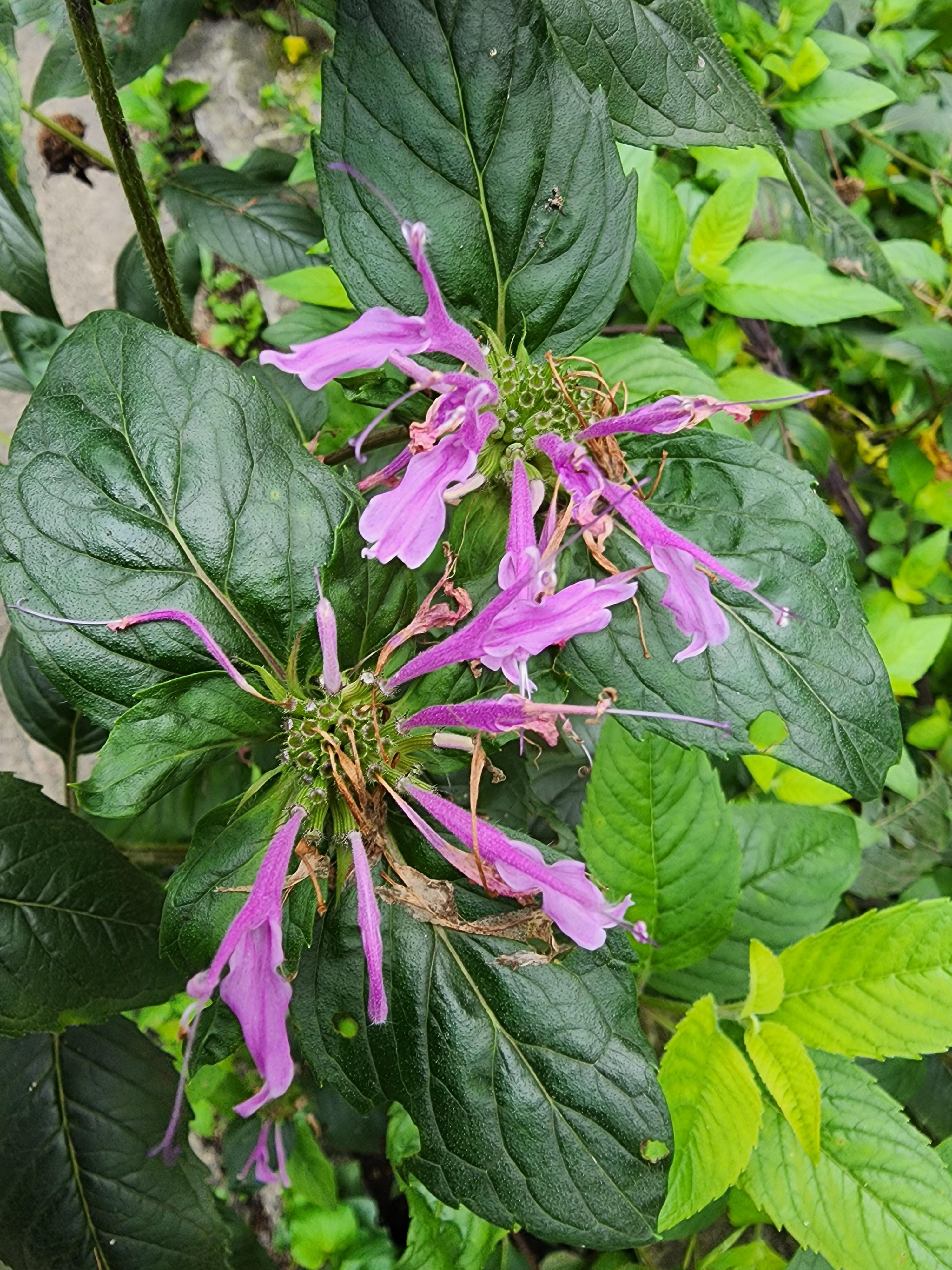
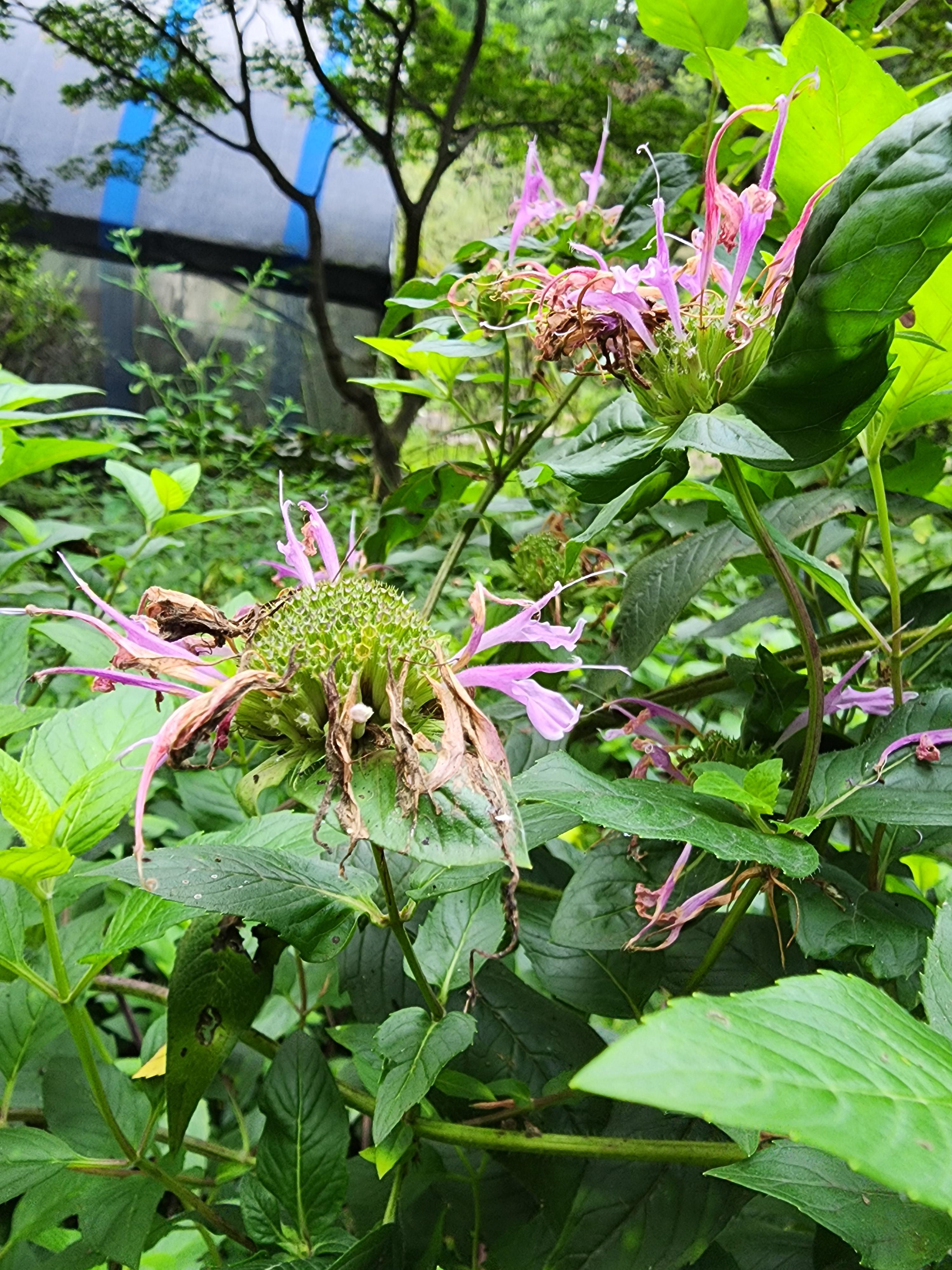
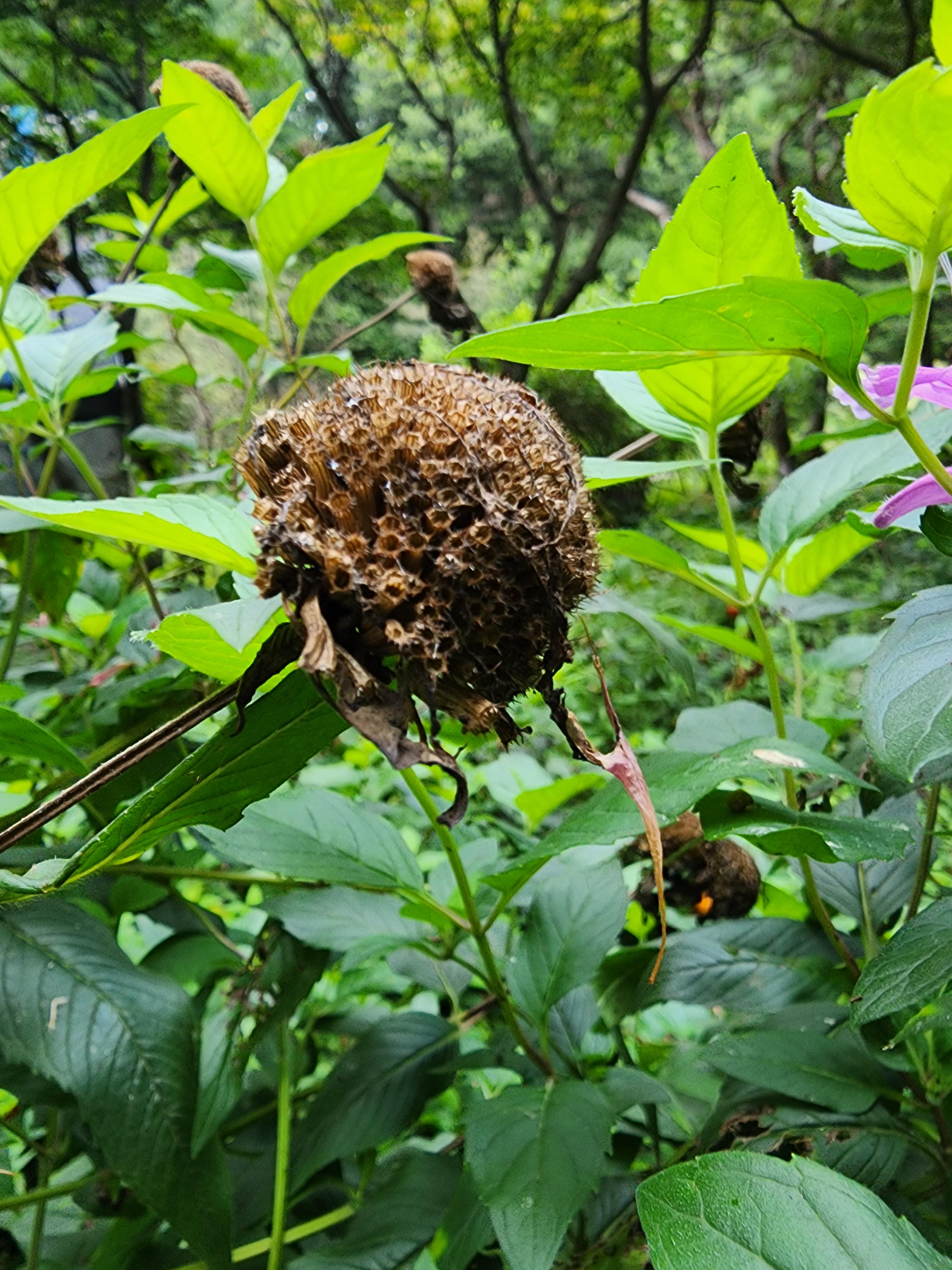
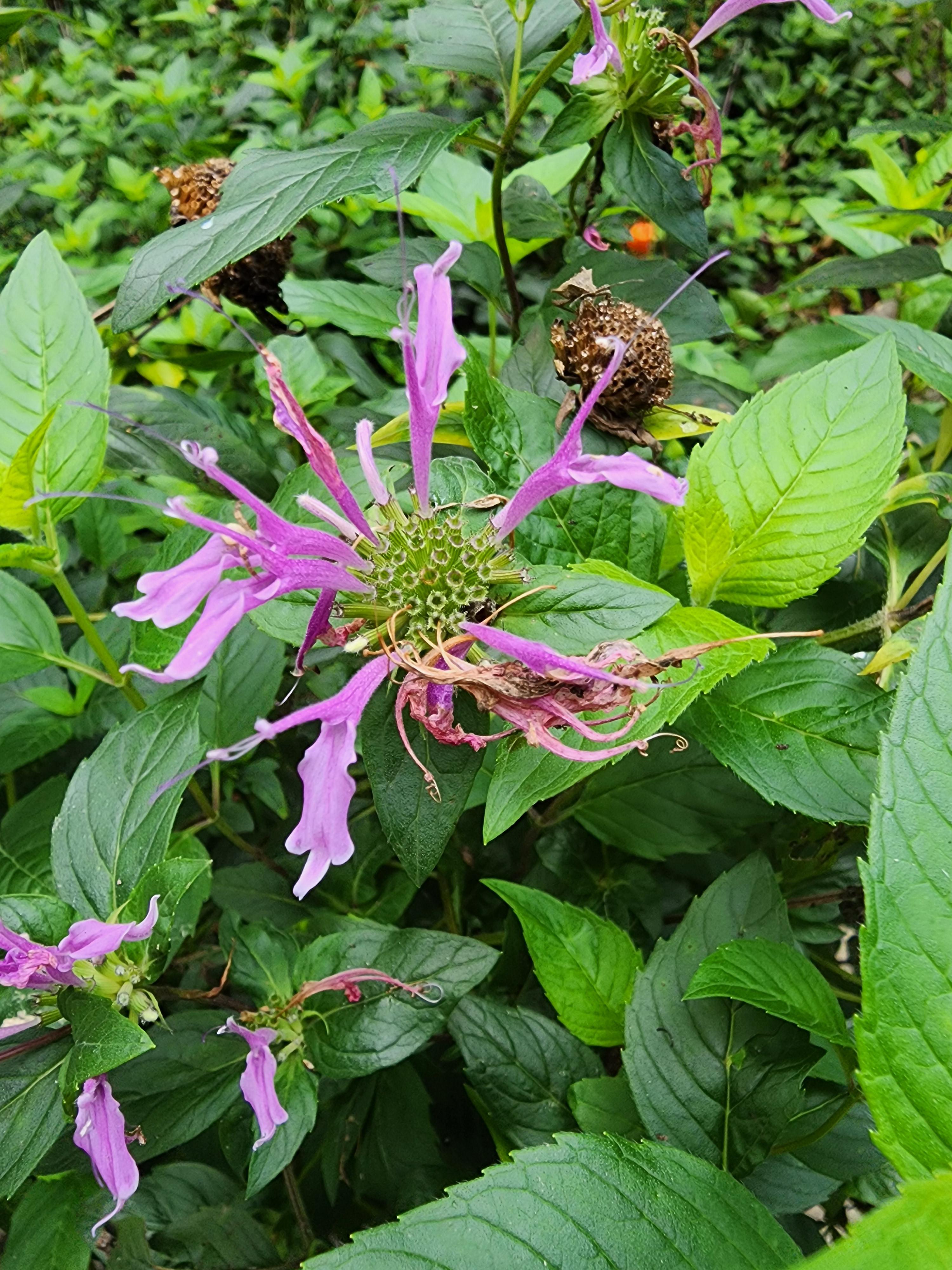
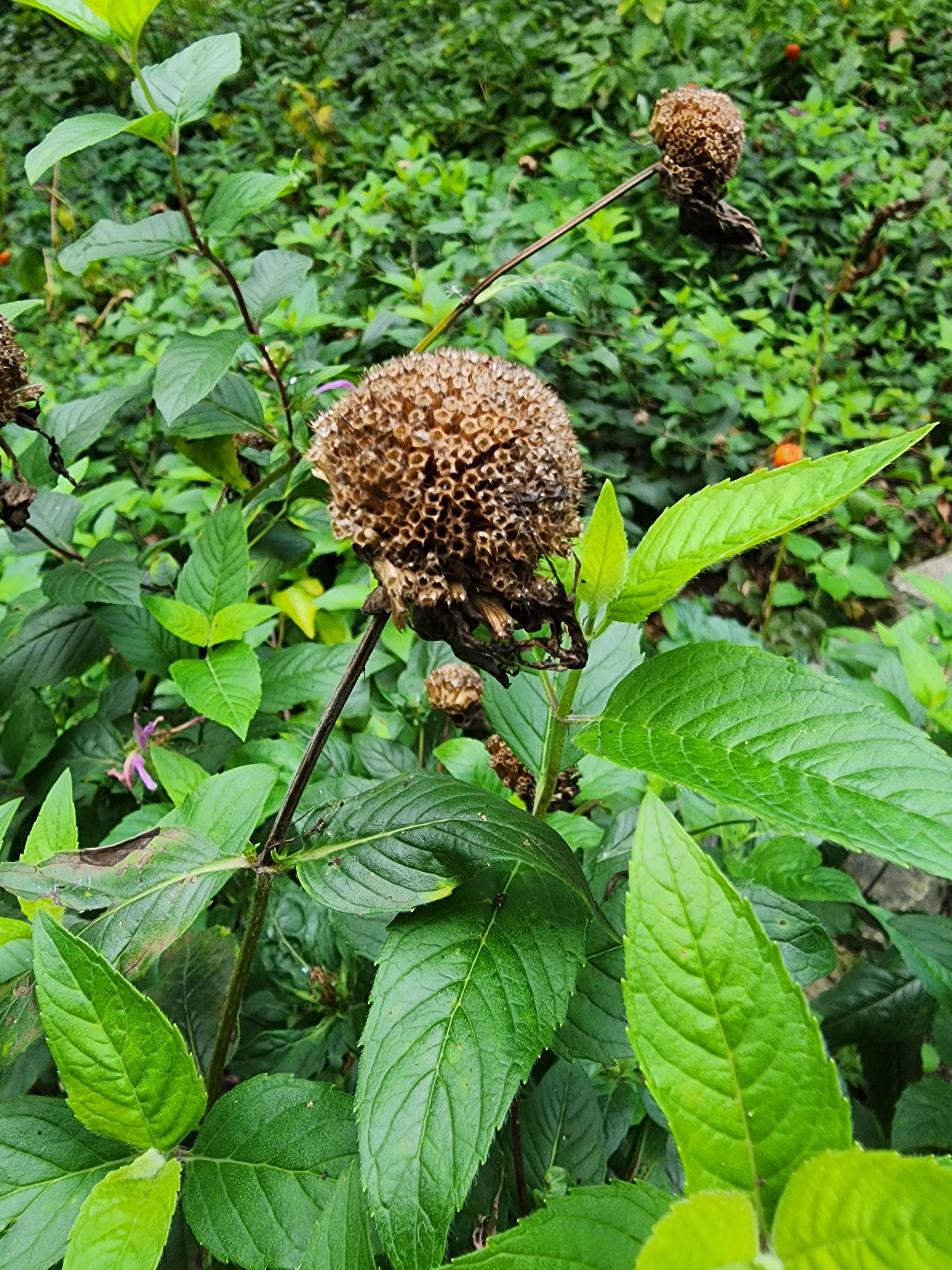
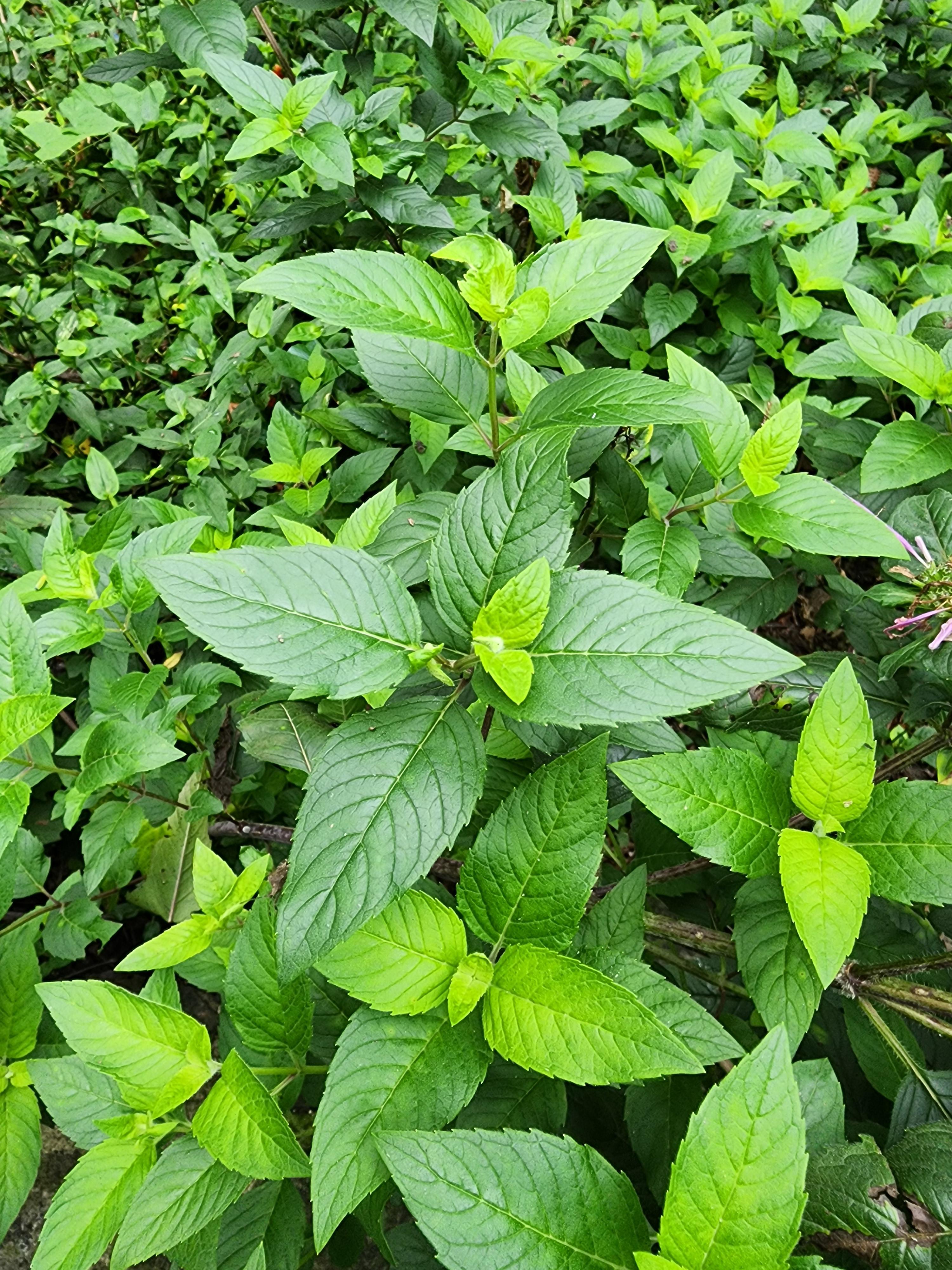
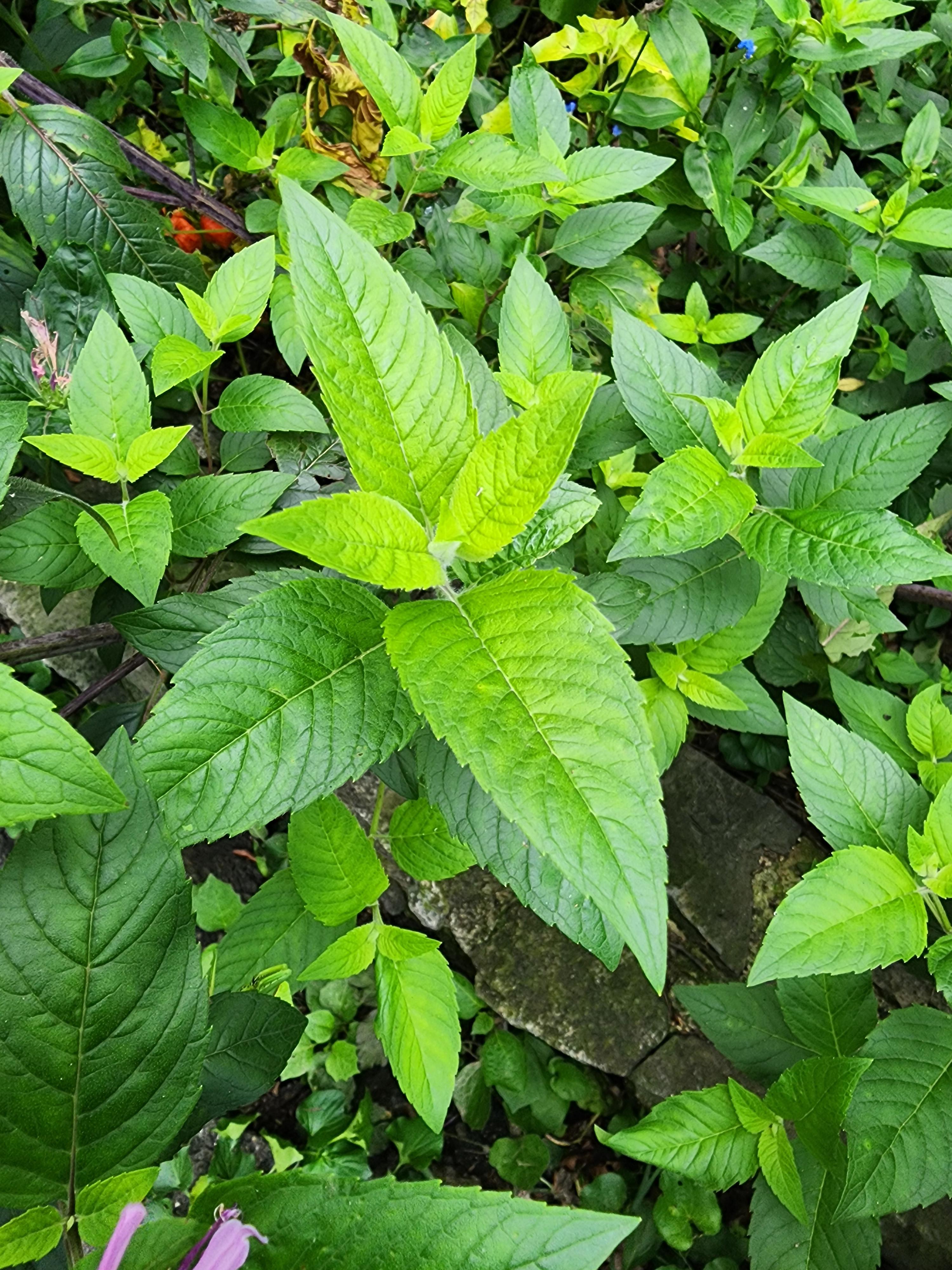
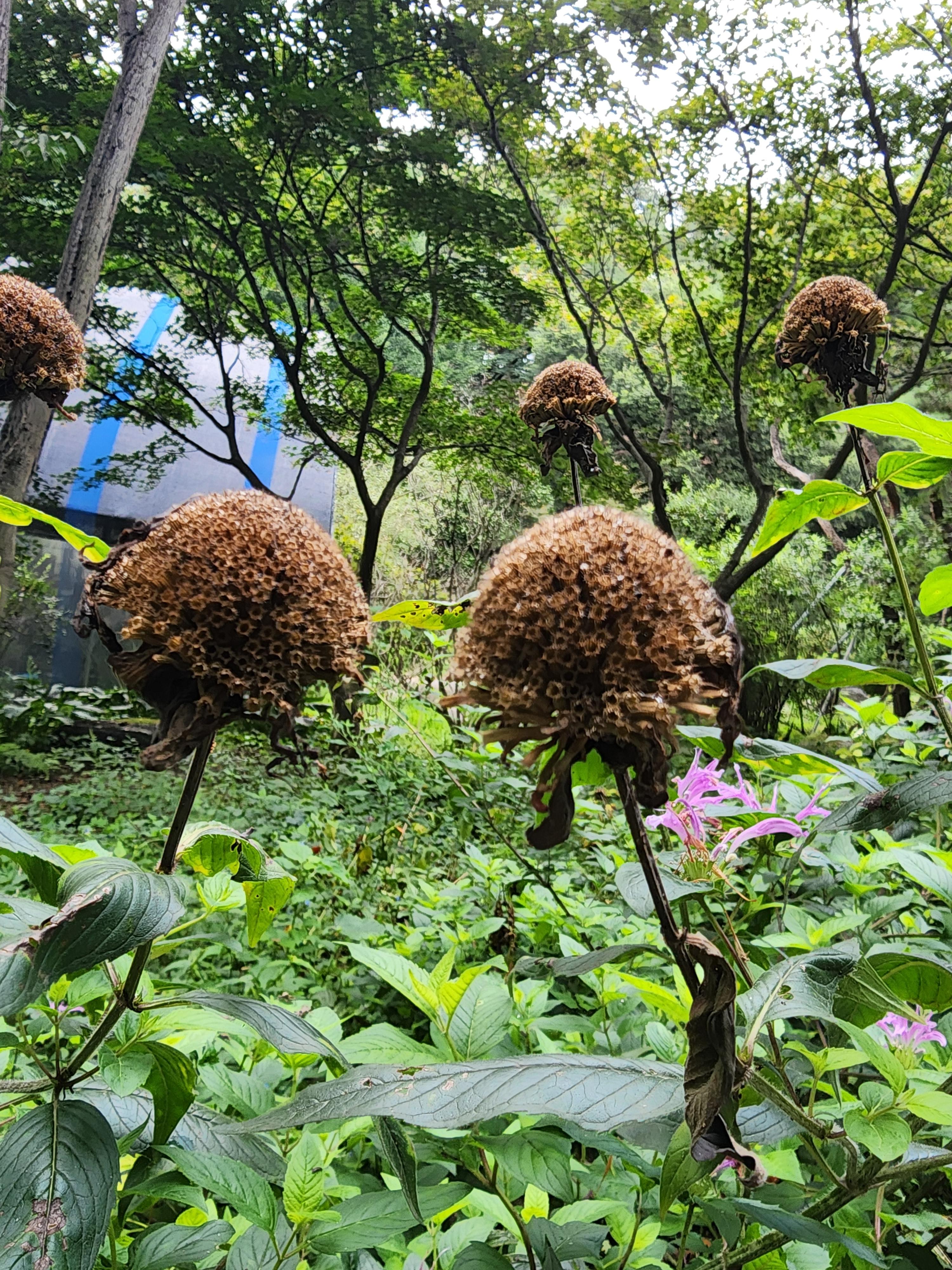

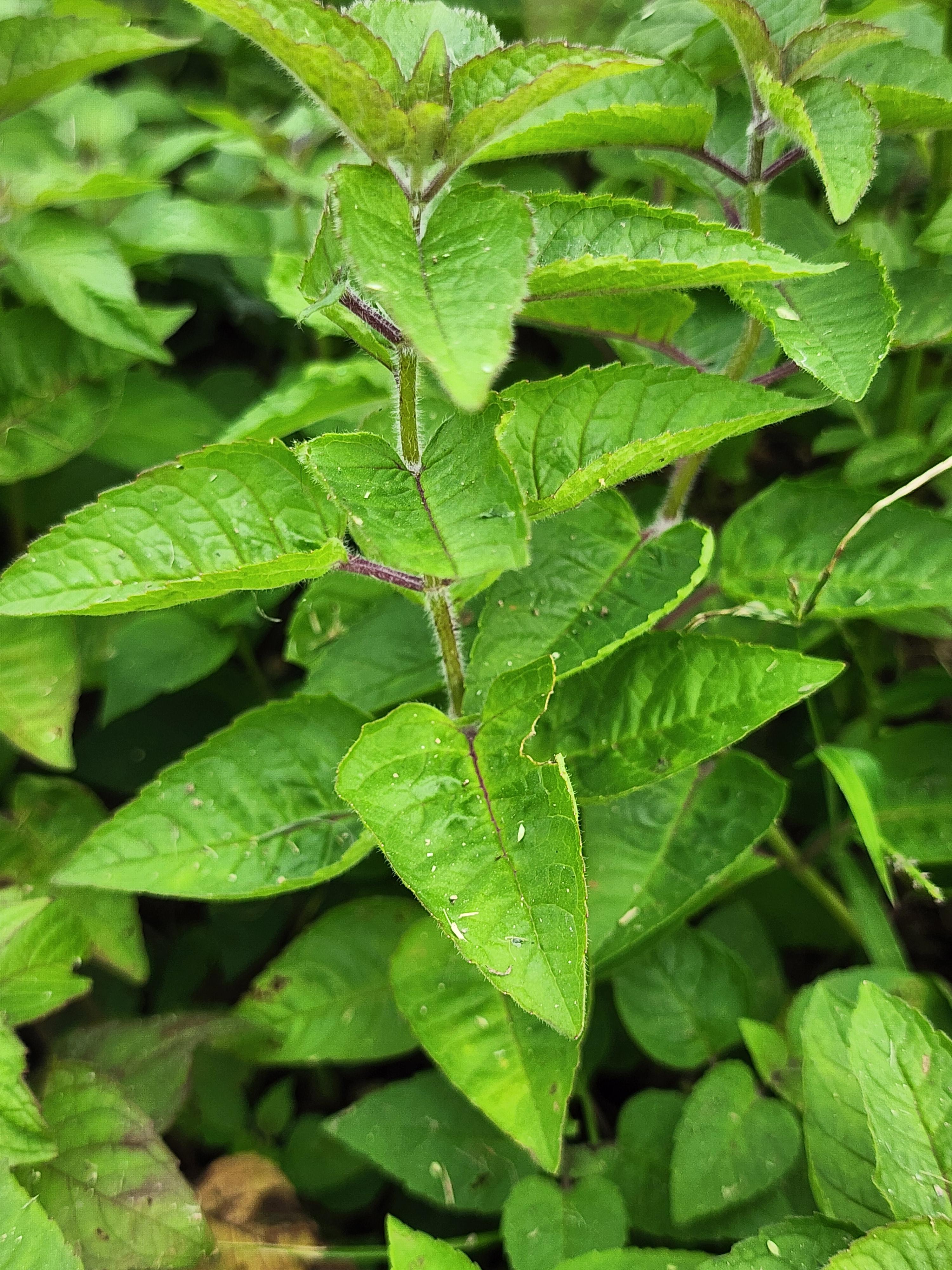
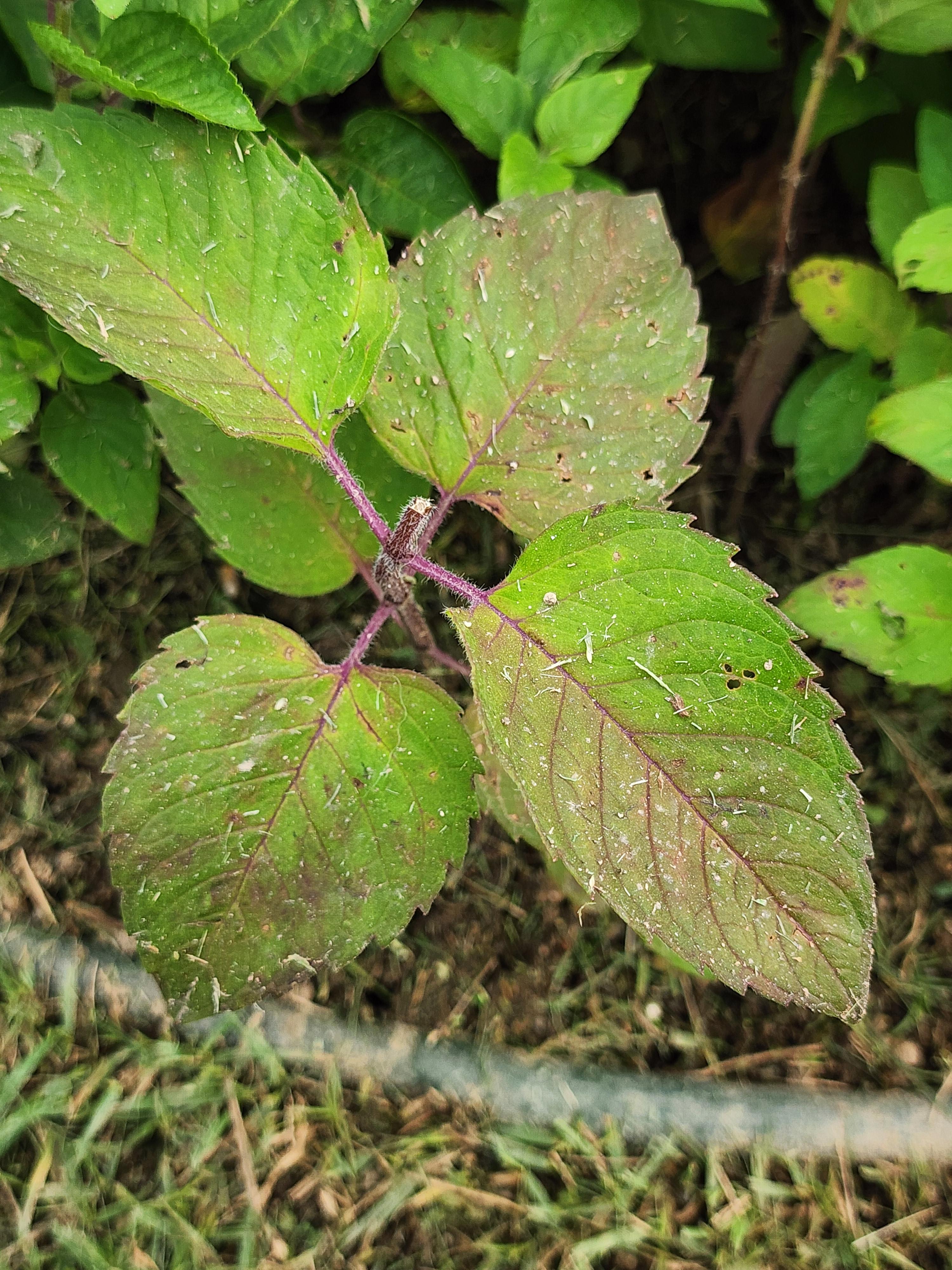
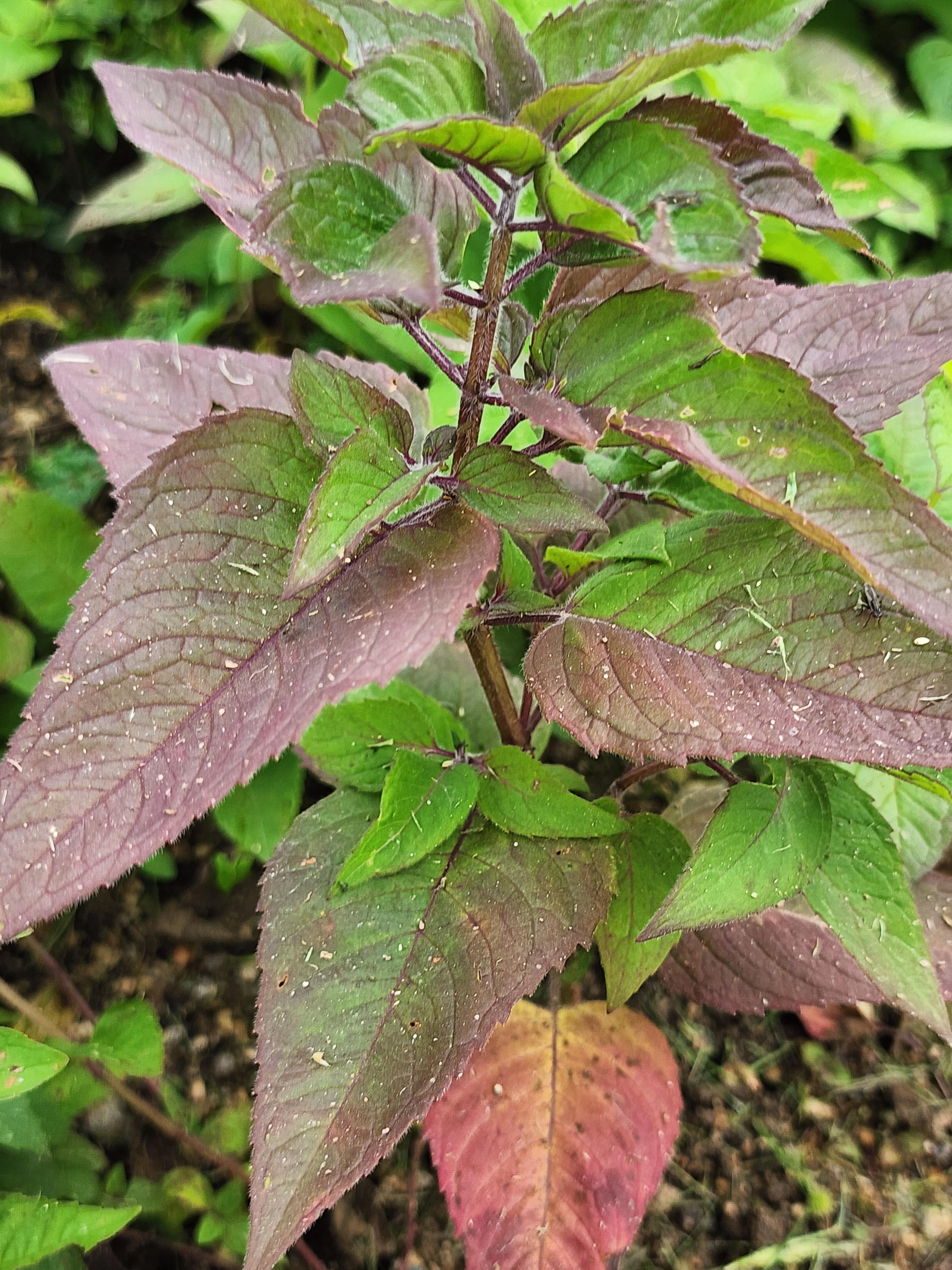
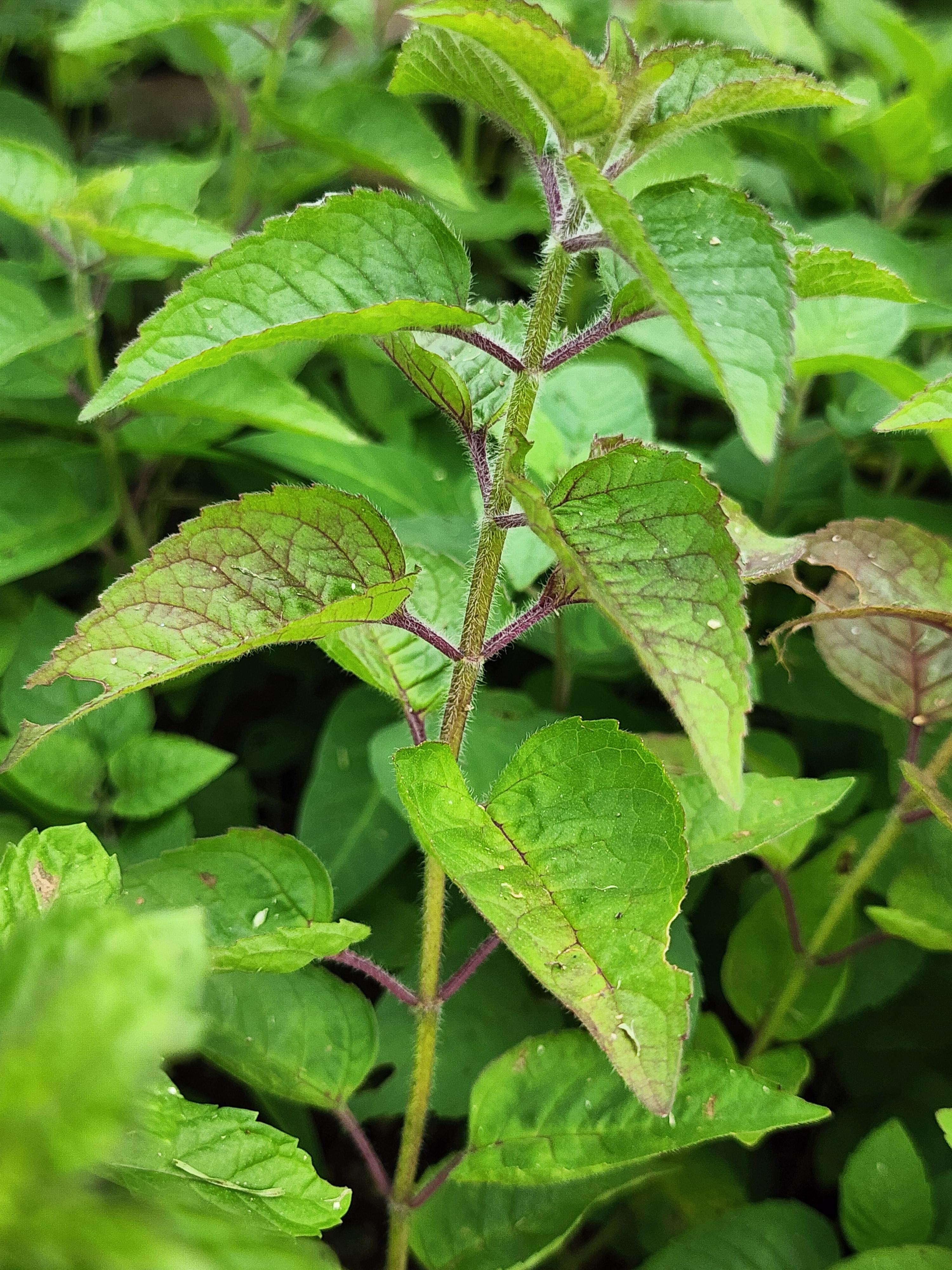
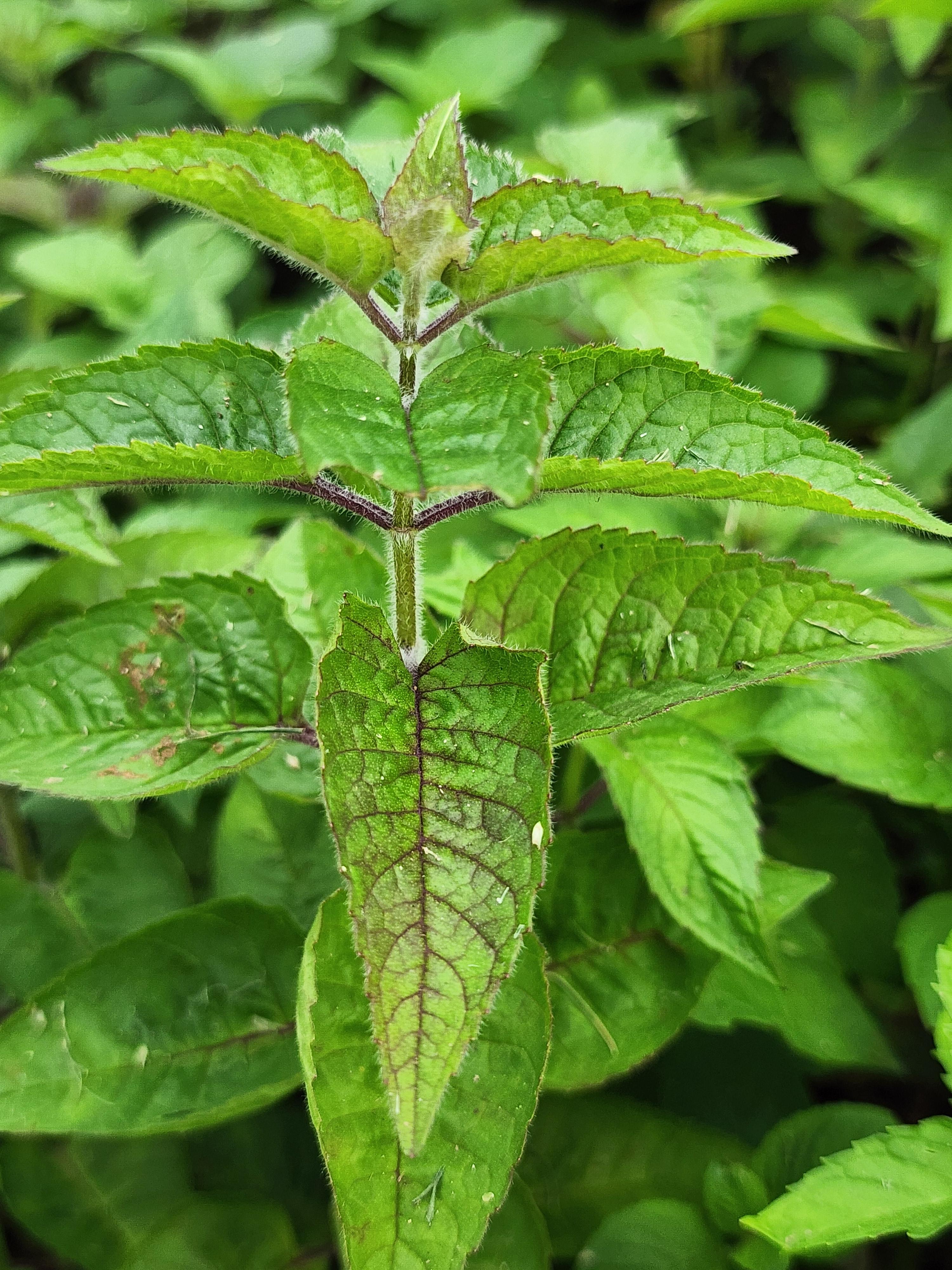
아래 : 2025.09.30 강동구 일자산 허브천문공원
안내판에는 Monarda didyma로 되어 있지만 줄기와 엽병의 털로 보아서는 Monarda fistlosa로 보인다

...........................................
B. Monaeda didyma
학명 : Monarda didyma L.
분류 : 꿀풀과(Lamiaceae)
사진: 2025.08.29 한택식물원
위의 Monarda fistulosa와 좀 떨어진 장소에 있던 것이다
표지판에 품종 'Cambridge Scarlet'으로 되어 있다 Monarda didyma의 품종이다
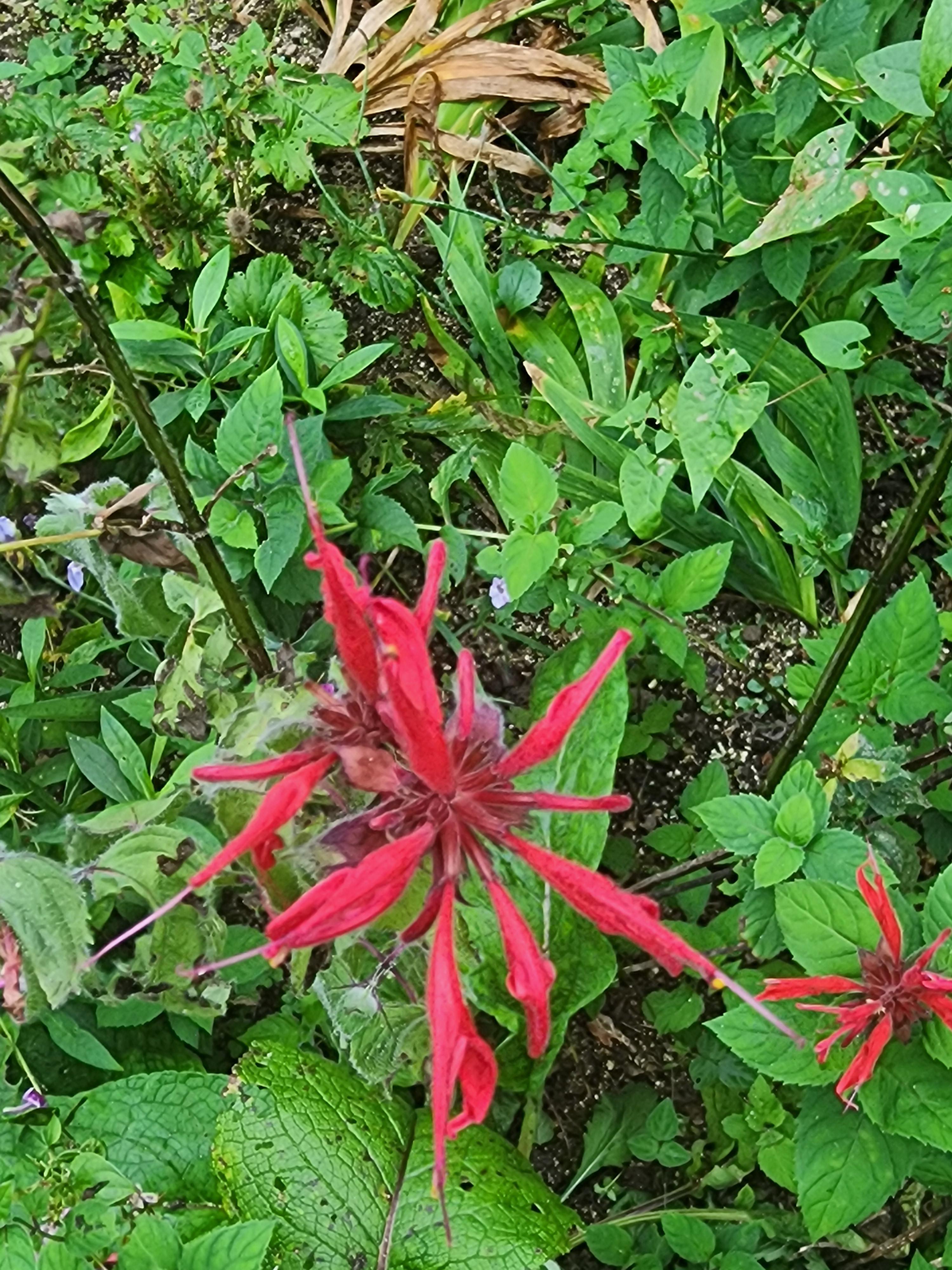
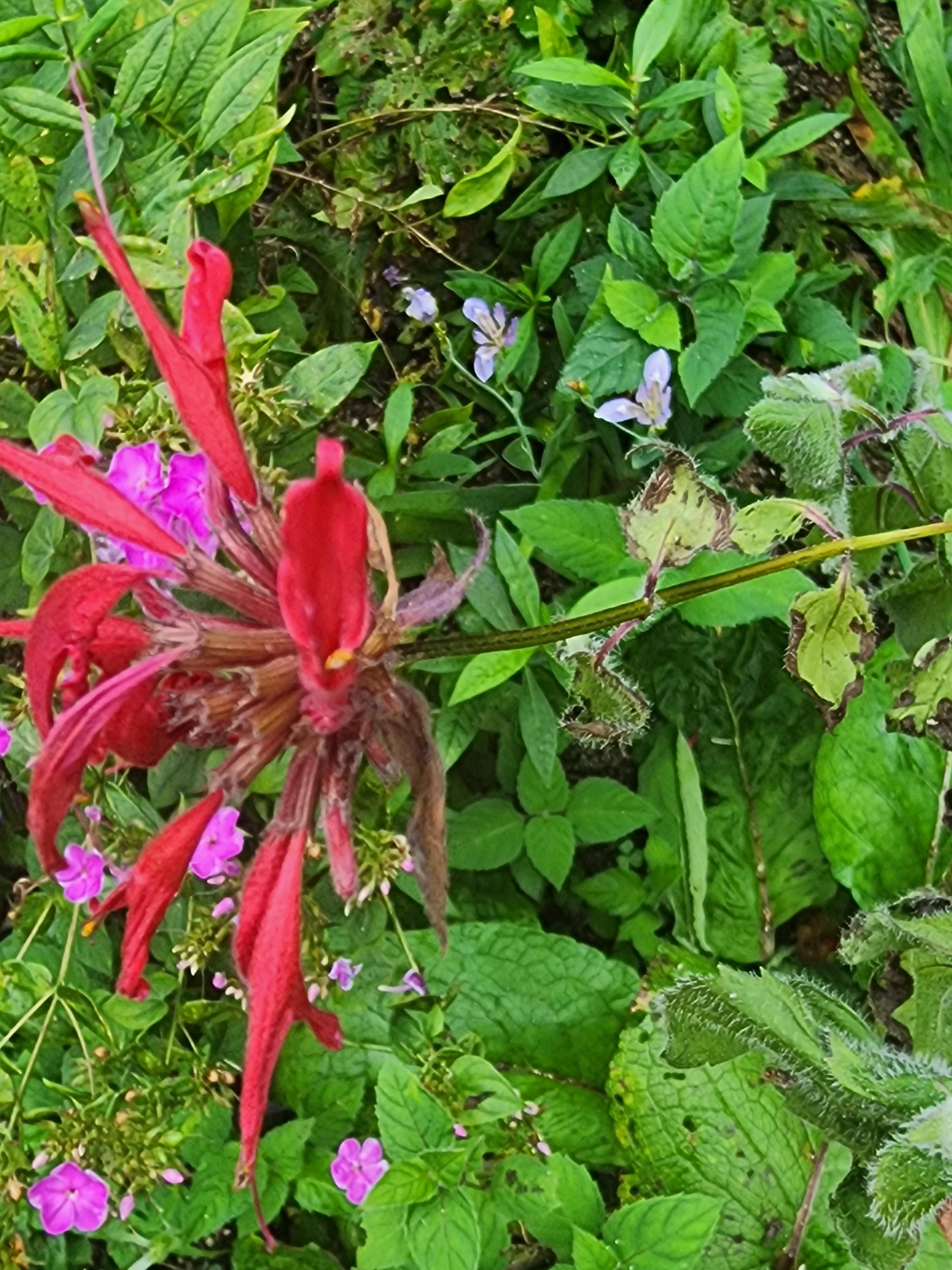

관찰 : 포가 붉은 색이다

Monarda속에 대한 위키 설명
Monarda is a genus of flowering plants in the mint family, Lamiaceae.[3] The genus is endemic to North America.[2][4] Common names include bergamot, bee balm, horsemint, and oswego tea, the first being inspired by the fragrance of the leaves, which is reminiscent of bergamot orange (Citrus bergamia). The genus was named for the Spanish botanist Nicolás Monardes, who wrote a book in 1574 describing plants of the New World.
Description
Monarda species include annual and perennial herbaceous plants. They grow erect to heights of 20–90 cm (8–35 in). The slender, serrated, lanceolate leaves are oppositely arranged on the square stem, hairless or sparsely hairy, and about 7–14 cm (2.8–5.5 in) long.
The flowers are tubular and bilaterally symmetric, with a narrow upper lip and a wider lower lip. The wild flowers are single, but some cultivated forms have double flowers. They are monoecious, with male and female structures in each flower. There are two stamens. Inflorescences occur at the top of the stem or emerge from the axils. They are typically crowded head-like clusters of flowers with leafy bracts. Flower color varies, with wild species bearing red, pink, and light purple flowers. M. didyma has bright carmine red flowers, M. fistulosa has pink, and M. citriodora and M. pectinata have pale purple. Hybrids occur in the wild, and they are common in cultivation. Seed collected from hybrids does not yield plants identical to the parent.[5][6]
Uses
The crushed leaves of all species exude a spicy, fragrant essential oil. Of the species examined in one study, M. didyma contained the highest concentration of oil.[7]
............ 하략 ...................
https://en.wikipedia.org/wiki/Monarda
Monarda fistulosa와 Monarda didyma의 구별에 대한 자료
1) FOC 검색표
1. Calyx throat densely white bearded;
upper corolla lip slightly recurved inward;
stem obtusely 4-angled
...................... Monarda fistulosa
1. Calyx throat sparsely hirsute;
upper corolla lip slightly recurved outward;
stem acutely 4-angled
...................... Monarda didyma
2) 인터넷 검색 자료
What is the difference between Monarda didyma and Monarda fistulosa?
Monarda didyma and Monarda fistulosa are two species of plants that belong to the genus Monarda in the mint family. While they share some similarities, there are several distinct differences between them.
1. Flower Color: One of the most noticeable differences between Monarda didyma and Monarda fistulosa is the color of their flowers. Monarda didyma, also known as bee balm or scarlet bee balm, has vibrant scarlet-red flowers. These flowers are surrounded by red-tinged bracts, which are leaf-like structures that protect the flowers. On the other hand, Monarda fistulosa, commonly called wild bergamot, features light lavender to pinkish-white flowers. These flowers are often surrounded by bracts that are tinted with pink.
2. Growth Habit: Monarda didyma and Monarda fistulosa also differ in their growth habits. Monarda didyma is a clump-forming perennial that can grow up to 3-4 feet tall. It has a spreading nature and can quickly fill in a garden space. Monarda fistulosa, on the other hand, is a more upright and compact plant, typically growing to a height of 2-4 feet. Its growth habit is more restrained compared to Monarda didyma.
3. Hardiness: Another important difference between these two Monarda species is their hardiness. Monarda didyma is native to eastern North America and is more commonly found in regions with a milder climate. It is not as tolerant of cold temperatures and may require protection or mulching in colder regions. Monarda fistulosa, on the other hand, is native to a wider range of North America, including more northern regions. It is generally more cold-hardy and can withstand colder temperatures without much trouble.
4. Aroma and Medicinal Uses: Both Monarda didyma and Monarda fistulosa have aromatic leaves and flowers, but they differ slightly in their scent. Monarda didyma has a strong, spicy fragrance, while Monarda fistulosa has a milder, more citrusy aroma. Both species have a long history of medicinal use by Native American tribes. Monarda didyma has been traditionally used for treating colds, fevers, and digestive issues, while Monarda fistulosa has been used for its antiseptic and anti-inflammatory properties.
5. Cultivars and Hybrids: Monarda didyma and Monarda fistulosa have been extensively hybridized and cultivated, resulting in a wide range of cultivars and hybrids with various flower colors. Cultivars of Monarda didyma can be found in rich shades of red, violet, purple, pink, and white, providing a stunning array of options for gardeners. Monarda fistulosa cultivars are less common, but they can also exhibit variations in flower color, including shades of pink and lavender.
https://greenpacks.org/what-is-the-difference-between-monarda-didyma-and-monarda-fistulosa/
3) 위키페디아
Monarda didyma : bergamot
Monarda fistulsa : wild bergamot
M. didyma has bright carmine red flowers, M. fistulosa has pink,
FOC 세밀화

................................................................................................
아래는 퍼온 사진
Monarda fistulosa

Monarda didyma

퍼온 세밀화
M. didyma

M. fistlosa

FOC 기재문 비교
| Monarda didyma Linnaeus 美国薄荷 |
Monarda fistulosa Linnaeus 拟美国薄荷 |
Plants annual. Stems subglabrous, villous on nodes and at apex along angles, glabrescent. Petiole to 2.5 cm, nearly lacking apically, base slightly dilated; leaf blade ovate-lanceolate, to 10 × 4.5 cm, papery, adaxially villous or glabrescent, abaxially sparsely, impressed glandular, villous on veins, base rounded, margin unequally serrate, apex acuminate. Verticillasters in terminal capitula to 6 cm in diam.; bracts short petiolate, leaflike, margin entire, red, shorter than capitula; bracteoles linear-subulate, ca. 10 × 1.5 mm, long caudate, puberulent, red. Pedicel ca. 1 mm, puberulent. Calyx slightly curved, ca. 10 × 2.5 mm, purple-red when dry, veins pubescent, throat sparsely hirsute; teeth equal, subulate-triangular, ca. 1 mm, apex spinescent. Corolla purple-red, ca. 2.5 cm, puberulent; upper lip straight, slightly recurved outward, margin entire; lower lip spreading, with middle lobe narrower, emarginate. Fl. Jul. Cultivated in China [North America]. |
Plants annual. Stems reddish or ± purple-red spotted, branched apically, densely retrorse white pubescent, nodes glabrous or villous. Petiole 2-15 mm; leaf blade lanceolate-ovate to ovate, ca. 8 cm × 3 mm, base rounded to subtruncate, margin unequally serrate, apex acuminate. Verticillasters in terminal capitula to 5 cm in diam.; floral leaves leaflike, reduced, densely pubescent, glandular, short petiolate or subsessile, margin entire; bracteoles linear, ca. 1 cm, curved upward, pilose, glandular. Pedicel ca. 1 mm, puberulent. Calyx tubular, narrow, 7-9 mm, pubescent, brown glandular outside, white bearded at throat inside; teeth subulate, equal, ca. 1 mm, apex spinescent. Corolla purple-red, 3-4 × as long as calyx, densely pubescent, glandular; upper lip slightly recurved inward, entire; lower lip ± patent. Nutlets obovoid, truncate. Fl. Jun-Jul. Cultivated in China [North America]. |
Monarda didyma와 Monarda fistlosa의 비교 요약
| M. didyma (Bergamot) |
M. fistlosa (Wild Bergamot) |
|
| 꽃 색 | 대체로 심홍색 | 대체로 핑크색 |
| 줄기 | 털이 적다 털은 주로 마디에 있다 |
털이 많다 |
| 엽병 | 거의 털이 없다 | 털이 많다 |
| 악통, 화관 | 거의 털이 없다 | 털이 많다, 밀선이 있다 |
'원예.재배식물 > ㅁ-ㅅ' 카테고리의 다른 글
| 미스틱 스파이어 블루세이지 (0) | 2025.12.22 |
|---|---|
| Mint 종류 (잎과 화서) (0) | 2025.09.27 |
| 붉은숫잔대(홍화숫잔대)(2) (0) | 2025.09.04 |
| 산호유동 (2) (0) | 2025.09.01 |
| 멜람포디움(Melampodium)(3) (0) | 2025.08.26 |