동자꽃(1)
https://daehyo49.tistory.com/7813952
털동자꽃(2)(동자꽃속 검색표)
https://daehyo49.tistory.com/7810853
털동자꽃(1)
https://daehyo49.tistory.com/7807527
제비동자꽃 (2)
https://daehyo49.tistory.com/7817048
제비동자꽃 (1)
https://daehyo49.tistory.com/7807528
(비교) 갈기동자꽃(장구채속)
https://daehyo49.tistory.com/7813624
학명: Lychnis wilfordii (Regel) Maxim
분류: 석죽과(Caryophyllaceae)
중국어명 : 丝瓣剪秋罗
일어명 : エンビセンノウ(燕尾仙翁)
사진 : 2025.08.29 한택식물원
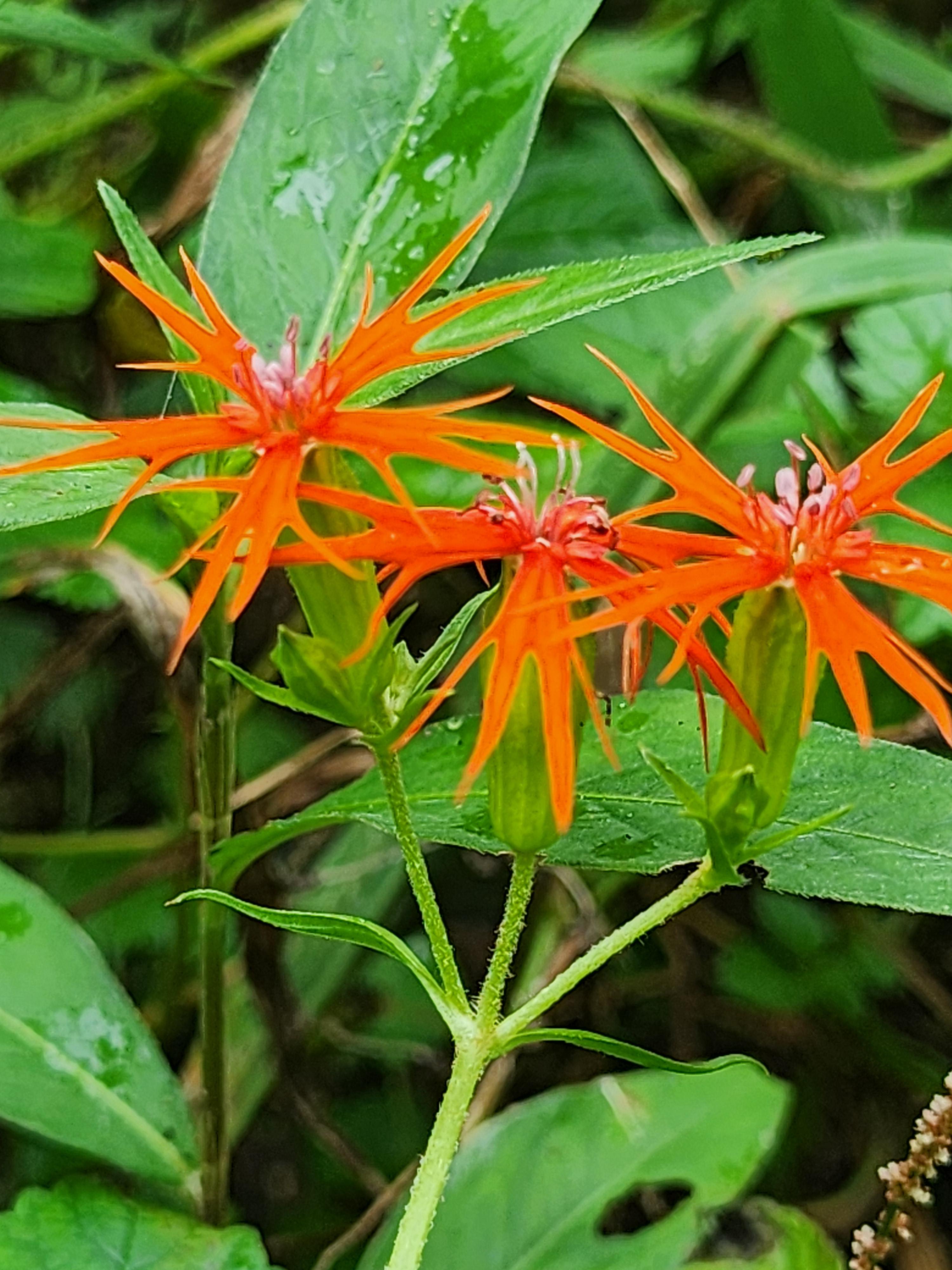
기산화서이다
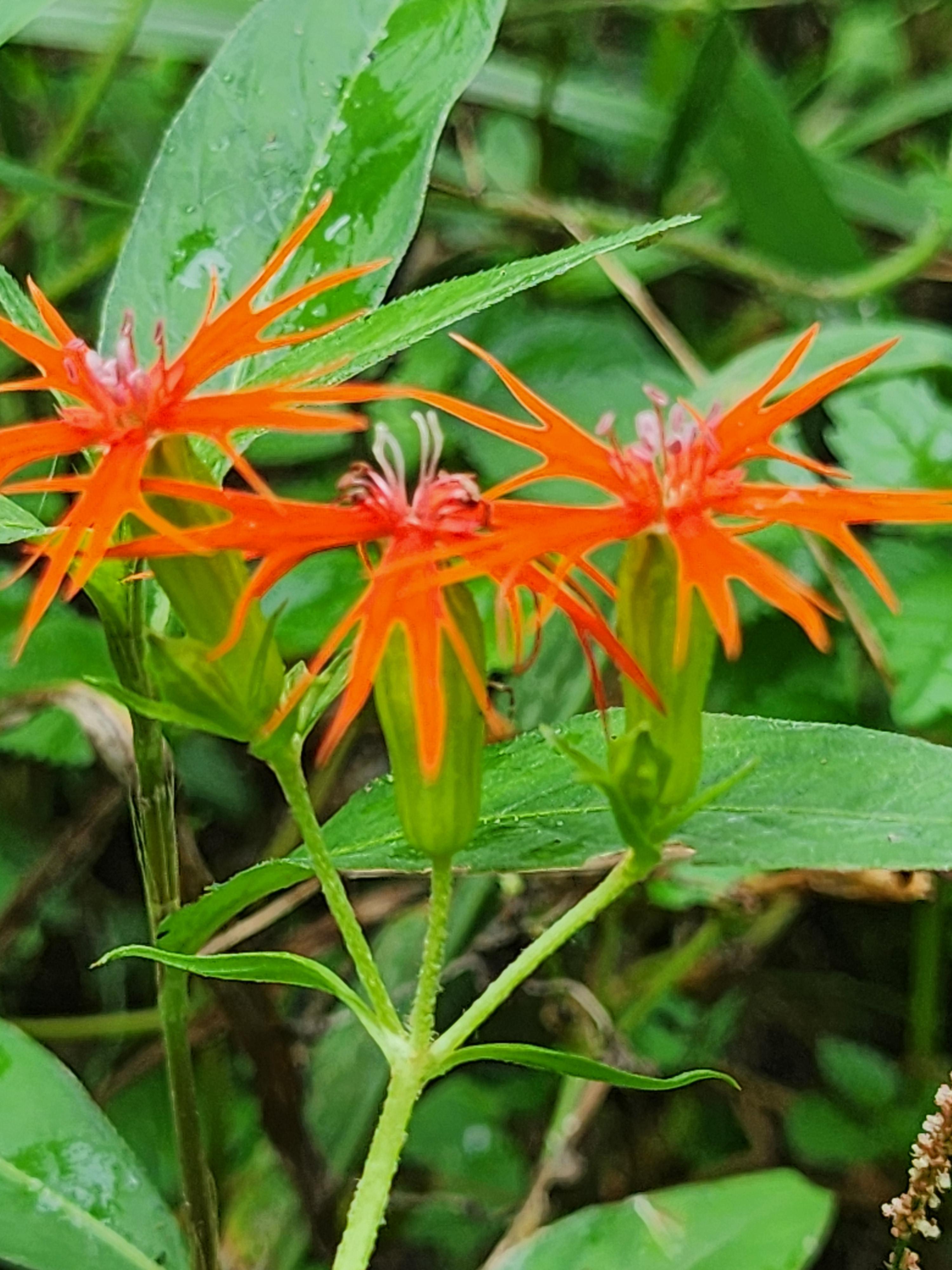

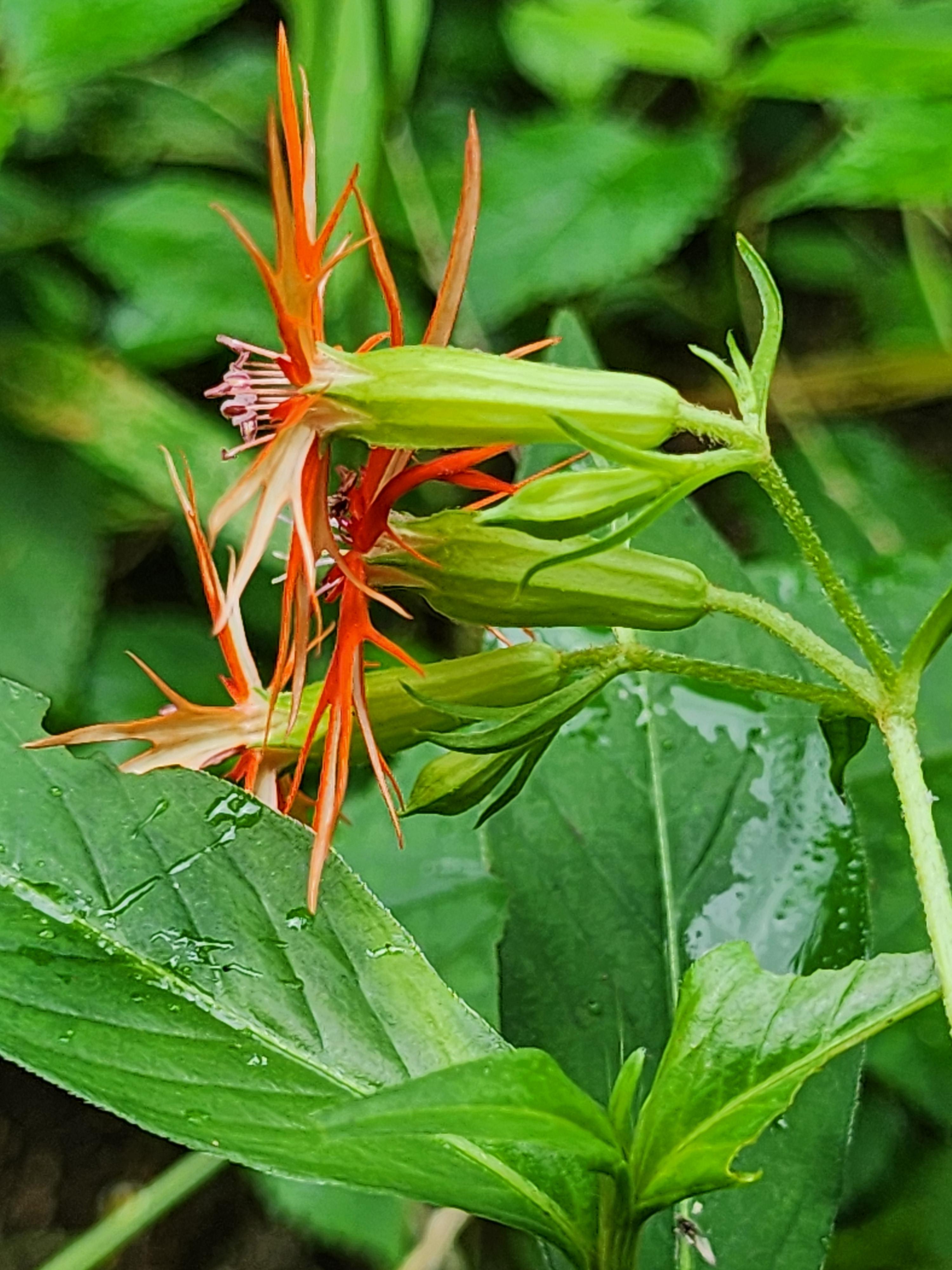
포는 옆으로 퍼지고 선형 내지 선상피침형이다

동속의 다른 종들:
가는동자꽃 Lychnis kiusiana Makino
동자꽃 Lychnis cognata Maxim.
털동자꽃 Lychnis fulgens Fisch. ex Spreng.
흰털동자꽃 Lychnis fulgens for. glabra (Nakai) W.T.Lee
국생지
형태
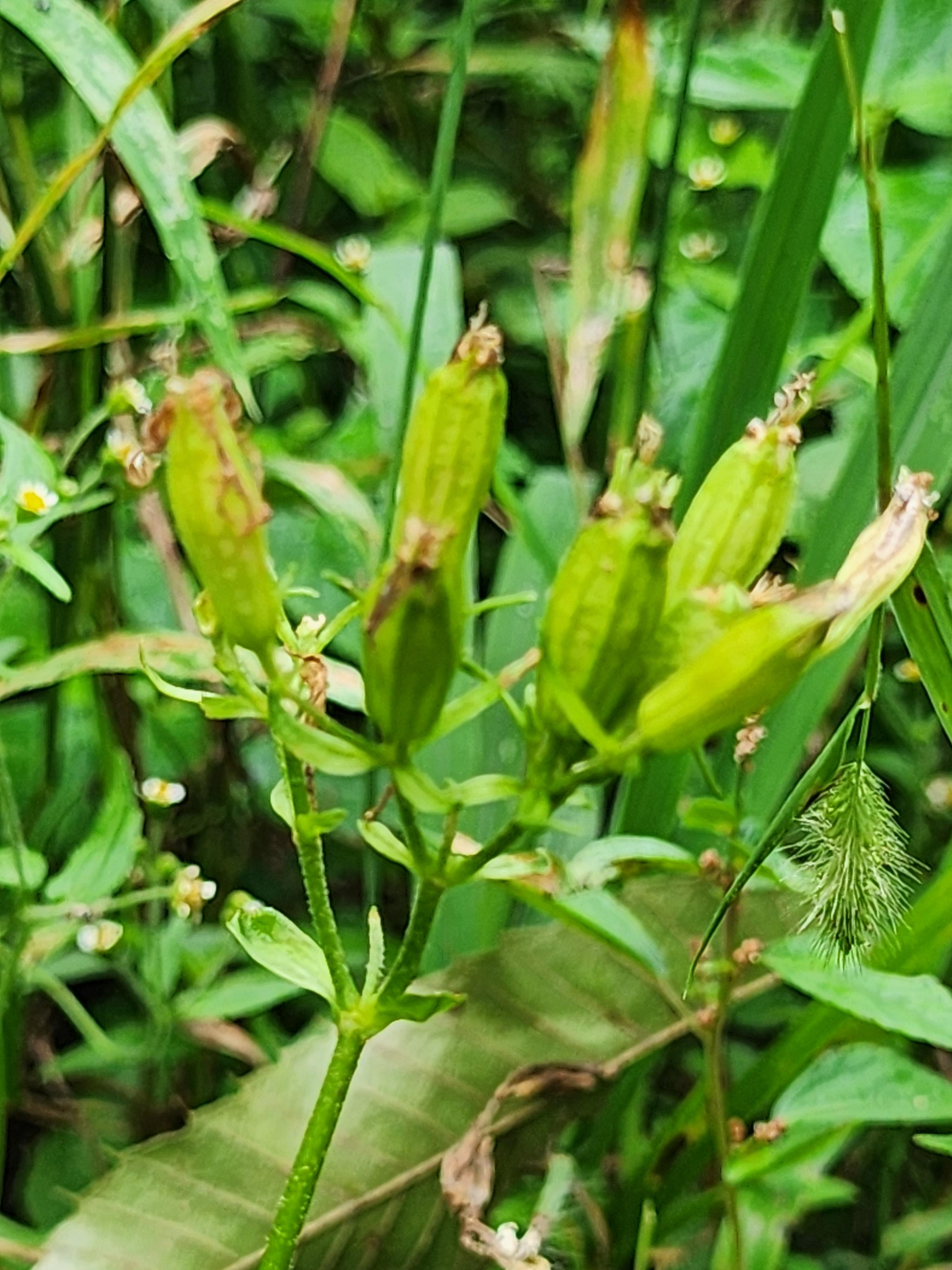
줄기는 곧게 서며 길이 50~80㎝ 정도로서 털이 없거나 적다. 잎은 마주나기하며 엽병이 없고 피침형이며 끝이 뾰족하고 밑부분이 다소 둥글며 길이 3~7㎝, 폭 1~2㎝로서 가장자리는 밋밋하나 잔털이 있고, 기부는 줄기를 감싼다. 원줄기 끝에 달린 2개로 갈라진 취산꽃차례에 짙은 홍색의 꽃이 7~8월에 핀다. 포는 옆으로 퍼지고 선형 또는 선상 피침형이며 길이 3~5㎜이고 꽃자루는 길이 3~10㎜로서 황갈색 털이 달린다. 꽃받침은 원통형이며 길이 1.5㎝로서 털이 없고 끝이 5개로 갈라지며 열편은 삼각상 침형이다. 꽃잎은 5개로 수평으로 퍼지고 퍼진 부분은 길이 2㎝로서 밑에 조부(爪部)가 있고 끝이 깊게 갈라지며 후부(喉部)에 각각 2개의 비늘조각이 있다. 화관통 안쪽에 10개의 비늘조각이 있다. 수술은 10개, 암술대는 5개이다. 삭과는 긴 타원형이며 길이 10~15㎜이고 끝이 5개로 갈라지고 꽃받침이 붙어있다. 종자에는 돌기가 있다.
분포
일본, 중국 / 한국(강원특별자치도 강릉시, 양구군, 인제군, 춘천시, 평창군)
생육환경
한랭한 지역의 햇볕이 잘 드는 고원 습지에서만 자란다.
생육형
여러해살이풀
보호방안
고산 습지에 자라며, 자생지가 10곳 미만으로 개체수도 많지 않다. 자생지 확인 및 유전자원의 현지내외 보전.
유사종
▶가는동자꽃(L. kiusiana Makino): 전체에 역향이며 털이 나고, 줄기는 모가 진다. 잎은 선상 피침형, 길이 5-10㎝이다.
▶털동자꽃(L. fulgens Fisch.): 전체에 긴 흰 털이 있고 잎은 긴 달걀모양, 길이 4-8㎝이다.
특징
속명 Lychinis는 희랍어 lychnos(붓꽃)에서 유래한 것으로 붉은 빛이 도는 종에 붙인다. 꽃잎이 제비모양 같기에 붙여진 이름이다.
FOC
Lychnis wilfordii (Regel) Maximowicz, Bull. Acad. Imp. Sci. Saint-Pétersbourg. sér. 3, 17: 178. 1872.
丝瓣剪秋罗 si ban jian qiu luo
Lychnis fulgens Fischer var. wilfordii Regel, Bull. Soc. Imp. Naturalistes Moscou 34(4): 576. 1861; Silene wilfordii (Regel) H. Ohashi & H. Nakai.
Herbs perennial, 45--100 cm tall, glabrous or pilose with intermixed sparse multicellular eglandular hairs. Roots unknown. Stems simple or branched above. Leaves sessile, ovate-lanceolate or narrowly lanceolate, 3--12 × 1--2.5 cm, glabrous, margin thickly ciliate. Dichasium(기산화서)* rather dense, many flowered. Pedicel 3--20 mm; bracts linear-lanceolate. Flowers 2.5--3 cm in diam. Calyx narrowly funnel-shaped, 1.5--2 cm × 4--5 mm, veins prominent, teeth ca. 3 mm. Petal limb bright red, 4-lobed; lobes subulate to broadly filiform, apex acute; claw narrowly cuneate; coronal scales dark red, oblong. Stamens and styles exserted. Androgynophore** ca. 5 mm. Capsule cylindric-ovoid, ca. 1 cm, equaling or slightly included in calyx. Seeds black-brown, reniform, ca. 1 mm, sharply pointed tuberculate. Fl. Jun--Jul, fr. Aug--Sep. 2n = 24.
Wet meadows, low river banks, woodland edges, forest margins; 200--1200 m. Jilin [Japan, N Korea, Russia (Far East)].
Mabberley (in Telopea 8: 249–256) considered species nos. 2–6 to be conspecific, hypothesizing that the type specimens pertaining to them are of garden origin and that they could all be of hybrid origin. The morphological diversity should thus be a reflection of segregation of offspring in F2 or later generations.
어휘 설명
*dichasium 岐繖花序

** androgynophore
