(스위트)바질 (2)
https://daehyo49.tistory.com/7817263
(스위트)바질 (1)
https://daehyo49.tistory.com/7814389
라임바질(Lime Basil)
https://daehyo49.tistory.com/7817271
* 엄격히 말하자면 스위트바질 Sweet Basil은 영명으로 Genovese Basil을 가리키는 것으로 수많은 품종이 있는 바질 Basil(학명 Ocimum basilicum L.) 중의 하나이나 보통 바질은 이 스위트바질을 가리킨다고 한다.
학명 : Ocimum basilicum L.
분류 : 꿀풀과(Lamiaceae)
학명 풀이
Ocimum : From the Greek word meaning to smell, to be fragrant
basilicum : prncely(왕자의, 군주 같은)
국내 유통명 : 바질(국표식), (기타 유통명) 스위트바질(Sweet Basil)
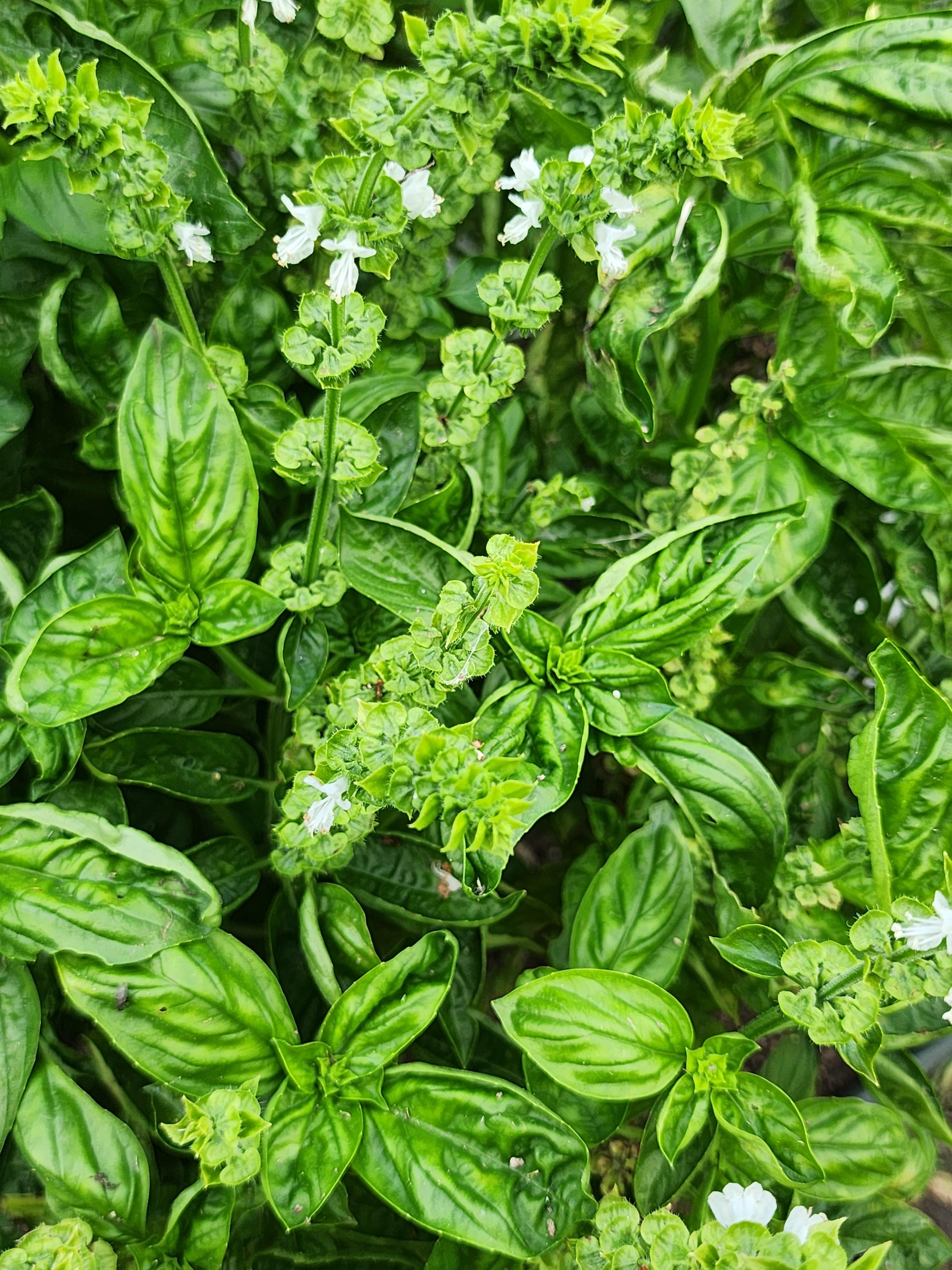
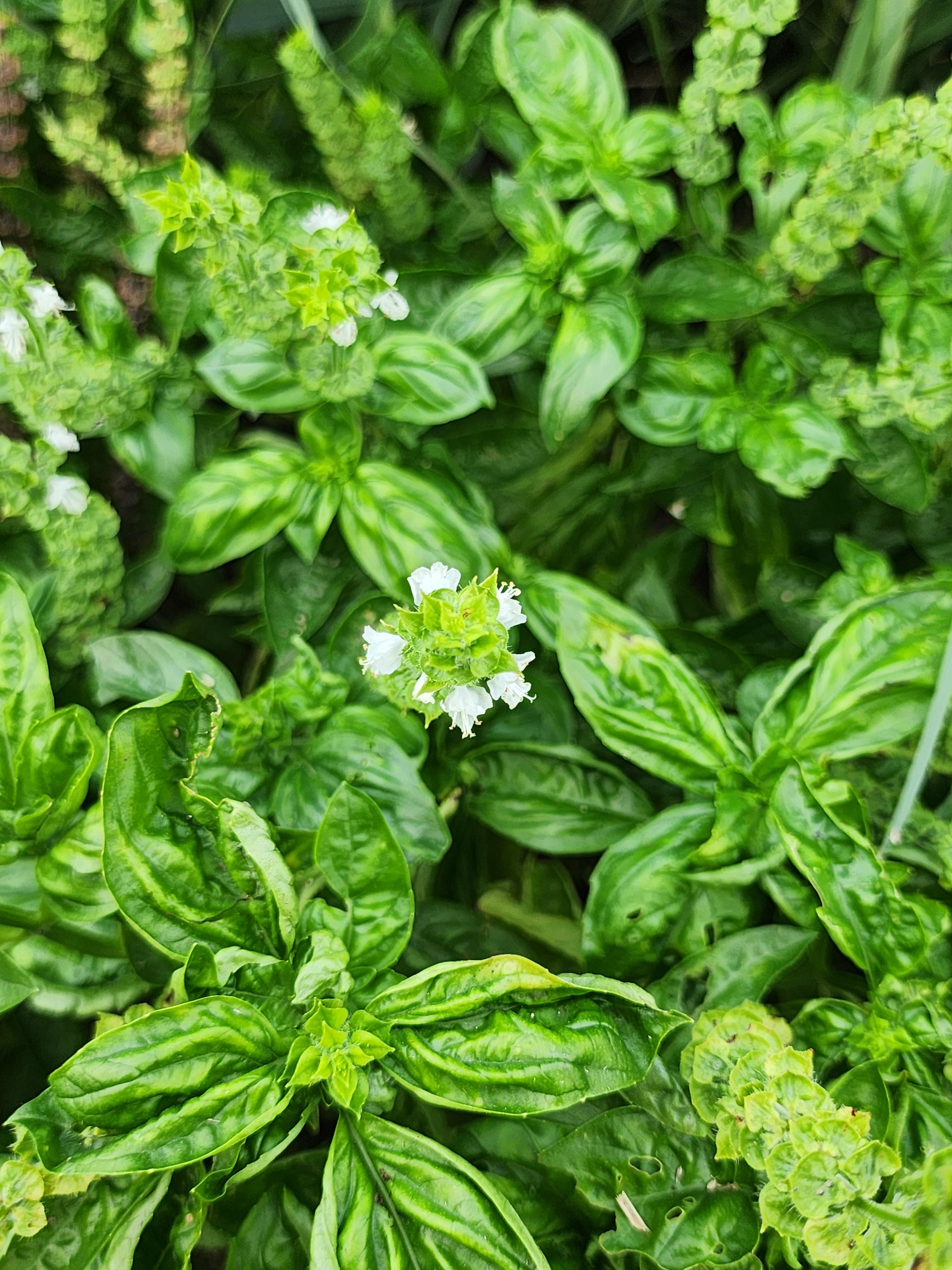
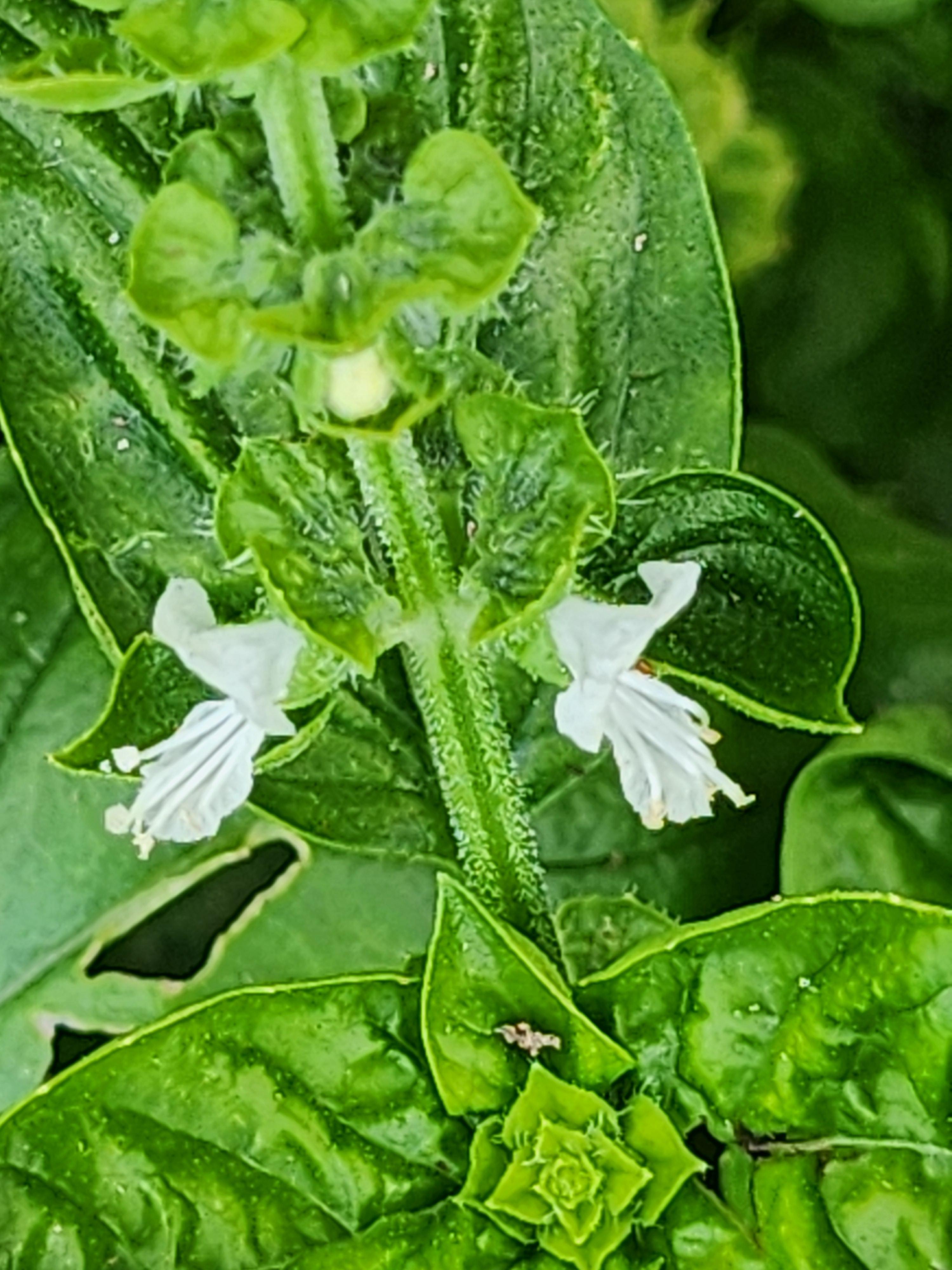
사진 : 2025.09.30 강동구 일자산 허브천문공원

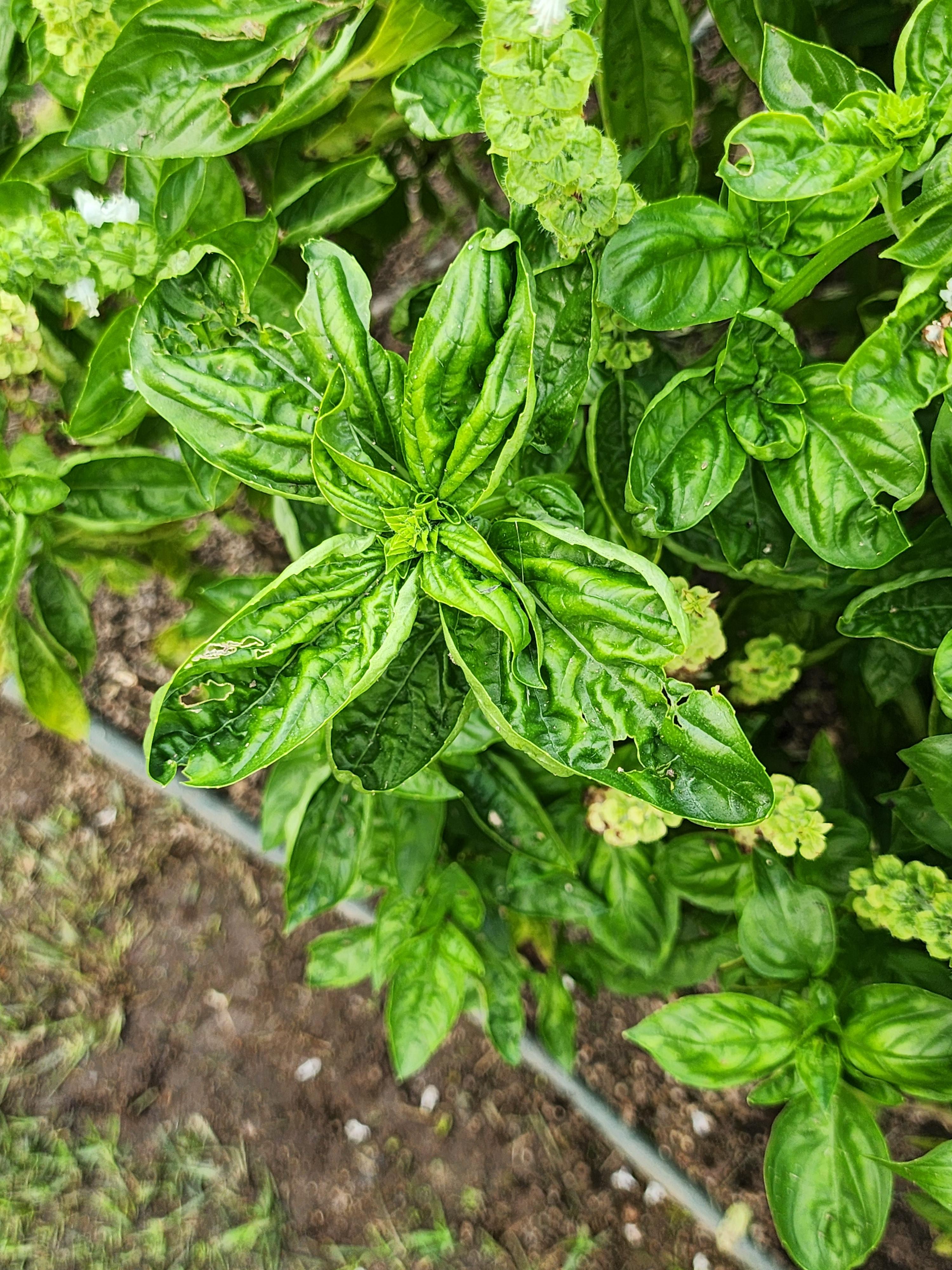
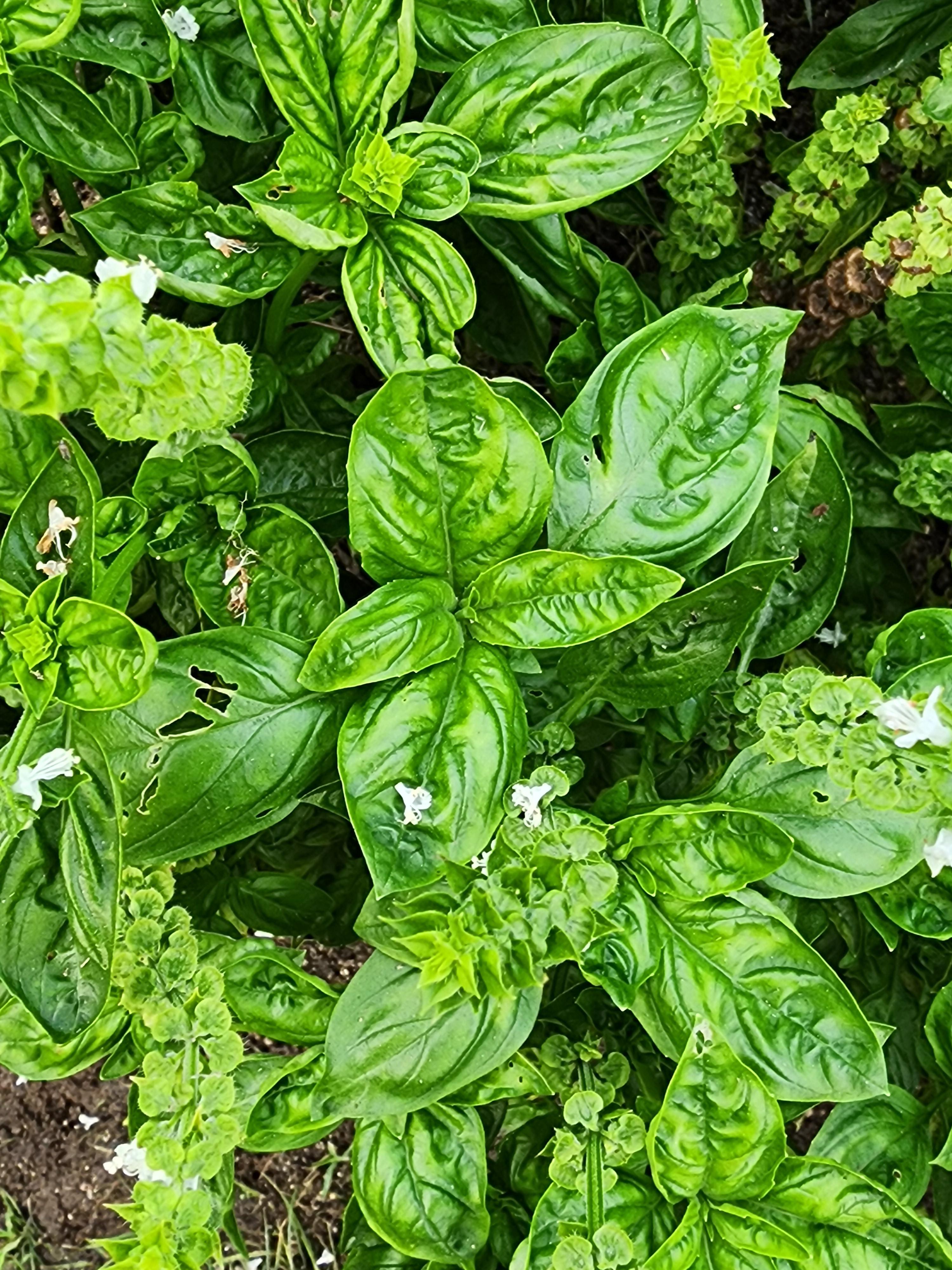
잎은 대체로 크고 끝이 둥그나 급첨두 경향이 잇는 것으로 보인다
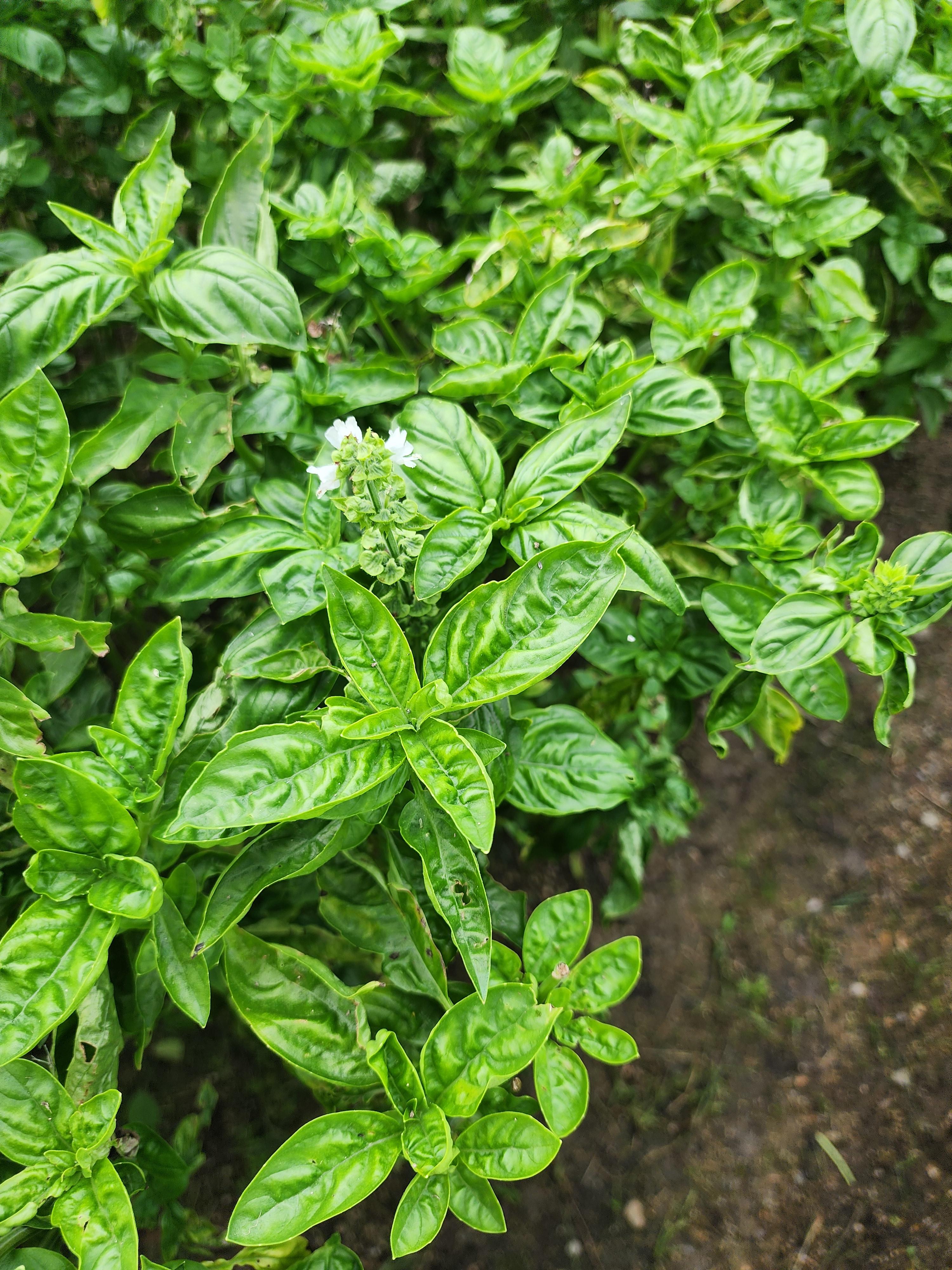

잎은 안쪽으로 말리는 경향이 있는 것으로 보인다
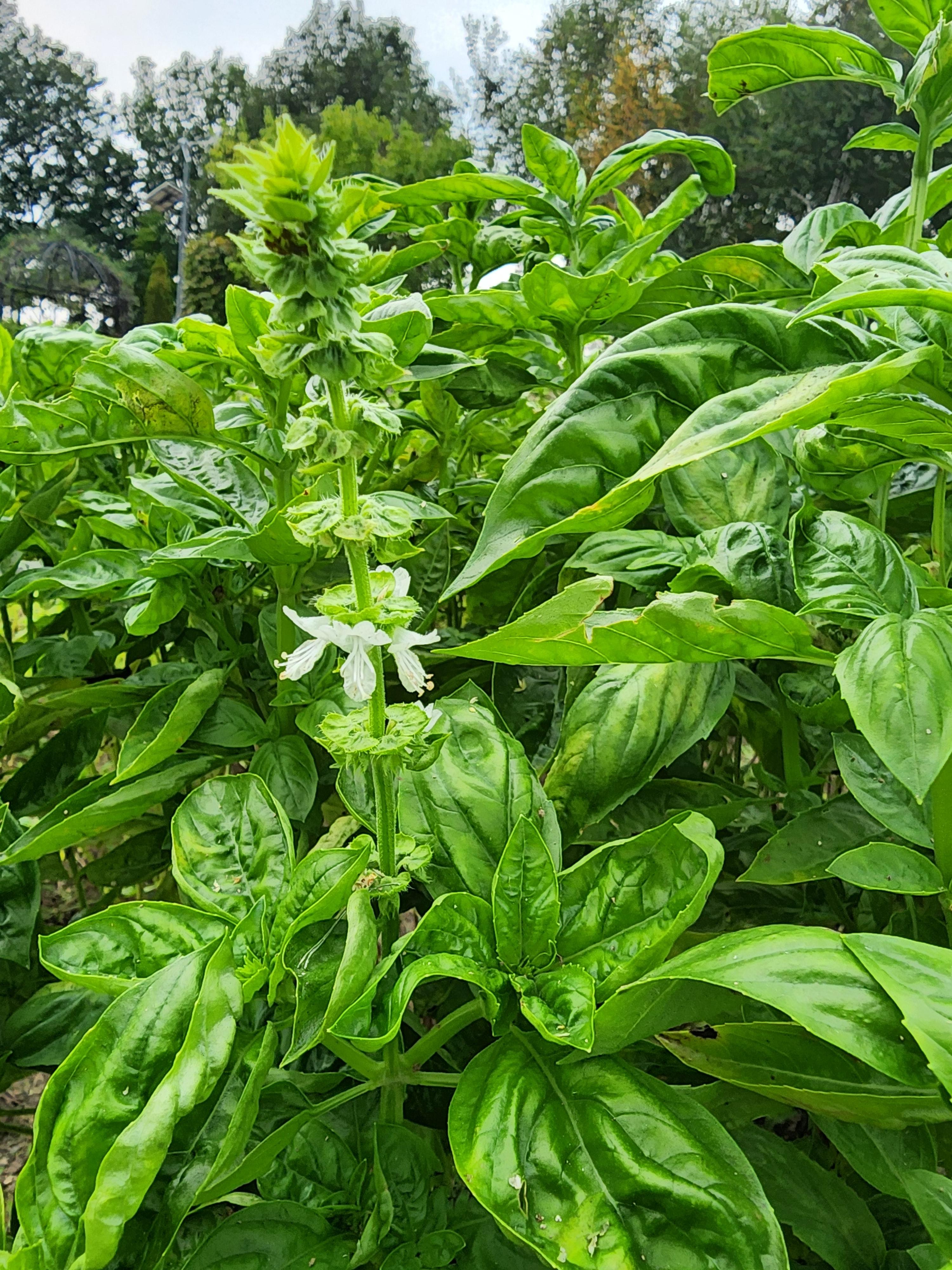

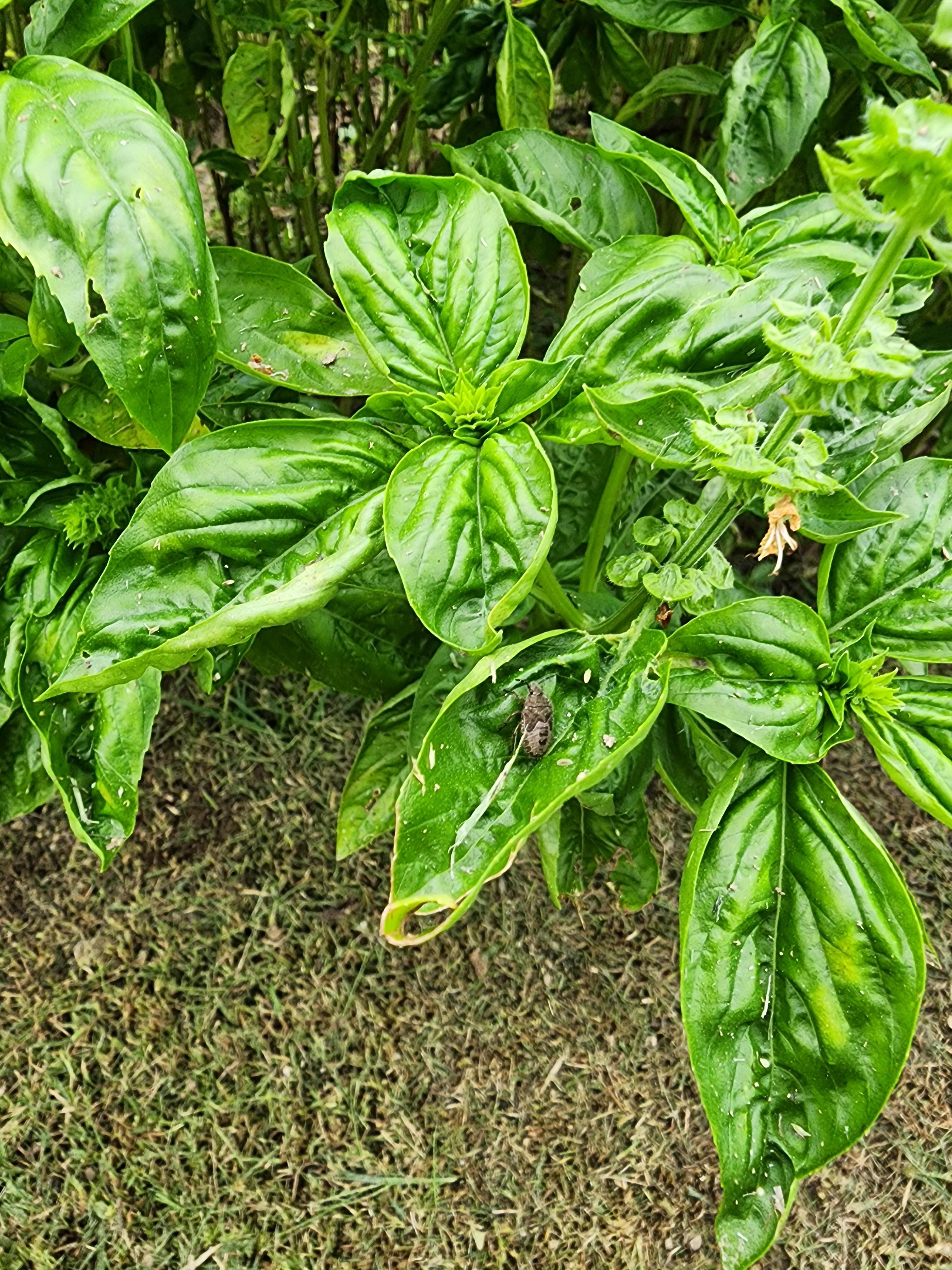
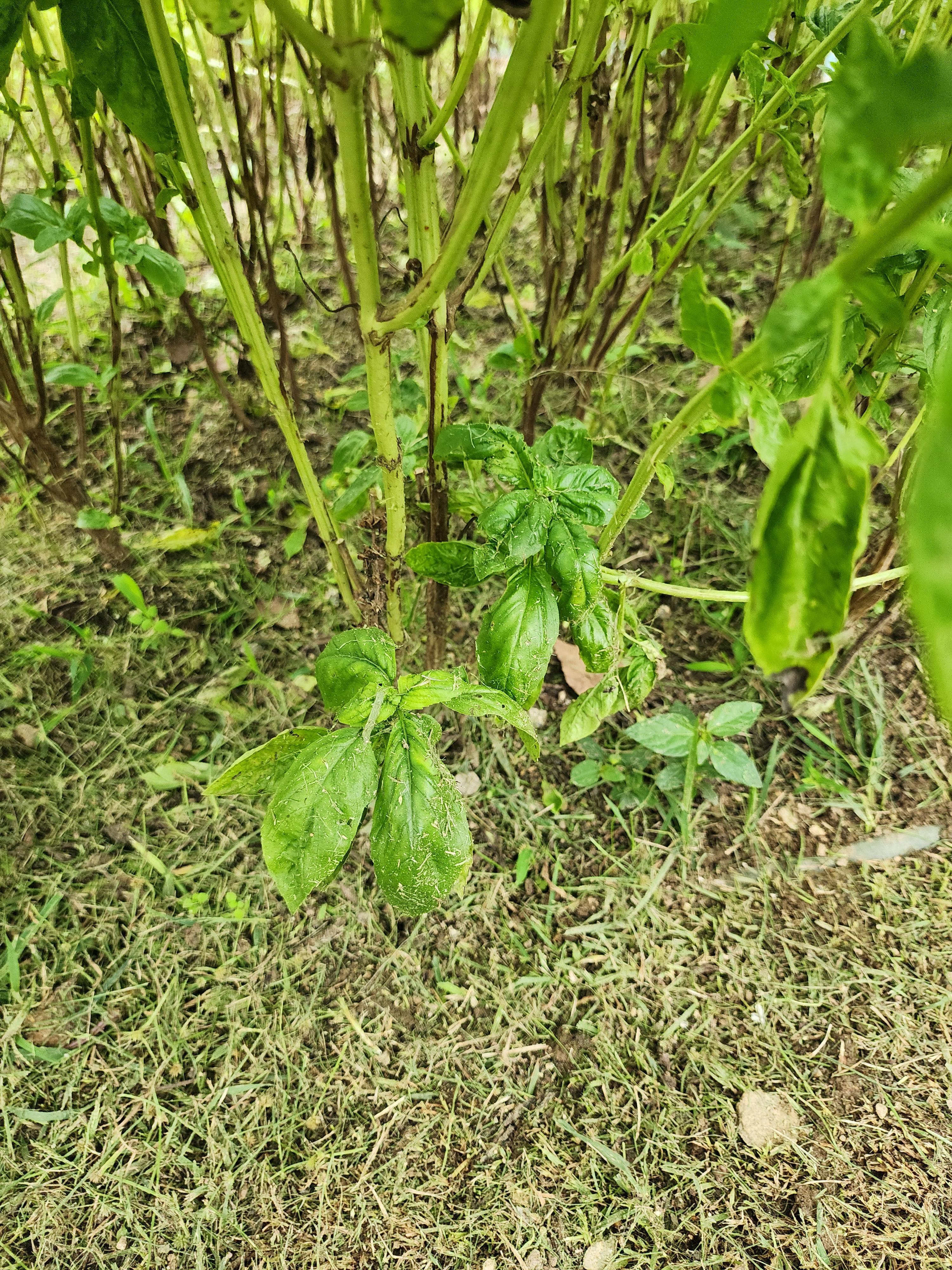

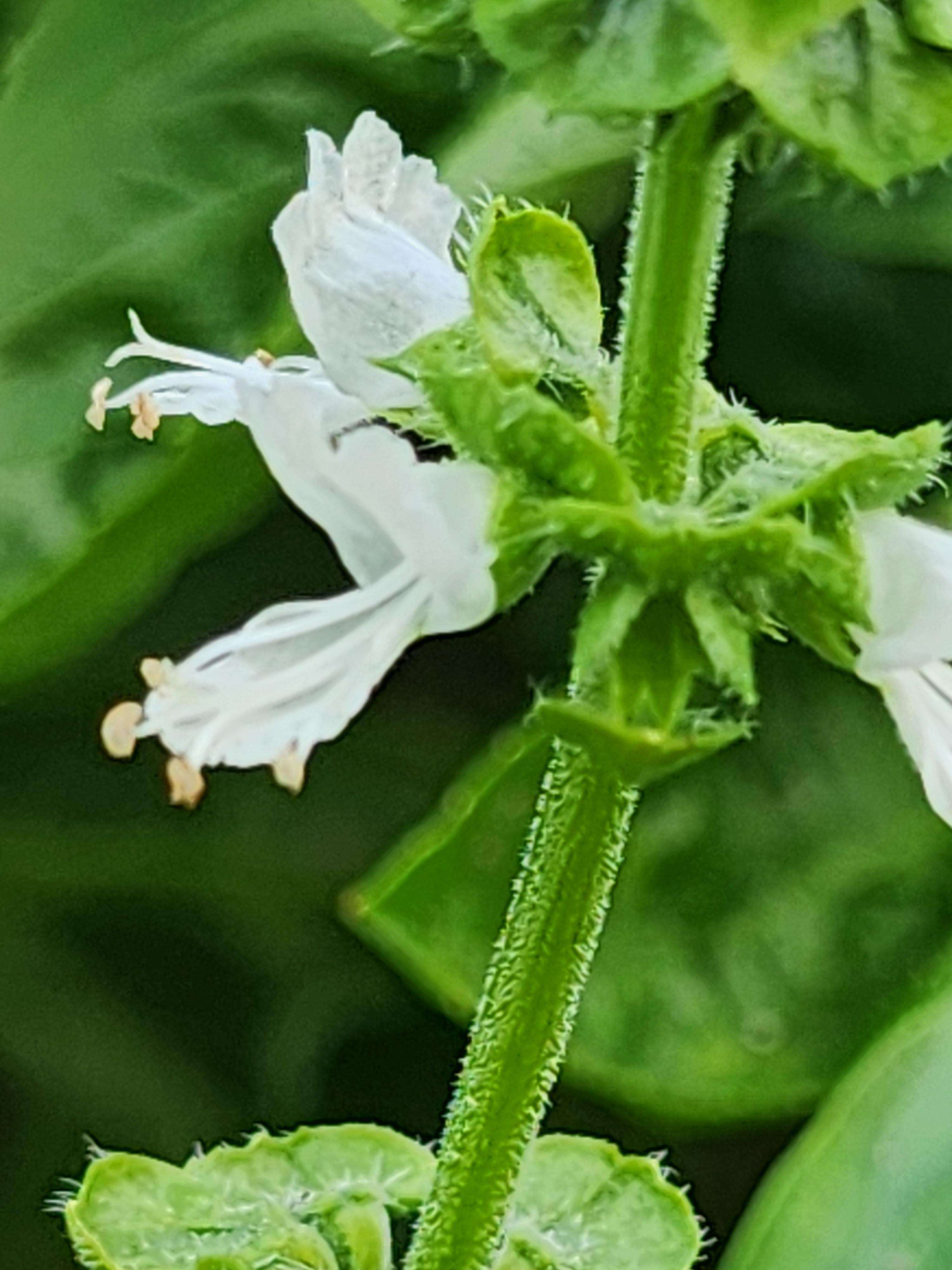
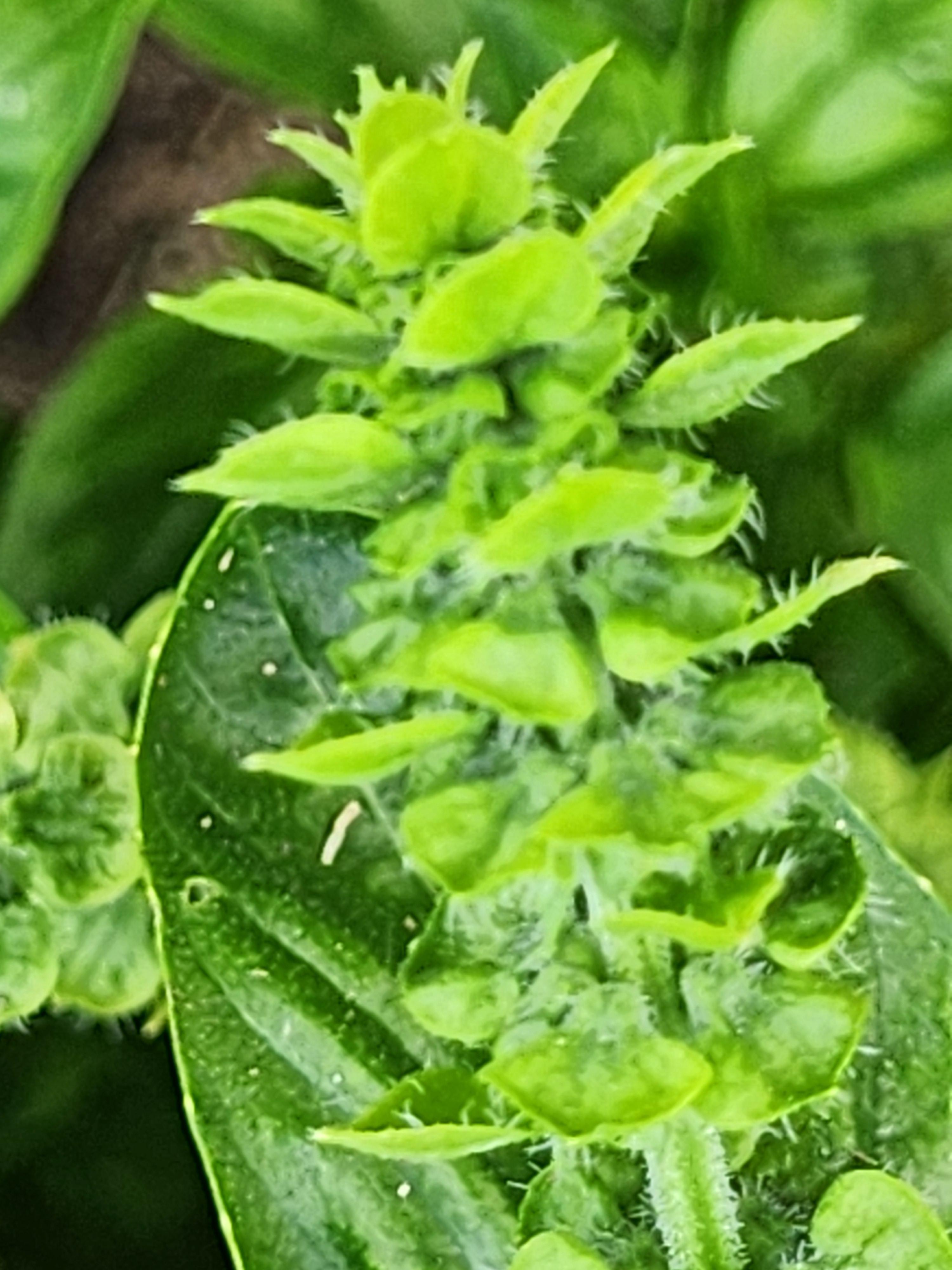
꽃대와 꽃받침에 털은 있으나 꽃대의 털은 미세하고 꽃받침은 털이 적다
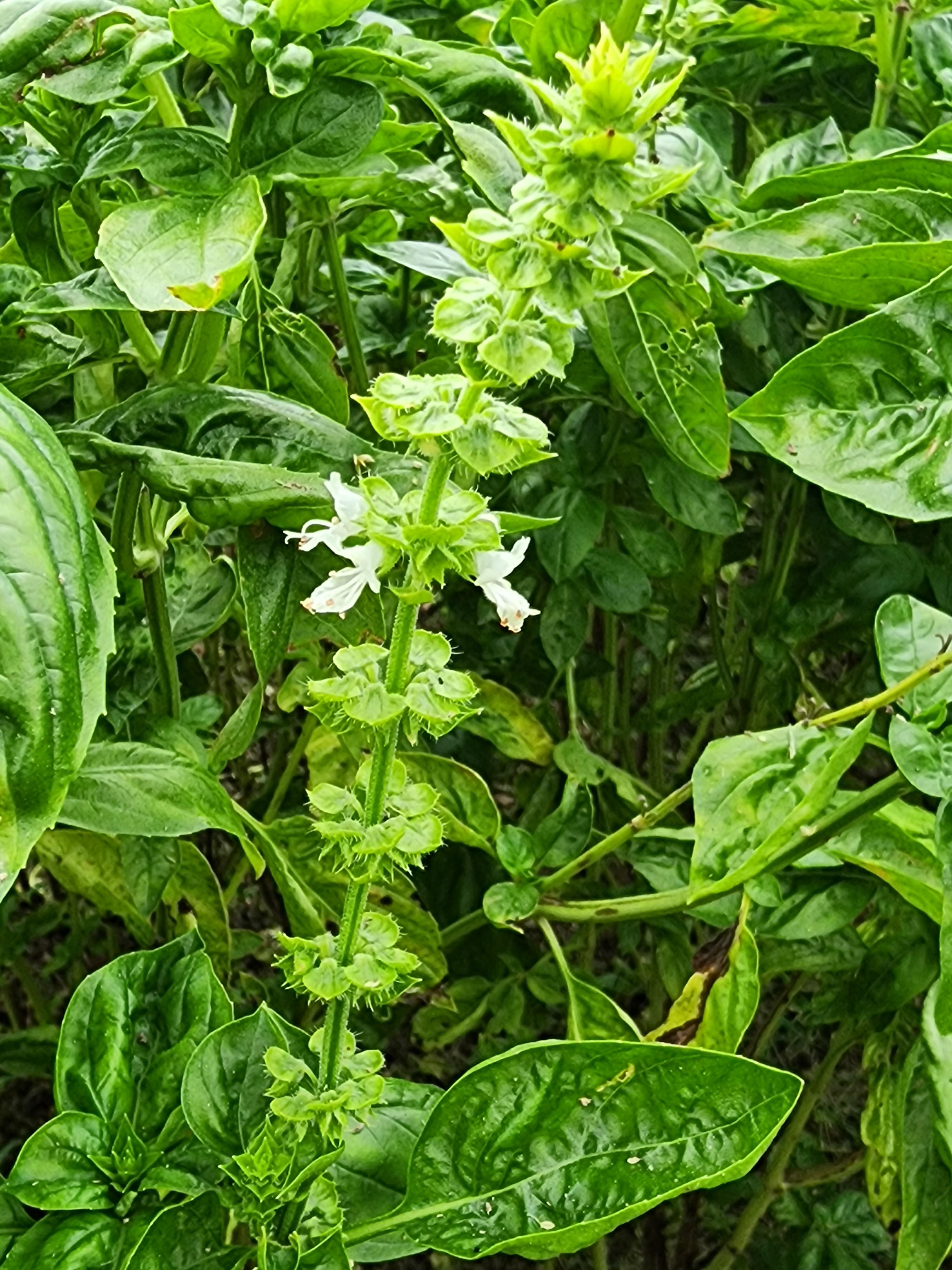
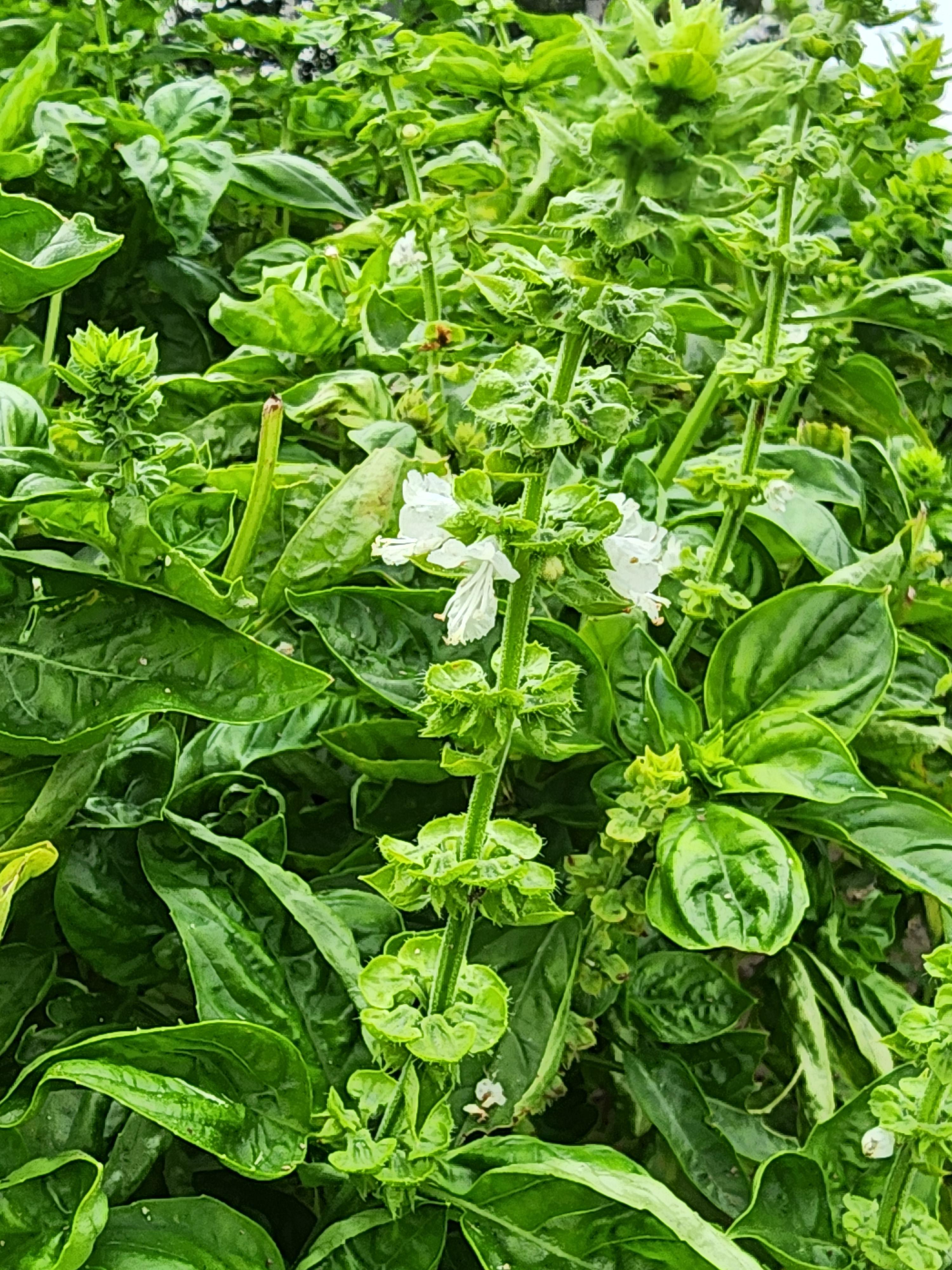


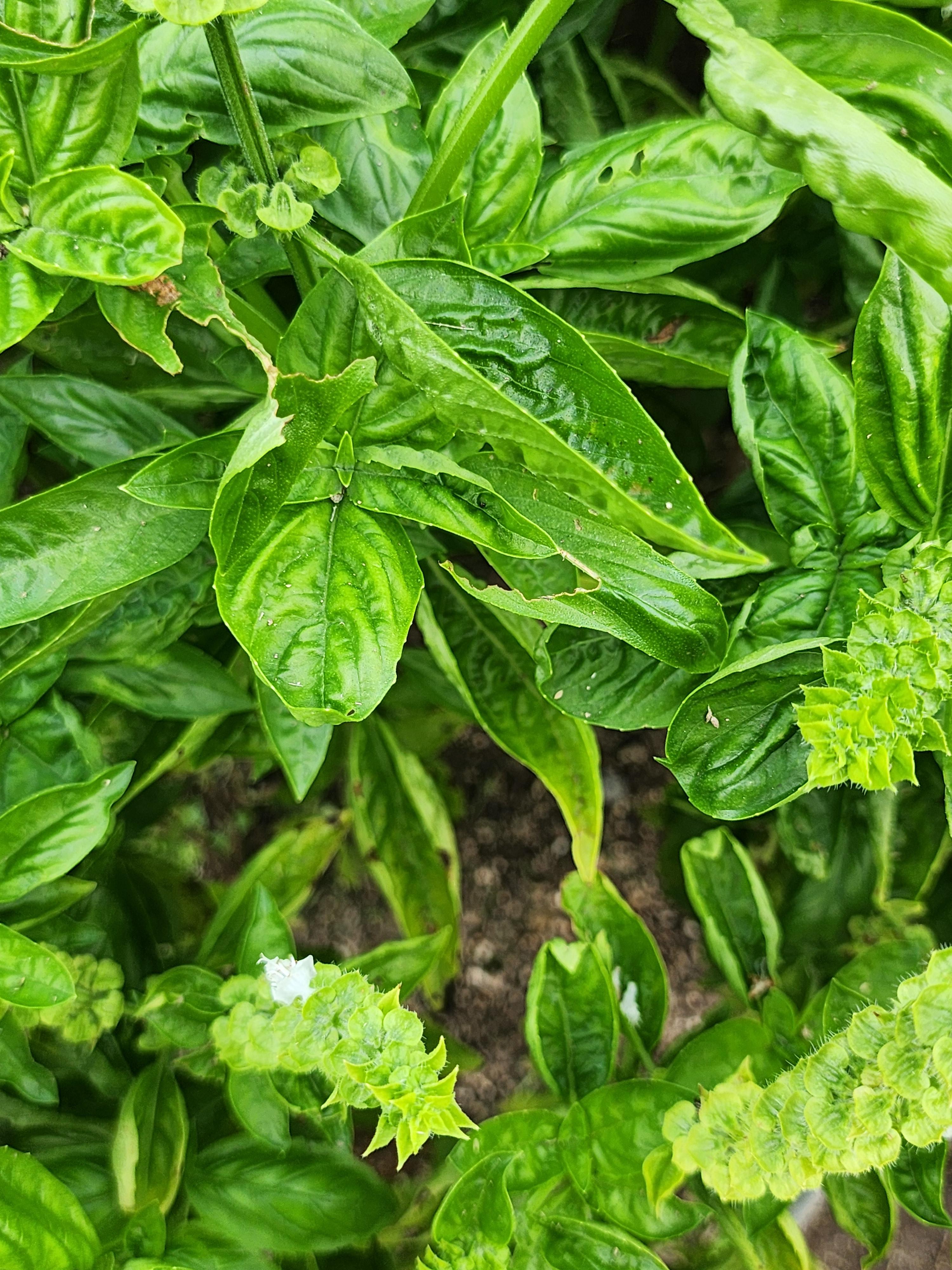
아래 : 2025.09.30 강동구 일자산 허브천문공원
위와 좀 떨어진 장소







Wikipedia 설명
Basil[a] (Ocimum basilicum[b]), also called great basil, is a culinary herb of the family Lamiaceae (mints). It is a tender plant, and is used in cuisines worldwide. In Western cuisine, the generic term "basil" refers to the variety also known as Genovese basil or sweet basil. Basil is native to tropical regions from Central Africa to Southeast Asia.[5] In temperate climates basil is treated as an annual plant, but it can be grown as a short-lived perennial or biennial in warmer horticultural zones with tropical or Mediterranean climates.[5]
There are many varieties of basil including sweet basil, Thai basil (O. basilicum var. thyrsiflora), and Mrs. Burns' Lemon (O. basilicum var. citriodora). O. basilicum can cross-pollinate with other species of the Ocimum genus, producing hybrids such as lemon basil (O. × africanum) and African blue basil (O. × kilimandscharicum).
Description
Basil is an annual, or sometimes perennial, herb. Depending on the variety, plants can reach heights of between 30 and 150 centimetres (1 and 5 feet).[6] Basil leaves are glossy and ovulate, with smooth or slightly toothed edges that typically cup slightly; the leaves are arranged oppositely along the square stems.[7] Leaves may be green or purple. Its flowers are small and white, and grow from a central inflorescence, or spike, that emerges from the central stem atop the plant.[citation needed] Unusual among Lamiaceae, the four stamens and the pistil are not pushed under the upper lip of the corolla, but lie over the inferior lip. After entomophilous pollination, the corolla falls off and four round achenes develop inside the bilabiate calyx.[citation needed]
Phytochemistry
The various basils have such distinct scents because the volatile aromatic compounds vary with cultivars.[5] The essential oil from European basil contains high concentrations of linalool and methyl chavicol (estragole), in a ratio of about 3:1.[5][8] Other constituents include: 1,8-cineole, eugenol, and myrcene, among others.[5][9] The clove scent of sweet basil is derived from eugenol.[10] The aroma profile of basil includes 1,8-cineole[11][12] and methyl eugenol.[11][13] In this species eugenol is synthesised from coniferyl acetate and NADPH.[14]
Similar species
Some similar species in the same genus may be commonly called "basil", although they are not varieties of Ocimum basilicum.
Camphor basil, African basil (O. kilimandscharicum)
Clove basil, also African basil (Ocimum gratissimum)[15][16]
https://en.wikipedia.org/wiki/Basil
Genovese basil
From Wikipedia, the free encyclopedia
Genovese basil or sweet basil (Genoese: baxaicò [baʒajˈkɔ] or baxeicò [baʒejˈkɔ]; Italian: basilico genovese [baˈziːliko dʒenoˈveːze, -eːse]) is a cultivar of Ocimum basilicum produced in the Italian provinces of Genoa, Savona and Imperia, Liguria. It is one of the most popular basils for culinary use, particularly for its use in pesto, the traditional Genoese sauce. The name basilico genovese is protected by the European Union with the protected designation of origin certification.[1][2]
The best Genovese basil is said to be grown in Pra',[3] a western neighbourhood of the city of Genoa. The nearby presence of a large steel mill from the 1950s to the 1980s threatened the cultivar, said to be necessary to produce the "real" Genoese pesto. Now the threat is mostly gone with the dismissal of the mill and the conversion of the remaining lines to less polluting productions.[4]
'원예.재배식물' 카테고리의 다른 글
| 서양난 종류 (0) | 2026.02.13 |
|---|---|
| 아니스 히솝(파랑배초향) (0) | 2025.12.21 |
| 미국마편초(Verbena hastata) (2) (0) | 2025.09.06 |
| Rudbeckia 검색표 (0) | 2025.09.06 |
| 불로화(아게라툼)(2) (2) | 2025.08.16 |